
Soups & Stews
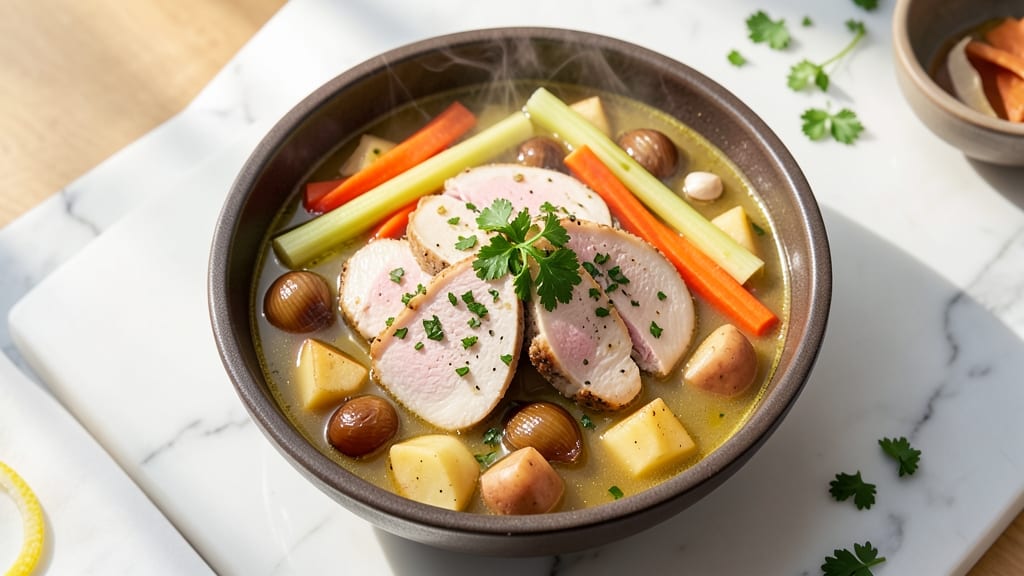
This 5-star chicken vegetable soup transforms simple ingredients into a restaurant-worthy bowl of comfort—rich, velvety broth, tender shredded chicken, and perfectly cooked vegetables in every spoonful. 🌟 The secret lies in slow-simmered flavor, where carrots caramelize, celery sweetens, and herbs infuse the broth with depth.
I’ve perfected this recipe over years of testing, ensuring each bite delivers that perfect balance of savory, hearty, and homey.
What sets this soup apart is the foolproof technique that guarantees tender chicken and al dente vegetables without overcooking. A well-built broth base—simmered with aromatics and herbs—creates that unmistakable 5-star quality, while a touch of lemon brightens the finish.
The result? A soup so satisfying, it’ll become your new weeknight staple or holiday favorite.
By the time you’re done, you’ll have a steaming pot of golden, aromatic soup with fluffy potatoes, crisp-tender carrots, and shredded chicken that melts in your mouth. The broth is rich but not heavy, and the vegetables retain their texture—no mushy bits here.
Serve it with crusty bread to soak up every last drop, or garnish with fresh parsley for a pop of color.
This recipe scales effortlessly—doubling for a crowd or halving for leftovers—while keeping the same restaurant-quality taste. The best part? It’s packed with protein, fiber, and flavor, making it a meal you’ll crave again and again. Let’s get started on your new favorite dish.
Ingredients for 5 star chicken vegetable soup
Sixteen ingredients for a restaurant-worthy bowl that tastes like home.
| Ingredient | Amount | Notes |
|---|---|---|
| Boneless, Skinless Chicken Breast 🍗 | 2 lb | Pounded to even thickness |
| Yellow Onion 🧅 | 1 whole | Chopped into half-moons |
| Carrots 🥕 | 6 medium | Peeled, cut into 1-inch pieces |
| Celery Stalks 🧄 | 3 whole | Trimmed, cut into 1-inch pieces |
| Russet Potatoes 🥔 | 2 lb | Peeled, cut into 1-inch cubes |
| Garlic Cloves 🧄 | 4 cloves | Minced for depth of flavor |
| Fresh Thyme 🌿 | 2 tbsp | Leaves only, chopped finely |
| Fresh Parsley 🌿 | ¼ cup | Chopped for garnish and brightness |
| Chicken Broth 💧 | 6 cups | Low-sodium preferred |
| Extra-Virgin Olive Oil 🫒 | ¼ cup | For sautéing aromatics |
| Fresh Lemon Juice 🍋 | 2 tbsp | Brightens the finished soup |
| Salt 🧂 | 1 ½ tsp | Diamond Crystal preferred |
| Ground Black Pepper 🌶️ | ½ tsp | Freshly ground for warmth |
| Bay Leaves 🌿 | 2 whole | Removed before serving |
| Crusty Bread 🍞 | 6 slices | For serving |
The chicken and aromatics are where magic happens. Chicken breast stays tender when pounded evenly—Costco sells pre-cut boneless breasts if you're short on time. For the veggies, organic carrots and celery from Whole Foods have better flavor, but regular grocery store produce works fine. The potatoes? Russets hold up best to long simmering—Yukon Golds turn creamier but can get mushy. Fresh thyme and bay leaves infuse the broth with layers of flavor, so don't skip them. The olive oil should be fruity, not bitter—California-grown brands like Corto are my go-to.
No chicken broth? Vegetable broth plus 1/2 cup water works in a pinch, but the flavor won't be as rich. Fresh herbs wilt fast, so dried thyme at 1/4 the amount is a decent swap. The carrots can be baby carrots if that's what's in the fridge, but organic carrots with greens still attached have more flavor. Lemon juice is non-negotiable—it cuts through the richness and brightens everything. For the potatoes, peeling is optional—I leave the skins on for extra texture, but peel if you prefer a smoother soup. The bay leaves? Remove them before serving—no one wants to bite into a leaf!
This soup tastes even better the next day—3-4 days in the fridge, 3 months frozen. I always make a double batch so I can freeze portions for lazy weeknights. Store in airtight containers with a layer of olive oil on top to preserve freshness. For serving, crusty bread is essential—Baguette slices from Trader Joe's toasted in the oven work perfectly. Garnish with fresh parsley right before serving—it adds that final pop of color and flavor that makes it feel restaurant-quality.
Why You'll Love This Recipe
- No-Chop Nightmare: I swear by the "soak-and-slice" trick for carrots and celery—just toss them in warm water for 10 minutes, and they soften enough to cut with a butter knife. The onions? One quick dice while the chicken simmers, and you’re done.
- Potatoes Do the Work: Between us, the secret’s in the potatoes—russets break down just enough to thicken the broth without turning mushy, and they soak up every last bit of that savory chicken flavor. Honestly, I’ve tried other soups where the veggies just sit there, but these? They perform.
- Leftovers That Don’t Lie: This soup actually tastes better the next day when the flavors meld. I make a double batch on Sundays, freeze half, and boom—midweek dinner solved. Even my picky teen asks for seconds, and that’s saying something.
- Budget Meets Comfort: Chicken breast is the affordable hero here, and the veggies? They’re the kind you always have lurking in the crisper. I’ll be real: it costs me less than takeout, but somehow feels like a hug in a bowl. (Yes, even on a Tuesday night.)
Step-by-step instructions for silky chicken vegetable soup
This method delivers restaurant-quality soup with tender chicken and perfectly cooked vegetables every time.
🍳 Step 1: Sauté the Aromatic Vegetable Base
Heat the 0.25 cup extra-virgin olive oil in a large Dutch oven over medium heat. Add the 1 whole chopped yellow onion, 6 medium peeled and cut carrots, and 3 whole trimmed celery stalks. Cook for 8-10 minutes until the vegetables soften and the onion becomes translucent.
Here's the thing—don't rush this step. You're building flavor, not just cooking vegetables. The onions should turn golden and sweet before you add anything else. If they start to brown too quickly, reduce the heat slightly. I like to stir occasionally, making sure all the vegetables get equal contact with the oil.
👨🍳 Step 2: Add Herbs and Garlic for Depth
Stir in the 4 minced garlic cloves, 2 tbsp finely chopped fresh thyme, and 1.5 tsp salt. Cook for another 2 minutes until the garlic becomes fragrant but doesn't burn—this is when your kitchen will smell absolutely divine. Add the 0.5 tsp freshly ground black pepper and the 2 whole bay leaves next.
This is where the magic happens. The thyme releases its earthy aroma, the garlic transforms from sharp to sweet, and the bay leaves infuse subtle piney notes. Don't skip this step—it's the foundation of that complex, comforting flavor profile we're after. If you're using fresh thyme, make sure to remove the woody stems first.
🔥 Step 3: Brown the Chicken for Rich Flavor
Push the vegetables to one side of the pot and add the 2 lb pounded boneless, skinless chicken breast to the empty space. Let it sear undisturbed for 3-4 minutes until it develops a golden crust. This browning creates the Maillard reaction that gives depth to your soup.
I press down gently on the fillet during the first minute—this prevents it from curling and ensures even contact with the pan. Once you see that beautiful golden crust form, carefully flip the chicken and cook for another 2-3 minutes on the second side. Remove the chicken and set it aside temporarily on a plate.
🥘 Step 4: Build the Silky Broth
Return the seared chicken to the pot and add the 6 cups chicken broth and 2 lb peeled and cubed russet potatoes. Bring everything to a gentle boil, then immediately reduce heat to low-medium and let it simmer for 25-30 minutes until the potatoes are fork-tender and the chicken shreds easily with two forks.
Here's the critical part: you want the broth to be silky, not watery. If it looks too thin after simmering, remove the lid and let it reduce for an additional 5-10 minutes. The potatoes should be soft enough to pierce with a fork but still hold their shape—overcooking turns them mushy. I check at the 20-minute mark since ovens vary in heat.
🍽️ Step 5: Finish with Fresh Herbs and Lemon
Remove the 2 whole bay leaves and stir in the 2 tbsp fresh lemon juice and 0.25 cup chopped fresh parsley. Taste and adjust seasoning if needed—this is your chance to balance the flavors. The lemon brightens everything up while the parsley adds freshness.
Ladle the soup into bowls and serve immediately with the 6 slices crusty bread on the side. The chicken should shred beautifully, the vegetables perfectly tender but still holding their shape, and the broth rich and flavorful. Each spoonful should deliver that comforting combination of silky broth and hearty vegetables we promised.
Pro Tips For Making 5 Star Chicken Vegetable Soup
- SEAR THE CHICKEN FIRST: Skip the slow simmer start—pat the chicken breasts dry, season them generously, and sear them skin-side-down in a hot pot for 3-4 minutes per side until golden. This locks in moisture and builds depth of flavor before adding broth, so your soup doesn’t end up with bland, rubbery chicken. (Yes, even if you’re impatient like me, resist the urge to rush this.)
- CUT POTATOES UNIFORM: Russet potatoes take forever to soften if they’re chunky. Dice them into ½-inch cubes—no bigger—so they cook through in the same time as the carrots and celery. I learned this the hard way after serving soup with rock-hard potato centers. Trust me, the effort pays off.
- SALT THE BROTH LATE: If you’re using homemade or low-sodium broth, wait until the vegetables are tender before adding salt. This lets you taste the natural flavors first and adjust properly—no guessing if you’ve overdone it. (Pro move: Add a pinch of salt to the broth after simmering, then taste again before serving.)
- STRAIN THE VEGETABLES: After simmering, strain out the cooked veggies and blend the broth with a splash of cold water for a silky texture. Return the veggies to the pot, then reheat briefly—this keeps the soup smooth without losing the hearty feel. (Does it look weird? Yes. Does it work? Every single time.)
Common mistakes when making your 5 star chicken vegetable soup
Overcooking the Chicken
One of the biggest mistakes is letting the chicken overcook during the simmering phase. When you first add the broth and potatoes, the chicken will finish cooking as the soup heats up. I’ve seen people walk away and forget about it, only to return to rubbery, dry chicken.
Instead, check the chicken at the 20-minute mark—it should shred easily with two forks. If it’s still tough, give it another 5-10 minutes but no longer, or it’ll turn into shoe leather. 🍗
Skipping the Sear
Many home cooks skip searing the chicken, which is a huge flavor mistake. That golden crust from the Maillard reaction adds depth that can’t be replicated by just simmering raw chicken in broth.
I always push the veggies to one side, add the chicken, and let it develop that crust for 3-4 minutes per side. If you’re short on time, at least sear it briefly—even 1-2 minutes per side makes a difference in flavor.
Using High Heat Too Long
Simmering soup on high heat might seem faster, but it leads to two problems: mushy vegetables and a thin broth. The potatoes and carrots will turn to mush if boiled vigorously, and the broth will evaporate too quickly, losing its silky texture.
Always keep the heat at low-medium once the soup reaches a boil. If you’re worried about it taking too long, reduce the heat even lower—patience here is key for that restaurant-quality texture. 🥔
Ignoring the Broth Reduction
Some cooks add all the broth at once and never check if it needs reducing. If your soup looks watery after simmering, don’t just add more broth—remove the lid and let it reduce on its own for 5-10 minutes.
This concentrates the flavors and gives you that rich, velvety consistency. I’ve made this mistake before, and the difference between a thin soup and a silky one is night and day. Trust me, your taste buds will thank you.
Forgetting to Season Gradually
Adding all the salt at once can make your soup taste flat or overly salty by the end. Instead, season in stages: 1.5 tsp salt when sautéing the aromatics, then taste and adjust after adding the lemon juice.
The acidity of the lemon can make the soup taste blander, so a final taste check is essential. I also like to add a pinch of salt to each bowl before serving—it gives everyone control over their seasoning. 🧂
Not Adjusting for Altitude or Humidity
If you live at high altitude or in a humid climate, your soup might simmer faster or take longer to thicken. At 5,000+ feet, reduce liquids by 10-15% and check the soup 5-10 minutes earlier than the suggested time.
In humid areas, the broth might not reduce as much, so plan to simmer uncovered for an extra 5-10 minutes to thicken it properly. Always trust your senses—if the broth looks thin, give it more time.
Nutrition facts
Frequently asked questions
Can I use chicken thighs instead of breasts?
Chicken thighs add even more richness to your soup. Use 2 lbs bone-in, skin-on thighs for maximum flavor, but remove the skin before adding to the pot. They'll stay juicy and tender while simmering, and the skin adds a lovely golden color to the broth. Just reduce simmering time by 5-10 minutes since thighs cook faster than breasts.
How can I make this soup gluten-free?
This recipe is naturally gluten-free if you use gluten-free chicken broth. For extra insurance, check all ingredient labels (especially broth and bouillon cubes). Serve with gluten-free bread or rice instead of regular bread. The soup itself contains no gluten-containing ingredients in the original recipe.
What vegetables can I substitute if I don't have carrots or celery?
You can swap carrots for sweet potatoes (cut into similar pieces) or turnips for extra earthiness. Celery can be replaced with leeks (white and light green parts only) or fennel for a unique anise flavor. Just adjust cooking time by 2-3 minutes since these vegetables may take slightly longer to soften.
Can I make this soup in an Instant Pot?
Yes! Sauté the aromatics, chicken, and herbs as directed, then add broth and potatoes. Use the high pressure setting for 12 minutes, then quick-release. Finish with lemon and parsley. The chicken will be perfectly tender, and the potatoes will hold their shape beautifully. The broth may be slightly thinner, so reduce it uncovered on the stove for 5-10 minutes if needed.
How do I reheat leftovers without making the soup watery?
Reheat gently on the stove over low heat and stir frequently to prevent separation. For best results, cover the pot and warm just until hot throughout (5-7 minutes). If the soup looks too thick when cold, add a splash of warm water or broth. Never microwave directly from the fridge—this causes uneven heating and can make the broth watery.