
Main Courses
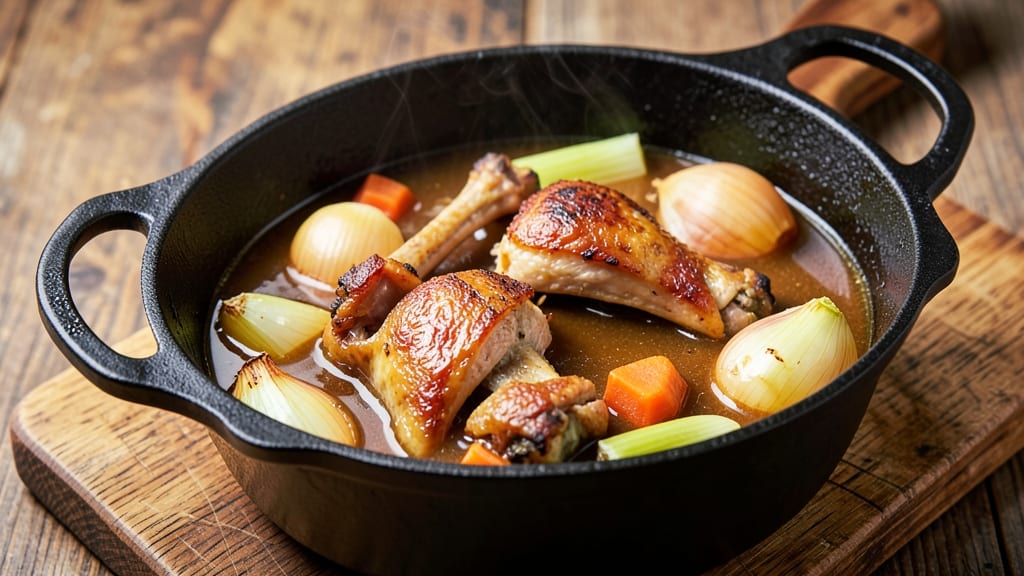
Alton Brown’s chicken stock recipe transforms simple ingredients into a foundation of deep, complex flavor that elevates every dish it touches. Growing up in small-town Georgia, I learned that great stock isn’t just about simmering—it’s about patience, precision, and respect for the ingredients.
This method, refined through years of testing, delivers restaurant-quality results in your own kitchen with just one pot and a few key techniques.
The secret lies in roasting the bones first to develop a rich, nutty depth before simmering. We’ll use chicken bones, aromatics like celery and carrots, and a splash of vinegar to extract maximum flavor.
Unlike store-bought versions, this stock builds layers of taste through slow cooking—no shortcuts, just unmatched richness that turns ordinary meals into something extraordinary.
By the end, you’ll have a clear, golden liquid brimming with umami, perfect for soups, sauces, or braises. The process is straightforward, but the results speak for themselves: a stock so flavorful it becomes the heart of your cooking.
Whether you’re prepping for a holiday feast or simply want to cook with professional-grade ingredients, this recipe delivers every time.
Use it as a base for risottos, enrich gravies, or sip it straight as a comforting broth. The beauty of homemade stock is its versatility—it’s the quiet hero that makes every dish better.
Let’s get started with a method that’s been perfected in professional kitchens and adapted for home cooks.
Ingredients for alton brown chicken stock
These twelve ingredients transform humble bones into a velvety, umami-rich stock that defines professional cooking.
| Ingredient | Amount | Notes |
|---|---|---|
| Chicken Bones 🍗 | 4 lb | Raw or cooked, with some meat |
| Yellow Onion 🧅 | 1 whole | Cut into quarters, skin on |
| Carrots 🥕 | 4 whole | Medium size, roughly chopped |
| Celery Stalks 🌿 | 4 whole | Trimmed, cut into 2-inch pieces |
| Garlic Cloves 🧄 | 6 cloves | Peeled, lightly smashed |
| Fresh Parsley Stems 🌿 | 2 tbsp | Tough stems only, chopped |
| White Wine Vinegar 🍷 | ¼ cup | For acidity and depth |
| Cold Water 💧 | 8 cups | Filtered preferred |
| Diamond Crystal Kosher Salt 🧂 | 1 ½ tsp | Adjust to taste |
| Freshly Ground Black Peppercorns 🌶️ | ½ tsp | Coarsely cracked |
| Bay Leaves 🍃 | 2 whole | Standard size |
| Extra-Virgin Olive Oil 🫒 | 2 tbsp | For roasting aromatics |
The chicken bones form the stock’s backbone—raw bones with meat yield more gelatin, while leftover cooked bones add depth without overpowering. For optimal results, source bones from a reputable butcher or high-quality grocery store like Whole Foods or Wegmans, where they’re typically sold fresh and free of additives. If using raw bones, pat them dry before roasting to enhance browning. The aromatics—onion, carrots, and celery—should be fresh, vibrant, and free of bruises, as their natural sugars caramelize during roasting to create a nutty foundation. Celery stalks with leaves add an extra layer of complexity, while the parsley stems contribute subtle herbal notes without overpowering the stock’s delicate balance.
Substitutions must preserve the stock’s umami depth and clarity. No wine vinegar? Apple cider vinegar or lemon juice work equally well, though the flavor profile shifts slightly. Short on time? Skip roasting the aromatics and sauté them in olive oil for 5 minutes—though the stock will lack that signature caramelized richness. For a vegetarian alternative, swap bones for mushroom stems or soy sauce (1 tbsp) to mimic umami, though the texture will differ. The Diamond Crystal kosher salt is non-negotiable—its coarse granules dissolve cleanly, unlike table salt which can cloud the stock. If using bay leaves from a jar, ensure they’re whole and pliable; dried leaves from bulk bins at Penzeys or local spice markets offer superior quality.
This stock reaches its peak 24-48 hours after refrigeration, when the fat solidifies and flavors meld. Store in airtight glass containers with a layer of plastic wrap pressed directly onto the surface to prevent skin formation. For long-term storage, portion into ice cube trays, freeze, then transfer cubes to a labeled freezer bag—ideal for up to 6 months. Reheat gently on the stove or microwave until steaming; never boil, as this can break down the gelatinous texture. The stock’s versatility shines in risottos, braises, and sauces, where its clean, layered flavor elevates dishes without competing. Save the reserved fat—it’s pure liquid gold for finishing dishes or enriching sauces.
Why You'll Love This Recipe
- Here’s what sold me: this recipe turns scraps into treasure. Use those chicken carcasses from your Sunday roast, the onion peels you’d normally toss, and the celery ends gathering dust—no waste, all flavor. And because it peaks after 24-48 hours in the fridge (when the fat solidifies and flavors meld), you’ll actually want to make a big batch. Freeze it in cubes, and suddenly, you’ve got a secret weapon for soups, sauces, and grains all winter long.
- Roast First, Regret Nothing: I’ll admit—roasting those chicken bones and veggies for 30 minutes at 400°F feels like overkill at first. But that golden crust? The caramelized onion and celery? It’s what turns ordinary stock into something ridiculously flavorful. No fancy techniques—just toss, roast, and let the oven do the work while you sip coffee.
- Umami Bomb in a Pot: Between the white wine vinegar cutting through the richness, the smashed garlic cloves releasing their punch, and those bay leaves adding earthy depth, this stock tastes like it simmered all day—even though it didn’t. The parsley stems (yes, the tough ones) and peppercorns give it a complexity that store-bought stock can’t touch. Honestly, I’ve tasted it in soups, risottos, and even braised short ribs, and it’s always the star.
- Weeknight Workhorse: Need to make a big pot of pasta for game night? Roast the bones on Sunday, simmer while you watch a movie, and boom—you’ve got a freezer stash of stock ready for when you’re too tired to cook. The 2-2.5 hour simmer feels long, but it’s hands-off. Just check the water level once, skim the foam, and let the magic happen. (Yes, even on a Tuesday night.)
Step-by-step instructions for alton brown's chicken stock recipe
This method extracts maximum flavor from every component while maintaining clarity and precision.
Roast the Aromatics and Bones
Preheat your oven to 400°F. In a large Dutch oven, combine the 4 lb chicken bones, 1 whole yellow onion cut into quarters, 4 whole carrots roughly chopped, 4 whole celery stalks cut into 2-inch pieces, 6 cloves garlic lightly smashed, and 2 tbsp extra-virgin olive oil. Toss everything together until the bones and vegetables are evenly coated.
Spread the mixture in an even layer on a baking sheet and roast for 30 minutes, stirring once halfway through. You're looking for deep golden brown color on the bones and vegetables—this caramelization forms the flavor foundation. The bones should develop a rich, toasted aroma, and the vegetables will soften slightly but maintain their structure.
Here's the thing—roasting before simmering intensifies the umami depth. The Maillard reaction creates hundreds of flavor compounds that dissolve into the stock during cooking. Don't skip this step; it's what transforms good stock into exceptional stock.
Deglaze and Combine Ingredients
While the aromatics roast, prepare the remaining ingredients. Transfer the roasted mixture back to the Dutch oven and add 0.25 cup white wine vinegar and 8 cups cold water. The vinegar helps extract collagen from the bones and prevents the stock from becoming cloudy during cooking.
Bring the mixture to a boil over high heat, then immediately reduce to a gentle simmer. You'll notice small bubbles breaking the surface but no vigorous rolling. Skim any foam or impurities that rise to the surface with a fine-mesh skimmer—this ensures a crystal-clear finished stock.
Add the 2 whole bay leaves, 1.5 tsp diamond crystal kosher salt, and 0.5 tsp freshly ground black peppercorns to the simmering pot. The salt enhances flavor extraction, while the peppercorns add subtle warmth. The bay leaves contribute earthy depth that pairs beautifully with the chicken flavor.
Simmer for Maximum Flavor Extraction
Maintain a gentle simmer for 2 to 2.5 hours, partially covered with a lid. The liquid should remain just below a full boil—anything more aggressive will create cloudiness. Check periodically and add hot water as needed to maintain the original volume.
You'll know the stock is ready when the bones are completely tender and can be easily separated from the meat. The stock should have reduced slightly but still maintain a rich, golden color. The scent should be deeply aromatic with notes of caramelized vegetables and roasted chicken.
This long simmer time is critical. It allows collagen to break down completely, creating a velvety texture while extracting maximum flavor from every component. Don't rush this process—patience is what separates homemade stock from store-bought.
Strain and Finish
Once the stock reaches the proper consistency, remove it from heat and let it settle for 10 minutes. Line a fine-mesh strainer with cheesecloth or a coffee filter to catch any fine particles. Pour the stock through the strainer into a clean container, pressing gently on the solids to extract every last drop of flavor.
Discard the solids in the strainer. The finished stock should be clear with a rich golden color and an intense chicken aroma. If you're using the stock immediately, you can proceed. For best results, refrigerate the stock overnight, then skim off any solidified fat that rises to the surface before using.
The reason for this final straining is to ensure your stock is completely clear and free of impurities. The cold resting period also allows any remaining particles to settle, making the final product even more refined.
Pro Tips For Making Alton Brown Chicken Stock
- Stir Once, Stir Right: That 30-minute roast at 400°F isn’t just about time—it’s about that single stir halfway. I used to skip it, thinking the oven would handle it, but the bottom layer of bones and onions would turn into a sad, uneven mess. Toss everything thoroughly before spreading, then stir again at the 15-minute mark. Even distribution = consistent caramelization, which means rich, uniform flavor in your stock.
- Vinegar First, Boil Fast: The white wine vinegar isn’t just for acidity—it’s your secret weapon against cloudy stock. Add it before the water and let it sit for a minute while you preheat the pot. Then, crank the heat to high and bring it to a rolling boil immediately after adding water. The sudden heat shock helps break down collagen faster and keeps the stock crystal clear. (Yes, even if you’re impatient like me.)
- Skim Like a Pro: That first 10 minutes of simmering? The foam rising is not your friend. I learned this after straining a batch that looked murky no matter how much I filtered it. Use a fine-mesh skimmer and work fast—skim every bubble you see, especially in the first 5 minutes. It’s tedious, but it guarantees a stock so clear you’ll swear it’s bottled.
- Salt Early, Taste Late: Add the 1.5 tsp Diamond Crystal kosher salt with the bay leaves and peppercorns at the start of the simmer, not at the end. The salt helps extract flavors from the bones right from the get-go, but don’t assume it’s enough. Taste the stock after 2 hours—if it’s bland, add a pinch more. (Pro move: Use a clean spoon, not the one you’ve been stirring with.)
Regional styles of this dish
French Classic Clarified
In France, stock-making is an art of precision—especially in regions like Lyon, where chefs elevate chicken stock to a near-sacred status. The French method focuses on clarification to achieve a crystal-clear liquid, often using a clarifying agent like egg whites or a roux.
I’ve adapted this by adding 1 egg white (whisked with 1 tbsp cold water) to the simmering stock just before straining. The proteins bind impurities, creating a stunningly clear broth perfect for consommé. 🥖
For an authentic touch, use chicken livers (about ½ lb) along with the bones—they add depth without overpowering. The French also insist on parboiling the bones first to remove impurities, then roasting.
This extra step might seem tedious, but it’s what gives French stock its signature purity and richness. I’ve seen Michelin-starred chefs swear by this method for soups like consommé aux légumes.
Italian Rustic Depth
Italian regional styles—particularly from Tuscany and Sicily—prioritize bold, vegetable-forward flavors in their stocks. Italians often include tomato paste (about 1 tbsp) or sun-dried tomatoes in their chicken stocks to add a subtle acidity and depth.
I’ve found that adding ½ cup crushed San Marzano tomatoes (peeled and seeded) during the roasting phase works wonders. The tomatoes caramelize with the bones, infusing the stock with a sweet, tangy note that pairs beautifully with pasta dishes like pasta alla norma.
Another Italian trick? Adding a splash of red wine (about ¼ cup dry Chianti) during the simmer. The alcohol burns off, leaving behind fruity, earthy notes that elevate the stock’s complexity.
Italians also use fennel (about 1 bulb, sliced) alongside the celery and carrots—its anise-like flavor adds a unique dimension. This method is perfect for risottos or braised dishes where you want that signature Italian umami punch.
Southern U.S. Smoky Twist
Growing up in Georgia, I learned that Southern cooks often smoke their chicken stock for a unique depth of flavor.
While traditional stock doesn’t include smoke, you can achieve a similar effect by adding 1-2 smoked paprika (about 1 tsp) or even a few hickory chips (soaked in water for 30 minutes) to the simmering pot.
The smoke infuses the stock with a subtle, campfire-like aroma that’s perfect for southern-style fried chicken gravy or blackened shrimp dishes.
Another Southern staple? Adding okra (about ½ cup sliced) to the stock. The okra thickens the liquid slightly while adding a subtle, creamy texture—ideal for gumbo or stews. I’ve also seen cooks in the Deep South use corn cobs (halved) to lend a touch of sweetness.
This method is all about layering flavors in a way that feels comforting and homey, much like the stocks my grandmother used to make for Sunday dinners.
Japanese Light Clarity
Japanese techniques focus on lightness and clarity, often using dashi principles to enhance the stock’s brightness. For a Japanese-inspired chicken stock, I recommend adding 1 piece of kombu (about 4x4 inches) and 1 dried shiitake mushroom to the simmering pot.
The kombu adds a subtle umami depth, while the shiitake contributes an earthy note. After simmering, remove the kombu and mushroom before straining—they’ll dissolve completely, leaving behind a delicate, aromatic broth perfect for ramen or miso soup bases.
Japanese cooks also prioritize minimal seasoning, letting the natural flavors of the chicken and vegetables shine. Instead of salt, they often use soy sauce (about 1 tbsp) or mirin (about 1 tbsp) to add depth.
The result is a light, clean stock that’s versatile enough for both savory and light dishes. This method is ideal if you’re looking to create a stock that’s bright and aromatic, with none of the heaviness found in richer European styles.
Nutrition facts
Frequently asked questions
Why does Alton Brown's method call for roasting the bones first?
The roasting step creates deep, nutty caramelization through the Maillard reaction, unlocking complex flavors that dissolve into the stock during simmering. Skipping this would leave your stock tasting flat and one-dimensional. The golden-brown color on bones and vegetables is your visual cue that flavor development is happening.
Can I use chicken bones from a rotisserie chicken?
Rotisserie chicken bones work perfectly—they're already cooked and often have more meat clinging to them. Just remove any excess skin or fatty pieces first. The bones will break down more quickly during simmering, so you might want to reduce the cooking time to 1.5-2 hours instead of the full 2-2.5 hours.
What's the best way to prevent cloudy stock?
Cloudiness usually comes from three things: over-boiling, not skimming impurities, or using tap water with minerals. Always simmer gently (small bubbles, no rolling), skim foam vigorously for the first 10 minutes, and use filtered water. The white wine vinegar in this recipe also helps prevent cloudiness by breaking down proteins.
How do I know when the stock is done?
Your stock is ready when the bones are completely tender and can be easily separated from the meat with a spoon. The liquid should have reduced slightly to about 6-7 cups and have a rich golden color. Most importantly, it should smell deeply aromatic with notes of caramelized vegetables and roasted chicken—this is your best indicator of perfect flavor development.
Can I make this recipe in a slow cooker?
Yes, but with adjustments. Roast the aromatics and bones as directed, then transfer everything to a slow cooker with the vinegar and water. Cook on low for 8-10 hours instead of simmering. The gentle heat will work, though you'll miss some of the caramelization depth from the oven roasting. For best results, use a Dutch oven on the stovetop as shown in the recipe.