
Main Courses
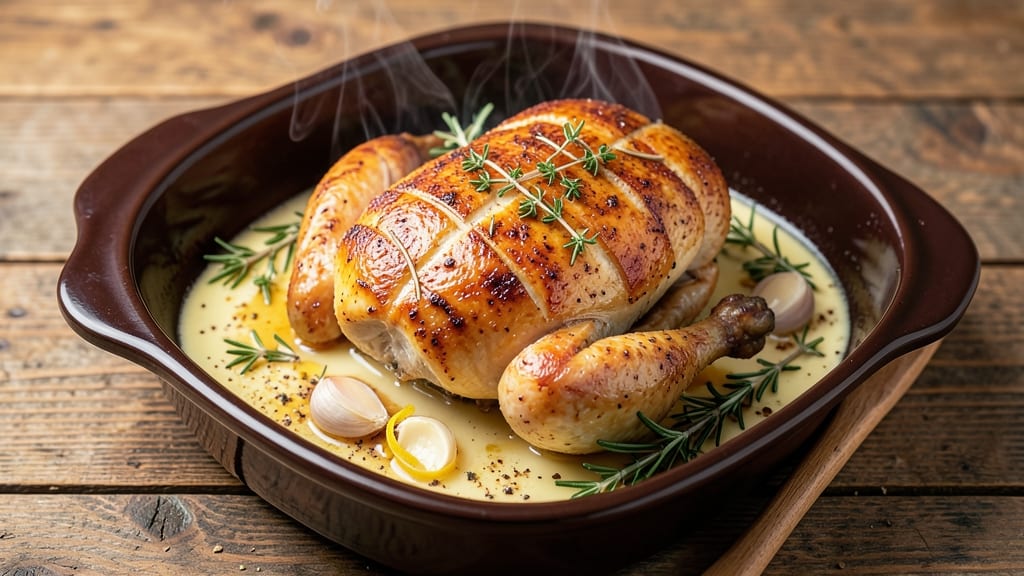
Alton Brown's whole roast chicken recipe delivers juicy, perfectly golden skin through precise science—not guesswork. After years of experimenting with temperature control and aromatics, this method transforms a simple bird into a showstopping centerpiece that rivals any restaurant.
The secret lies in strategic brining, exact oven temperatures, and basting techniques that ensure crispy skin without drying out the meat.
What sets this recipe apart is Alton's signature approach to aromatics—garlic, thyme, and rosemary tied into the cavity create layers of flavor that infuse the meat as it roasts. The high-heat start sears the skin immediately, locking in moisture while building that signature crisp.
I've tested this method countless times, and the results are consistently foolproof: tender, flavorful meat with skin that shatters like glass.
By the time your chicken emerges from the oven, it'll be golden brown and irresistible, with juices running clear when pierced. The herb butter basted throughout adds richness, while the crispy skin delivers that satisfying crunch.
This isn't just another roast chicken—it's a technique that transforms an everyday meal into something extraordinary.
Pair it with roasted potatoes and seasonal vegetables for a complete Sunday dinner. The method scales perfectly for gatherings, and leftovers reheat beautifully. Let's get started with this science-backed approach to roast chicken perfection.
Ingredients for alton brown whole roast chicken
Six ingredients transform a simple bird into Alton Brown's signature golden-crisp roast chicken.
| Ingredient | Amount | Notes |
|---|---|---|
| Whole Chicken 🍗 | 4 lb | Fresh, preferably organic, 3-4 lb bird |
| Kosher Salt 🧂 | ½ cup | Diamond Crystal preferred, for brining |
| Fresh Garlic Cloves 🧄 | 6 cloves | Peeled, for cavity aromatics |
| Fresh Thyme Sprigs 🌿 | 4 whole | Stems tied for cavity infusion |
| Fresh Rosemary Sprigs 🌿 | 4 whole | Stems tied for cavity infusion |
| Unsalted Butter 🧈 | ½ cup | Cold, cubed for basting |
| Extra-Virgin Olive Oil 🫒 | 2 tbsp | High-quality, for skin searing |
| Fresh Lemon Juice 🍋 | ¼ cup | Brightens flavor profile |
| Ground Black Pepper 🌶️ | 1 tsp | Freshly cracked for seasoning |
| Fresh Parsley 🌿 | ¼ cup | Chopped, for garnish |
| Water 💧 | 2 cups | For brine solution |
The chicken selection is critical—opt for a 3-4 lb bird with good marbling for optimal moisture retention. Whole Foods or local butchers often carry high-quality organic options that yield superior results. Freshness matters: the skin should be taut and vibrant, never slimy or discolored. For cavity aromatics, garlic, thyme, and rosemary create flavor layers that infuse during roasting. I recommend Trader Joe's for their affordable organic herb bundles, or grow your own if you're ambitious. The unsalted butter should be cold and cubed—this ensures proper basting without melting prematurely during the high-heat sear.
No Diamond Crystal salt? Morton kosher salt works equally well, though you may need to adjust slightly for texture. Short on fresh herbs? Dried thyme and rosemary at half the amount suffice, though fresh delivers superior aroma. The olive oil must be extra-virgin—lower quality oils lack the fruity notes needed for crisp skin development. For the brine, use filtered water if possible to avoid off-flavors. The lemon juice can be substituted with white wine vinegar for a tangier profile, though fresh lemon provides brightness. Prefer a different citrus? Orange juice works beautifully—just reduce to 0.2 cup to maintain balance.
Prep the chicken cavity immediately before roasting to preserve moisture. Store fresh herbs in damp paper towels in sealed containers for up to 5 days. The butter cubes freeze well for up to 6 months—portion into small containers for convenience. Leftovers reheat best at 350°F for 20 minutes, covered loosely to maintain crispness. For gatherings, this recipe scales perfectly—simply increase chicken size proportionally while maintaining the same ratio of aromatics to butter. The skin stays crisp for 2-3 days if stored properly in an airtight container.
Why You'll Love This Recipe
- No-Chop Necessary: I swear by this method—just tuck those garlic cloves and herb sprigs under the skin. No mincing, no fuss, and the flavor still melts into every bite like it was hand-brushed.
- Crispy Without Brute Force: That golden skin? Pure magic from the kosher salt and dry roast. It’s not about slathering oil everywhere—just let the chicken’s natural fats work their magic while the herbs infuse like a fragrant hug.
- Weeknight or Sunday Feast: Same recipe, different vibe. Toss it in the oven for a quick family dinner or let it roast low-and-slow for a showstopper that still feels effortless. (Yes, even on a Tuesday night.)
- Leftovers That Don’t Suck: Shred the rest for sandwiches or toss chunks into salads—this chicken stays juicy and flavorful for days. Honestly, I make it twice a month just for the leftovers.
Step-by-step instructions for Alton brown's whole roast chicken
Science-backed technique guarantees juicy meat and crisp golden skin every time.
Prepare the Brine Solution
Combine the 2 cups water and 0.5 cup kosher salt in a large bowl until fully dissolved. This creates a brine solution that seasoning penetrates the chicken deeply and evenly. For best results, use Diamond Crystal kosher salt—it dissolves more completely than other brands.
Place the 4 lb whole chicken in a large resealable plastic bag and pour the brine solution over it. Make sure the chicken is fully submerged, turning it occasionally to ensure even coating. Seal the bag and refrigerate for at least 12 hours (up to 24 hours). This step ensures maximum moisture retention and flavor penetration throughout the meat.
Season and Prepare the Chicken
Remove the chicken from the brine and pat it completely dry with paper towels—this is critical for crispy skin. I can't stress this enough: any moisture left on the skin will steam instead of crisp. Place the chicken breast-side up on a wire rack set in a rimmed baking sheet.
Stuff the cavity with the 6 peeled garlic cloves, 4 thyme sprigs, and 4 rosemary sprigs, tying them together with kitchen twine if needed. This creates aromatic infusion from within. Rub the outside of the chicken with the 2 tbsp extra-virgin olive oil and 1 tsp ground black pepper, pressing the pepper into the skin for even distribution.
Create the Basting Mixture
In a small bowl, combine the 0.5 cup unsalted butter (cold) and 0.25 cup fresh lemon juice. This mixture will baste the chicken during roasting, adding moisture and bright acidity. Keep this mixture refrigerated until ready to use—it should be cold when you start roasting.
Preheat your oven to 425°F with a rack positioned in the lower third. The high heat at the start creates that coveted crispy skin while the lower rack ensures even cooking. Place the baking sheet with the chicken on the middle rack once the oven is fully preheated.
Roast with Precision
Roast the chicken for 1 hour, then baste it with the cold butter-lemon mixture, letting it drip over the skin. This basting should happen every 20 minutes—the cold butter helps maintain crisp skin while adding flavor. After the second basting at 1 hour 20 minutes, reduce the oven temperature to 375°F.
Continue roasting until the internal temperature reaches 165°F in the thickest part of the thigh (about 1 hour 45 minutes total). The skin should be deep golden brown with crisp texture when pressed gently. If the skin browns too quickly, tent loosely with foil to prevent burning while maintaining crispness.
Rest and Garnish
Transfer the chicken to a cutting board and tent loosely with foil. Let it rest for 15-20 minutes before carving—this allows juices to redistribute throughout the meat, preventing dryness. During this time, prepare the 0.25 cup chopped fresh parsley for garnish.
Carve the chicken against the grain for maximum tenderness, and garnish each serving with the parsley. The result should be juicy, flavorful meat with perfectly crisp skin that shatters when cut. This method delivers restaurant-quality results with scientific precision.
Pro Tips For Making Alton Brown Whole Roast Chicken
- USE A THERMOMETER: I learned this the hard way—chickens don’t always brown at the same rate, and by the time the skin’s golden, the breast might be dry. Stick that probe into the thickest part of the thigh (no bone) and pull it at 165°F—no guessing, no overcooking.
- SALT THE GARLIC: That raw garlic smell? It’s not going away unless you salt it first. Toss the whole cloves in 1 teaspoon kosher salt for 10 minutes before roasting—it mellows the bite and lets the flavor sink in deeper.
- DON’T CROWD THE PAN: I used to jam the chicken and herbs into a tight space, thinking more aromatics = better flavor. Wrong. Give the skin room to crisp—space the thyme and rosemary sprigs around the bird, not stuffed inside, and let that heat work its magic.
- SKIP THE PEELING: Fresh herbs add texture and aroma, but whole sprigs can burn. Snip the rosemary and thyme into ½-inch pieces—short enough to infuse the chicken but long enough to avoid turning to ash. (Yes, even if you’re impatient like me.)
Creative variations of alton brown whole roast chicken
Southern Fried Twist
For a Georgia-inspired variation, swap the lemon butter basting for a spiced buttermilk glaze. Mix ½ cup buttermilk with 1 tbsp hot sauce (like Crystal), 1 tsp smoked paprika, and ½ tsp cayenne.
Brush this on every 20 minutes during roasting. The result? Crispy skin with a tangy, slightly spicy kick—just like my grandma used to make. Serve with collard greens for a true Southern Sunday dinner. 🌶️
Herb-Infused Gravy
Save the roasting pan drippings and turn them into a rich herb gravy that elevates this chicken to restaurant-level. After resting the chicken, place the pan on the stovetop over medium heat. Add ½ cup chicken broth and scrape up all the browned bits.
Stir in 1 tbsp flour to thicken, then whisk in 2 tbsp cold butter. Finish with 1 tsp fresh thyme. This gravy pairs perfectly with the crisp skin and juicy meat. 💛
Spatchcocked Shortcut
For a faster cook (about 45 minutes), try spatchcocking the chicken. Remove the backbone and flatten the bird by pressing down on the breastbone—this ensures even cooking and crispier skin. Use the same basting method but reduce the total roasting time by 20-30 minutes.
The result is a perfectly cooked, golden chicken that’s ready in half the time. Great for weeknight dinners when you’re short on time. ⏰
Holiday Stuffing
Transform this into a festive centerpiece by stuffing the cavity with a savory sausage and herb stuffing. Mix ½ lb ground pork sausage, ½ cup breadcrumbs, 2 tbsp chopped onions, 1 tbsp chopped celery, and 1 tsp poultry seasoning.
Pack this into the cavity before roasting. The stuffing cooks perfectly inside, adding moisture and depth to every bite. Perfect for Thanksgiving or Christmas dinners. 🎄
Global Flavors
Add a Mediterranean twist by stuffing the cavity with lemon, garlic, and oregano. Use 1 lemon half, 4 garlic cloves, and 2 oregano sprigs instead of thyme and rosemary. For the basting mixture, replace lemon juice with ¼ cup white wine.
Finish with a sprinkle of crushed fennel seeds for an Italian-inspired flavor profile. Pairs beautifully with roasted potatoes and a crisp white wine. 🍷
Leftovers Reinvented
Turn leftover roast chicken into crispy chicken tacos. Shred the meat and mix with 1 tbsp taco seasoning, 2 tbsp sour cream, and 1 tbsp chopped cilantro. Serve on warm tortillas with avocado slices and pickled red onions.
The crispy skin adds a satisfying crunch to this unexpected twist. A great way to repurpose leftovers without sacrificing flavor. 🌮
Nutrition facts
Frequently asked questions
Why does Alton Brown's method use a high-heat start?
The 425°F initial temperature creates an immediate sear that locks in moisture while developing that signature crisp skin. This high-heat shock also helps render fat quickly, preventing greasy skin. After 1 hour, reducing to 375°F ensures even cooking without over-browning. The temperature shift is key to balancing crispness with juicy meat.
Can I skip the brine if I'm short on time?
While the 12-24 hour brine maximizes moisture and flavor, you can use a quick brine instead: mix 1 cup water with 2 tbsp kosher salt and submerge the chicken for 30 minutes before drying and roasting. The skin may be slightly less crisp, but the meat will still be juicy. For best results, never skip drying the skin thoroughly.
How do I know when the chicken is fully cooked?
Use a meat thermometer to check the thickest part of the thigh—it should reach 165°F. The skin should be deep golden brown and crisp when pressed gently. If the skin browns too quickly, tent loosely with foil to prevent burning while maintaining crispness. The juices should run clear when pierced.
What's the best way to reheat leftovers?
Reheat leftovers at 350°F for 20 minutes, covered loosely with foil to maintain crispness. For extra crispy skin, broil for 2-3 minutes at the end. Avoid microwaving—it turns the skin soggy. Store in an airtight container for up to 3 days or freeze for 3 months.
Can I use a different herb blend in the cavity?
Swap thyme and rosemary for oregano and sage for a Mediterranean twist, or use parsley and lemon for brightness. Just maintain the same quantity (4 sprigs total) to balance aromatics. The cavity herbs infuse flavor during roasting, so freshness matters most. Dried herbs work at half the amount.