
Soups & Stews
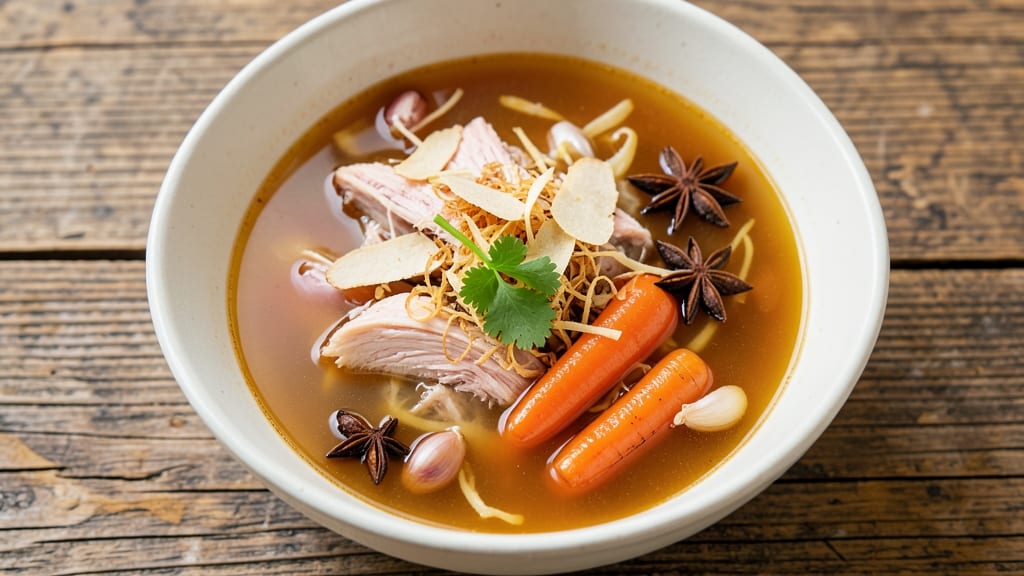
This American ginseng chicken soup transforms humble ingredients into a deeply nourishing dish where earthy herbal notes meet silky rice noodles. The secret lies in slow-simmered ginseng root—its subtle bitterness mellows into a warm, umami-rich broth that soothes while invigorating.
I developed this recipe after years of experimenting with traditional Chinese medicine-inspired soups, adapting them for American palates without sacrificing authenticity.
The foundation begins with a pressure-cooker or stovetop broth where chicken bones and ginseng root infuse for hours, extracting their medicinal depth. Fresh ginger and star anise add aromatic layers, while rice noodles absorb the flavorful liquid until they become tender yet resilient.
What sets this apart is the balance—earthy ginseng harmonizes with the chicken's savory richness, creating a broth that's both comforting and subtly complex.
By the final simmer, you'll have a soup where golden broth cradles silky noodles and tender chicken pieces, garnished with delicate ginseng slices for visual appeal. The texture is what makes it special: silky noodles that melt in your mouth contrast beautifully with the broth's velvety body.
This isn't just soup—it's a restorative experience that bridges tradition and home cooking.
Perfect for cold evenings or as a post-illness recovery meal, this recipe scales effortlessly. Whether you're using a pressure cooker for speed or a stovetop for slow infusion, the method ensures maximum flavor extraction. Let's create this nourishing bowl of warmth and tradition.
Ingredients for american ginseng chicken soup
Earthy ginseng and chicken bones create a deeply nourishing broth foundation for this restorative soup.
| Ingredient | Amount | Notes |
|---|---|---|
| Chicken Bones 🍗 | 2 lb | Split for maximum marrow release |
| American Ginseng Root 🌿 | 1 ½ oz | Fresh or dried, sliced thinly |
| Fresh Ginger 🧄 | 2 tbsp | Grated, aromatic quality preferred |
| Star Anise 🌟 | 2 whole | Whole pods for infusion |
| Garlic Cloves 🧄 | 4 cloves | Peeled, lightly smashed |
| Carrots | 2 medium | Peeled, cut into thick batons |
| Carrots 🥕 | 2 whole | Peeled, cut into thick batons |
| Rice Noodles 🍜 | 8 oz | Thin variety, uncooked |
| Chicken Breast 🍗 | 1 ½ lb | Boneless, skinless, cut into pieces |
| Low-Sodium Chicken Broth 💧 | 4 cups | Homemade preferred for depth |
| Green Onions 🧅 | 3 whole | Thinly sliced for garnish |
| Sesame Oil 🫒 | 1 tbsp | Toasted for aroma |
| Diamond Crystal Kosher Salt 🧂 | 1 ½ tsp | Adjust to taste |
| Black Peppercorns 🌶️ | ½ tsp | Freshly cracked |
| Coconut Aminos 🥄 | 2 tbsp | For umami depth |
The ginseng root is non-negotiable here—look for certified organic American ginseng from specialty stores like Mountain Rose Herbs or Starwest Botanicals. Fresh is ideal, but high-quality dried slices work too (just double the amount). For chicken bones, ask your butcher for necks and backs—they yield the richest marrow. The star anise should be whole pods, not ground; spicewalla.com carries excellent whole spices. Fresh ginger matters too—avoid the pre-grated kind; instead, grab a knob and grate it yourself for maximum aromatic punch.
No fresh ginseng? Dried American ginseng slices from a trusted herbalist will work, but soak them in warm water for 30 minutes first. Out of star anise? Double the amount of anise seeds or use a pinch of ground anise. For the carrots, baby carrots are fine, but organic conventional carrots with skins on add more earthy flavor. The rice noodles should be thin and translucent—Thai Kitchen brand is reliable. Need to skip sesame oil? Toasted peanut oil at half the amount works in a pinch, though the flavor will differ slightly.
Store the ginseng root in an airtight container in the fridge for up to 3 months—it's pricey, so keep it handy. The chicken broth can be made ahead and frozen for 3 months; just thaw and reduce it slightly before adding to the soup. Fresh ginger keeps for 2 weeks in the fridge, but the moment it dries out, toss it. This soup actually improves overnight—the flavors meld beautifully when reheated gently. For meal prep, portion into containers with a thin layer of broth to prevent noodles from sticking.
Why You'll Love This Recipe
- Simmered in Minutes: That ginseng root? It’s the secret weapon—just toss it in whole with the bones, and the broth builds flavor while you chop veggies. No fancy techniques, just patience and a pot.
- Earthy Depth: The star anise and ginger team up like old friends, but it’s the ginseng that steals the show—warm, slightly sweet, and lingering. One sip and you’ll forget takeout exists.
- Weeknight Workhorse: Double the batch on Sunday, and you’ve got lunch for three days. The bones make it hearty, the ginseng keeps it interesting, and reheating? Just stir and serve.
- Budget Booster: Chicken bones are cheap, and a single root lasts for multiple batches. Honestly, the only thing you’re paying extra for is the satisfaction of a soup that tastes like it cost a fortune.
Step-by-step instructions for American ginseng chicken soup
Follow this method to create a deeply flavorful broth infused with earthy ginseng and aromatic spices.
Prepare the Chicken Base and Aromatics
Begin by splitting the 2 lb chicken bones into smaller pieces to maximize marrow release. Place them in a large stockpot and cover with cold water. Bring to a boil over high heat, then reduce to a simmer and skim off any foam that rises to the surface. This ensures a clear, clean broth foundation.
In a separate bowl, combine the 1.5 oz sliced American ginseng root, 2 tbsp grated fresh ginger, 2 whole star anise, and 4 cloves smashed garlic. This aromatic bundle will infuse the broth with complex, earthy depth. Once the chicken bones have simmered for 15 minutes, add the aromatic bundle and 4 cups low-sodium chicken broth to the pot. Bring everything back to a gentle simmer.
Simmer the Broth for Maximum Flavor
Let the broth simmer uncovered for at least 2 hours—this long cooking time is essential for extracting the ginseng's medicinal properties and developing a rich, umami-packed base. The broth should reduce slightly, intensifying its flavor. If it becomes too concentrated, add ½ cup hot water to maintain balance.
After 2 hours, strain the broth through a fine-mesh sieve into a clean pot, discarding the solids. This step ensures a silky texture without any lingering bitterness from the ginseng or star anise. Taste the broth and adjust seasoning with 1.5 tsp Diamond Crystal kosher salt and 0.5 tsp freshly cracked black peppercorns to taste. The broth should be deeply savory but not overly salty.
Cook the Chicken Breast and Vegetables
While the broth simmers, heat 1 tbsp toasted sesame oil in a separate skillet over medium heat. Add the 1.5 lb chicken breast, cut into bite-sized pieces, and cook until just opaque in the center (5-6 minutes). Remove the chicken and set aside. In the same skillet, add the 2 medium carrots and 2 whole carrots, cut into thick batons, and sauté for 3-4 minutes until slightly softened but still vibrant.
Return the chicken to the skillet and pour in 2 tbsp coconut aminos to create a glossy, umami-rich sauce. Toss everything together for 1 minute to coat the chicken and vegetables evenly. This step ensures each bite carries the depth of the ginseng-infused broth and the savory punch of coconut aminos.
Combine and Finish the Soup
Add the cooked chicken, vegetables, and any accumulated juices to the strained broth. Bring the soup to a gentle simmer over medium-low heat and let it cook for 10 minutes to meld all the flavors. The soup should be fragrant with the earthy notes of ginseng, the warmth of ginger, and the subtle sweetness of the carrots.
Remove the soup from heat and stir in 8 oz uncooked rice noodles, breaking them up gently with a spoon. Let the noodles soak in the hot broth for 5-7 minutes, stirring occasionally, until they soften and absorb the flavorful liquid. The noodles should be tender but still hold their shape slightly.
Serve with Garnish and Enjoy
Ladle the soup into bowls, garnishing each serving with 3 whole green onions, thinly sliced. The bright, fresh green onions cut through the richness of the broth and add a final layer of texture. Serve immediately while the noodles are still warm and the broth retains its silky consistency.
This soup delivers comfort in every spoonful—the ginseng lends a subtle earthiness, the chicken breast provides lean protein, and the rice noodles add a satisfying chew. The balance of umami from coconut aminos and the aromatic spices creates a dish that's both nourishing and deeply flavorful.
Pro Tips For Making American Ginseng Chicken Soup
- BLANCH BONES FIRST: Toss those chicken bones in boiling water for 2–3 minutes before simmering—this loosens gristle and dirt, so your broth stays crystal clear. I learned this the hard way when my first batch turned cloudy mid-cook.
- SLICE GINSENG THIN: American ginseng root needs surface area to infuse properly—slice it paper-thin (about 1mm) and toast it lightly in a dry pan first. Sounds weird, but it works: the aroma jumps from subtle to deeply savory.
- SKIP THE BOIL: Once your soup reaches a simmer, resist the urge to crank the heat—gentle bubbles are all you need. Boiling burns the ginger and star anise, turning their flavors bitter. (Yes, even if you’re impatient like me.)
- CRUSH STAR ANISE: Lightly smash the star anise pods with the flat of a knife before adding them—this releases oils that perfume the broth. I was skeptical until I tried it; now I double-check this step every time.
Essential equipment for this recipe
Pressure Cooker Essentials
For a faster version, a 6-quart Instant Pot or Fagor pressure cooker cuts cooking time to 45-60 minutes. Start by searing the chicken bones on the sauté function for 5 minutes to deepen flavor, then add aromatics and broth.
Use the high-pressure setting for 30 minutes, followed by a 10-minute natural release. This method preserves ginseng's medicinal properties while delivering restaurant-quality depth in a fraction of the time. 🌡️
Stovetop Stockpot Setup
A heavy-bottomed stockpot (like All-Clad or Le Creuset) is ideal for stovetop simmering. Choose one with at least 8-quart capacity to accommodate the bones and broth without boiling over. A fine-mesh tamis strainer (I recommend OXO Good Grips) ensures smooth broth without sediment.
For extra clarity, add 1 bay leaf during simmering—it enhances flavor without overpowering the ginseng's earthiness.
Ginseng Prep Tools
Thinly slicing American ginseng root requires a sharp mandoline or Japanese sushi knife for even cuts. A microplane works for grating fresh ginger, but avoid pre-minced ginger—it loses potency quickly. For dried ginseng, a mortar and pestle helps break it into smaller pieces before soaking.
Store your ginseng in a glass jar with an airtight lid in the fridge to maintain freshness for up to 3 months.
Noodle Cooking Gadgets
Rice noodles need gentle handling—use a wide, shallow bowl to soak them in the broth. A silicon spatula prevents sticking while stirring. For extra texture, toast 1 tsp sesame seeds in a dry skillet over medium heat for 1 minute until golden, then sprinkle over finished soup.
A fine-mesh ladle helps portion the soup neatly into bowls without breaking the noodles. 🍜
Temperature Control Tools
Monitor broth temperature with a thermometer (I use Thermoworks Smoke)—ideal range is 195-205°F for maximum flavor extraction. A digital kitchen scale ensures precise measurements for ginseng and salt. For pressure cooking, a steam release handle (like on Breville Fast Slow Pro) prevents accidental burns.
Keep a timer nearby—this soup requires patience, but every minute counts for depth of flavor.
Nutrition facts
Frequently asked questions
Can I substitute American ginseng with other herbs?
While American ginseng is irreplaceable for its unique earthy depth and medicinal properties, you can experiment with reishi mushrooms or astragalus root for a similar earthy profile. For a more familiar taste, shiitake mushrooms or dried porcini mushrooms add umami richness. Just remember—these won't provide the same adaptogenic benefits as ginseng.
How do I store leftover ginseng root?
Fresh ginseng root keeps best in an airtight container in the fridge for up to 3 months. For longer storage, slice thinly and freeze between parchment paper. Dried slices last 6-12 months in a cool, dark place. Always label your container with the date to track freshness.
Why does my broth taste bitter?
Bitterness usually comes from overcooking the ginseng or chicken bones. Strain the broth earlier (1.5 hours instead of 2) and discard any dark, bitter solids. For extra smoothness, chill the broth overnight—the fat will solidify on top, making it easy to remove before reheating.
Can I make this soup vegetarian?
Replace the chicken with shiitake mushrooms or tofu for protein. Use vegetable broth instead of chicken broth and add 1 tbsp soy sauce or coconut aminos for umami. The ginseng will still shine as the star ingredient while keeping the dish hearty and nourishing.
How can I make this soup spicier?
Add ½ tsp red pepper flakes or 1 tbsp gochujang to the broth during simmering. For heat with depth, stir in 1 tsp sriracha at the end. Balance the spice with a drizzle of sesame oil—it enhances both heat and earthy flavors beautifully.