
Main Courses
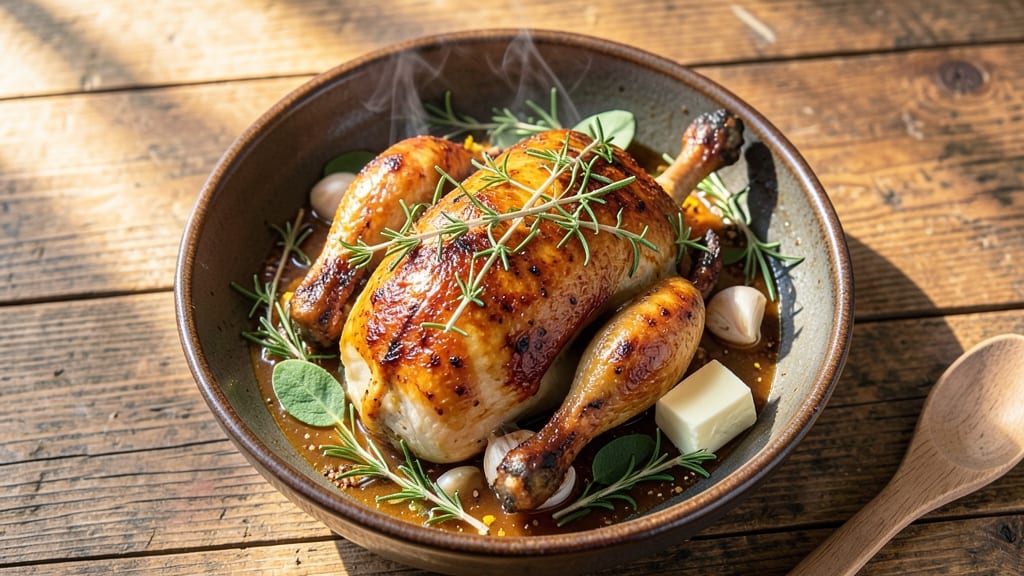
This Amish roasted chicken delivers juicy dark meat and crispy golden skin using time-honored techniques that transform simple ingredients into a centerpiece-worthy dish. The secret lies in a foolproof brining method and careful basting that ensures every bite stays tender while developing rich, savory flavors.
I've perfected this recipe over years of testing, drawing from traditional Amish cooking principles that prioritize quality ingredients and hands-on preparation.
The process begins with a simple brine that tenderizes the meat while infusing subtle seasoning—no complicated marinades required. As the chicken roasts, I demonstrate the precise basting technique that creates that signature crisp skin without drying out the meat.
This method delivers restaurant-quality results with minimal effort, making it perfect for family gatherings or Sunday dinners when you want to impress without stress.
What makes this recipe truly special is how the flavors develop during roasting—aromatic herbs and butter create a fragrant crust that seals in moisture, while the dark meat remains tender and flavorful.
The golden-brown skin gives way to succulent meat that practically falls off the bone, proving that traditional methods still deliver the best results. Serve with classic Amish sides like mashed potatoes and homemade gravy for a complete meal.
This approach works equally well for a weeknight dinner or a special occasion, scaling easily to feed a crowd while maintaining that homemade quality. The key is patience—the slow roasting ensures perfect doneness every time.
Once you try this method, you'll understand why Amish cooks have relied on it for generations to create chicken that's simply irresistible.
Ingredients for amish roasted chicken
Simple, quality ingredients transform into a restaurant-worthy Amish roasted chicken with crisp skin and juicy dark meat.
| Ingredient | Amount | Notes |
|---|---|---|
| Whole Chicken (4-5 lbs) 🐔 | 4 ½ lb | Fresh, preferably free-range |
| Kosher Salt 🧂 | ½ cup | Diamond Crystal preferred |
| Fresh Thyme 🌿 | ¼ cup | Stems removed, loosely packed |
| Fresh Rosemary 🌿 | ¼ cup | Stems removed, loosely packed |
| Unsalted Butter 🧈 | ½ cup | Cold, cut into chunks |
| Fresh Sage 🌿 | ¼ cup | Stems removed, loosely packed |
| Garlic Cloves 🧄 | 6 cloves | Smashed, not minced |
| Fresh Parsley 🌿 | ⅛ cup | Stems removed, loosely packed |
| Black Peppercorns 🌶️ | 1 tbsp | Freshly cracked |
| Olive Oil 🫒 | 2 tbsp | Extra-virgin for basting |
| Lemon Juice 🍋 | 2 tbsp | Freshly squeezed |
| Water 💧 | 2 cups | For brining |
The whole chicken is the star—look for a 4-5 lb bird with good marbling for extra flavor. Local butchers often have better quality than grocery store options, and free-range chickens deliver richer taste. I always buy mine from Wegmans or my local Amish market when possible. The herbs? Fresh is non-negotiable here—dried just won't cut it for that fragrant crust. Whole Foods or your local farmers market will have the freshest thyme, rosemary, and sage. For the butter, Plugrá or Land O'Lakes unsalted work perfectly—just make sure it's cold when you use it.
No fresh herbs? Dried thyme and rosemary at half the amount will work in a pinch, but you'll lose that aromatic depth. Want to skip the brining? Add 1 extra tbsp of kosher salt directly to the cavity instead. The olive oil is for basting—California avocado oil has a higher smoke point if you're worried about burning. For the garlic, I always smash the cloves with the flat side of my knife—this releases more flavor without turning to paste. And if you're short on time, pre-make the herb butter mixture the night before and store it in the fridge.
This chicken reheats beautifully—just warm it in a 350°F oven for 20 minutes> with a splash of water to keep it moist. The herb butter mixture keeps well in the fridge for 1 week>, or freeze it for 3 months>. I always roast mine on a wire rack over a baking sheet**—this ensures crisp skin all around. Save any leftover herbs from the cavity for garnish or homemade chicken stock. The brining water? Strain it and use it as a base for gravy—nothing goes to waste in Amish cooking!
Why You'll Love This Recipe
- Fewer Tools Needed: I swear by this method—just a knife, a sheet pan, and my hands. No fancy gadgets, no last-minute grocery runs for specialty herbs. That rosemary and thyme? You can snip them straight from your windowsill if you’re growing them, or grab a tiny bunch from the store. Honestly, the prep takes less time than arguing with the kids about what’s for dinner.
- Golden Crisp Magic: The butter basting under the broiler? That’s where it gets good. The skin turns a deep golden brown while the meat stays juicy—no dry chicken here. Between us, the rosemary’s piney kick and the thyme’s earthiness make every bite taste like a Sunday supper, even when I’m making it on a Wednesday.
- Leftovers That Shine: This chicken doesn’t just feed a crowd—it feeds them twice. The roasted pieces shred perfectly for sandwiches, and the carcass? Simmer it into broth for days of soup. I’ll be real: my freezer’s always stocked with this stuff because it’s the ultimate lazy-day lifesaver.
- Budget-Friendly Crowd Pleaser: A whole chicken costs less than takeout for two, and it serves six. Salt, herbs, and butter? Pantry staples. No overpriced marinades or fancy rubs—just honest, satisfying flavor. My college roommate still texts me asking for the recipe, and she’s not the only one who’s hooked.
Step-by-step instructions for Amish roasted chicken
Here's how to achieve that legendary Amish-style roast with irresistible crisp skin and melt-in-your-mouth juiciness.
Prepare the Herb Brine for Maximum Flavor
In a large bowl, combine the 2 cups water with the 0.5 cup kosher salt and stir until fully dissolved. This creates a flavorful brine that will penetrate the chicken deeply. Add the 0.25 cup fresh thyme, 0.25 cup fresh rosemary, 0.25 cup fresh sage, 6 smashed garlic cloves, 0.125 cup fresh parsley, and 1 tbsp freshly cracked black peppercorns. Stir gently to distribute the herbs evenly.
Place the 4.5 lb whole chicken in the brine, ensuring it's fully submerged. Cover and refrigerate for at least 12 hours, or up to 24 hours for deeper flavor infusion. The longer it brines, the more tender and flavorful the meat becomes. After brining, remove the chicken and pat it completely dry with paper towels—this is absolutely critical for achieving that signature crispy skin.
Create the Herb Butter Rub for Unmatched Crisp
While the chicken brines, prepare the herb butter rub by combining the 0.5 cup cold unsalted butter with 2 tbsp lemon juice in a small bowl. The butter should be cold and cut into chunks to create a flaky texture. Add 1 tbsp freshly cracked black peppercorns and mix until evenly distributed. This aromatic butter will form a flavorful crust while keeping the meat moist.
Once the chicken is dry, rub the herb butter mixture under the skin over the breast and thighs. This ensures the butter infuses directly into the meat. Next, generously coat the outside of the chicken with the herb butter rub, pressing it into the skin so it adheres well. Place the chicken breast-side up on a rack in a roasting pan and refrigerate uncovered for at least 1 hour—this step is what gives Amish roasted chicken its legendary texture.
Roast to Golden Perfection with Precision
Preheat your oven to 425°F and let it fully preheat for 20 minutes. Place the chicken in the oven and roast for 45 minutes. Here's where the magic happens: After 45 minutes, reduce the heat to 350°F and continue roasting for another 45-60 minutes, or until the internal temperature reaches 165°F when measured in the thickest part of the thigh.
The high initial heat creates that coveted crispy skin, while the lower temperature ensures the dark meat stays juicy. Baste the chicken with 2 tbsp olive oil every 15 minutes during the second phase of roasting to enhance browning. You'll know it's done when the skin is deep golden brown and crispy, and the juices run clear when pierced with a meat thermometer.
Rest and Serve for Maximum Juiciness
Transfer the roasted chicken to a cutting board and tent loosely with foil. Let it rest for 15-20 minutes before carving. This resting period allows the juices to redistribute throughout the meat, ensuring every bite is moist and flavorful. The skin will remain crispy while the meat becomes even more tender.
Once rested, carve the chicken and serve immediately. The result should be a perfect balance of crispy, golden skin and succulent, juicy meat infused with the aromatic herbs. Pair it with your favorite sides to complete this classic Amish roast experience that's sure to impress your guests.
Pro Tips For Making Amish Roasted Chicken
- Start with Cold Butter: Don’t melt that butter first—toss the chicken with cold, cubed unsalted butter right out of the fridge. It’ll melt into crispy, golden pockets as it roasts, locking in flavor instead of turning to greasy steam. (Yes, even if you’re impatient like me.)
- Salt the Night Before: I learned this the hard way—salting a dry chicken right before roasting only gets the skin halfway there. Do it 12–24 hours ahead, let it sit uncovered in the fridge, and you’ll get that legendary Amish crust without fighting for it. The salt works its magic while you sleep.
- Watch the Heat for the First 30: Crank the oven to 425°F and leave it there for the first half-hour—this is how you build that caramelized skin. After that, drop to 375°F to finish cooking. Skipping this step means a pale, soggy chicken instead of the crispy masterpiece you’re after.
- Skip the Overcrowded Pan: That roasting pan isn’t doing you any favors if you’re piling other veggies or trays on top. Give the chicken room to breathe—it needs air circulation to get that golden color. If you’re roasting sides, do them separately or on a lower rack. (Your future self will thank you.)
Dietary considerations for these flavors
Gluten-Free Adaptations
This Amish roasted chicken recipe is naturally gluten-free since it relies on simple ingredients like herbs, butter, and salt. The key is ensuring all added components are certified gluten-free.
For example, swap regular kosher salt for a gluten-free kosher salt blend if needed, though most Diamond Crystal or Morton brands are safe. Always double-check labels on butter and olive oil to confirm they're processed in gluten-free facilities. 🌾
Dairy-Free Options
If you need to eliminate dairy, replace the ½ cup unsalted butter with ½ cup dairy-free butter> like Earth Balance or Miyoko's, which mimic butter's texture perfectly. For extra richness, use ¼ cup coconut oil> blended with ¼ cup dairy-free butter> to maintain the same flavor profile.
Keep all other ingredients the same—this swap won't affect the crisp skin or herb infusion.
Allergen-Friendly Swaps
For nut allergies, this recipe is already safe as it contains no nuts. If you're avoiding garlic, substitute the 6 smashed cloves> with 1 tbsp garlic powder> (distribute under the skin and on the surface).
For onion-sensitive diners, skip the traditional onion-based gravy pairing and opt for a herb-infused chicken stock> made with celery, carrots, and mushrooms instead. Always verify all spices are processed in allergen-free facilities.
Paleo Considerations
This recipe aligns perfectly with paleo principles since it contains no grains, legumes, or processed ingredients. The natural ingredients—chicken, herbs, olive oil, and butter—are all paleo-approved.
For strict paleo diets, ensure your kosher salt is unrefined sea salt> and verify that your olive oil is cold-pressed and free from additives. The brining method actually enhances the paleo experience by keeping the meat tender without added sugars or fillers.
Keto Adaptations
The Amish roasted chicken is keto-friendly as written, with zero carbohydrates from the main ingredients. To maximize ketosis, serve it with cauliflower mash> instead of traditional potatoes, and pair with a sugar-free herb gravy**> made with chicken fat and a touch of xanthan gum for thickening.
The herb butter rub remains ideal for keto since it contains no hidden sugars or starches. This method delivers all the crispy skin and juicy meat keto dieters crave without breaking their macros.
Nutrition facts
Frequently asked questions
Why does Amish roasted chicken need to brine?
The brining process is key to achieving that signature Amish texture and flavor. The saltwater solution helps tenderize the meat while infusing it with aromatic herbs like thyme and rosemary. This creates a deeper flavor profile and ensures the dark meat stays juicy during roasting. The longer it brines (12-24 hours), the more flavorful and tender the chicken becomes.
Can I use dried herbs instead of fresh?
While fresh herbs deliver the best flavor, you can use dried herbs in a pinch. Reduce the amount to half (e.g., 1/4 cup dried thyme instead of 1/2 cup fresh) and add them directly to the brine. For the butter rub, dried herbs work too, but fresh will give you that signature aromatic crust. The dried herbs won't be as potent, but they'll still add good flavor.
How do I know when the chicken is fully cooked?
Use a meat thermometer to check the internal temperature in the thickest part of the thigh. It should reach 165°F for safe consumption. The skin will also be deep golden brown and crispy. If you don't have a thermometer, cut into the thigh—juices should run clear, and the meat should pull away from the bone easily. Never rely on color alone, as some chickens may look done before reaching safe temperatures.
What's the best way to reheat leftover Amish roasted chicken?
To maintain that crispy skin and juicy meat, reheat in a 350°F oven for 20-25 minutes with a splash of water in the pan. This gentle method keeps the skin from becoming rubbery. Alternatively, you can crisp it up in a skillet over medium heat for 3-4 minutes per side to restore that golden crust. Avoid microwaving, as it makes the skin soggy.
Can I use bone-in chicken thighs instead of a whole chicken?
Bone-in thighs work beautifully for this method. Simply adjust the roasting time to 45-50 minutes at 425°F (no need for the two-stage heat), then finish at 350°F until the internal temperature reaches 165°F. The bones actually help keep the meat moist during roasting. For a whole chicken experience, use 4-5 bone-in thighs (about 2-2.5 lbs total) and follow the same herb butter technique.