
Side Dishes
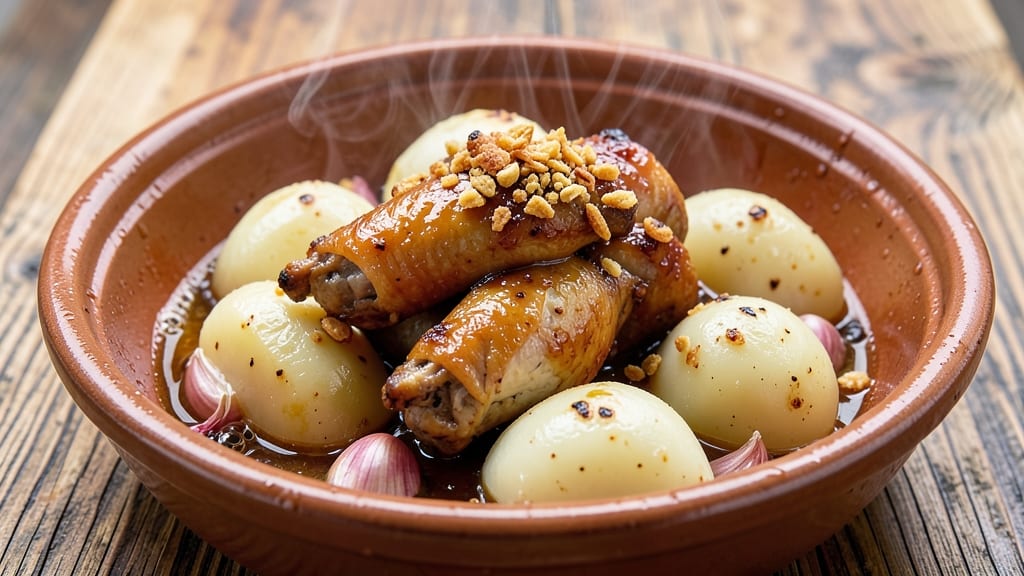
Authentic Filipino chicken adobo with potatoes delivers the perfect balance of tangy vinegar, savory soy, and subtle sweetness that defines this beloved Filipino dish. 🌟 The secret lies in slow-braising the chicken until fork-tender while potatoes soak up the rich, caramelized sauce—a technique passed down through generations. This isn't just a recipe; it's a taste of home that transforms simple ingredients into something unforgettable.
The magic begins with marinating the chicken in a mix of soy sauce and vinegar, allowing the flavors to penetrate deeply before the braising process. Potatoes are boiled separately to maintain their texture, then added at the end to absorb the sauce's complex flavors.
The result? A dish where every component—tender chicken, creamy potatoes, and glossy sauce—works in perfect harmony.
What sets this recipe apart is its authenticity—no shortcuts, no substitutions. The soy-vinegar braise develops layers of flavor as it simmers, creating a sauce that's both tangy and sweet, with just the right amount of saltiness.
The aroma alone will have everyone gathering around the table, and the first bite delivers on that promise of home.
Serve this over steamed white rice to soak up every last drop of that luscious sauce. The combination of textures—tender chicken, fluffy potatoes, and sticky rice—makes this a complete meal that's as satisfying as it is delicious. Let's get cooking!
Ingredients for authentic filipino chicken adobo recipe with potatoes
Eleven simple ingredients create this iconic Filipino dish where tangy, sweet, and savory flavors unite.
| Ingredient | Amount | Notes |
|---|---|---|
| Chicken Thighs 🍗 | 1 ½ lb | Bone-in, skin-on preferred |
| White Potatoes 🥔 | 2 lbs | Russet or Yukon gold, peeled |
| Cane Vinegar 🍶 | 1 cup | White or apple cider vinegar |
| Soy Sauce 🥄 | ½ cup | Filipino or Japanese preferred |
| Brown Sugar 🍚 | ¼ cup | Packed, light or dark |
| Garlic Cloves 🧄 | 8 cloves | Minced, fresh preferred |
| Bay Leaves 🍃 | 2 whole | Dried, standard size |
| Black Peppercorns 🌶️ | 1 tsp | Crushed, whole preferred |
| Olive Oil 🫒 | 2 tbsp | For searing chicken |
| Salt 🧂 | 1 ½ tsp | Kosher or sea salt |
| Water 💧 | 1 ½ cups | For boiling potatoes |
| Green Onions 🧅 | 2 whole | Sliced, for garnish |
The chicken thighs are non-negotiable here—bone-in, skin-on pieces stay juicier than breasts. Look for fresh, plump thighs at your local Asian market or butcher shop, where they often cut them to your preferred size. The potatoes should be starchy (Russet or Yukon gold) for that creamy texture when they absorb the sauce. For vinegar, Filipino cane vinegar is ideal, but apple cider or white vinegar work in a pinch. The soy sauce matters too—Filipino brands like Silver Swan or Japanese soy add depth that regular soy can't match. If you can't find them, use low-sodium soy sauce and adjust salt later.
No cane vinegar? White vinegar or apple cider vinegar will work, though the flavor profile shifts slightly. Short on brown sugar? White sugar or coconut sugar are fine—just know the color will be lighter. The garlic can be frozen if fresh isn't available, but thaw and drain it first. For bay leaves, dried is standard, but fresh will infuse more aroma if you're feeling fancy. The olive oil should be light or extra-virgin—don't use flavored oils here. And if you're out of green onions, regular onions or chives will garnish just as well, though the color won't be as vibrant.
This dish tastes even better the next day as the flavors meld. Store leftovers in an airtight container in the fridge for up to 4 days, or freeze for 3 months. The sauce thickens as it cools, so a splash of water or vinegar can loosen it when reheating. For serving, keep the potatoes creamy but not mushy—they should hold their shape slightly. And always serve over steamed white rice to soak up every last bit of that glorious sauce. The rice acts like a sponge, making each bite a perfect balance of textures.
Why You'll Love This Recipe
- One-Pan Magic: I swear by this recipe—just toss the chicken, potatoes, and aromatics in one pot, then walk away. The potatoes soak up that tangy-sweet sauce while the thighs get fork-tender, and honestly? No extra dishes. That’s my kind of cooking.
- Tangy-Sweet Obsession: The balance here is chef’s kiss—cane vinegar cuts through the richness, soy sauce adds umami depth, and brown sugar caramelizes into the chicken until it’s sticky, savory, and just a little addictive. My family fights over the last bite, and I don’t even pretend to be neutral.
- Budget Meal, Big Flavor: Chicken thighs and potatoes are cheap, but this recipe feels like a fancy dinner. Between us, I’ve served it to guests who thought it was restaurant-quality, and they had no idea it cost me less than $10. That’s the kind of dish that makes you feel like a hero without breaking the bank.
Step-by-step instructions for authentic Filipino chicken adobo with potatoes
Master this classic Filipino dish with a perfect balance of tangy, sweet, and savory flavors.
🍳 Step 1: Sear the Chicken Thighs for Depth of Flavor
Heat a large Dutch oven over medium-high heat and add the 2 tablespoons olive oil. Once shimmering, add the 1.5 lb chicken thighs skin-side down. Let them sear undisturbed for 5-6 minutes until the skin turns deep golden brown and crispy.
Flip the thighs and cook for another 3-4 minutes until they develop color on all sides. This initial searing creates a rich, caramelized foundation for the adobo sauce. Remove the chicken and set aside—it will finish cooking in the braising liquid.
👨🍳 Step 2: Build the Adobo Base with Aromatics
In the same Dutch oven, add the 8 cloves minced garlic and cook for 30 seconds until fragrant. Be careful not to let it burn—garlic should smell sweet and nutty, not bitter. Add the 2 whole bay leaves and 1 teaspoon crushed black peppercorns, stirring for 10 seconds to toast the spices.
Pour in the 1 cup cane vinegar and 0.5 cup soy sauce, scraping up any browned bits from the bottom of the pot. This deglazing step captures all the flavor you just built. Let the mixture simmer for 2-3 minutes until it slightly reduces and the raw vinegar smell mellows into something more complex.
🥘 Step 3: Add Potatoes and Simmer the Braise
Return the chicken thighs to the pot, skin-side up. Add the 2 lbs peeled white potatoes (cut into 1-inch chunks) and the 0.25 cup packed brown sugar. Pour in 1.5 cups water and bring to a gentle simmer. The liquid should just cover about half of the potatoes.
Cover the pot and simmer for 45-50 minutes over low heat until the potatoes are fork-tender and the chicken reaches an internal temperature of 165°F. Stir occasionally to prevent sticking, but don't overmix—the sauce should develop a glossy, slightly thick consistency. The potatoes should absorb some of the adobo liquid while staying firm enough to hold their shape.
⏰ Step 4: Finish and Rest for Perfect Texture
Once the chicken is fully cooked and the potatoes tender, uncover the pot and increase heat to medium to reduce the sauce for 5-7 minutes. The sauce should coat the back of a spoon with a syrupy consistency. Taste and adjust seasoning with 1.5 teaspoons salt if needed—Filipino adobo should balance tangy, sweet, and savory flavors.
Let the adobo rest for 10 minutes before serving. This resting period allows the juices to redistribute throughout the chicken and potatoes, ensuring every bite is moist and flavorful. Garnish with sliced green onions just before serving to add a fresh contrast to the rich, braised components.
Pro Tips For Making Authentic Filipino Chicken Adobo Recipe With Potatoes
- CRISP THE POTATOES FIRST: Toss peeled, quartered potatoes in 1 tablespoon oil and salt, then pan-fry until golden (about 10 minutes) before adding to the adobo. I learned this the hard way—raw potatoes turn mushy in the long simmer, but crisping them first keeps them firm and soaks up the sauce like a sponge.
- USE THICK CHICKEN THIGHS: Skip the breasts—bone-in, skin-on thighs stay juicy and absorb flavor better. After browning, let them rest 5 minutes before adding vinegar; this prevents them from curling up like sad little sausages in the pot.
- MEASURE VINEGAR IN STAGES: Start with half the vinegar (about ½ cup for 4 thighs), simmer uncovered for 15 minutes, then add the rest. Too much upfront makes the chicken rubbery; this gradual approach balances tang without overpowering the soy-sweet balance.
- SWEAT THE SOY SAUCE: Don’t dump soy sauce cold—heat it in the pot for 2 minutes first to deepen its flavor. Add brown sugar after the vinegar’s initial simmer, so it caramelizes into the sauce rather than dissolving into a sticky mess. (Yes, even if you’re impatient like me.)
Essential equipment for authentic filipino chicken adobo recipe with potatoes
Dutch Oven
This is your workhorse for authentic Filipino adobo—Le Creuset's 5.5-quart Dutch oven is my go-to because it distributes heat evenly and retains it beautifully during the long braising process. The heavy enamel coating prevents sticking, which is crucial when dealing with vinegar-based sauces.
If you're on a budget, a Lodge cast iron Dutch oven works just as well and adds a rustic charm to your kitchen.
For smaller households, a 3-4 quart Dutch oven will work fine, but avoid non-stick versions—they can't handle the high heat needed for proper searing. If you don't own one, a heavy-bottomed pot with a tight-fitting lid will suffice, though the flavor development might not be as rich. 🔥
Measuring Tools
Precision matters in adobo, especially with vinegar and soy sauce ratios. I use a stainless steel liquid measuring cup for the 1 cup vinegar and 0.5 cup soy sauce to avoid spills, and a digital kitchen scale for the 2 lbs potatoes and 1.5 lbs chicken to ensure accuracy.
For dry ingredients like brown sugar and black peppercorns, a set of nested measuring spoons keeps things tidy.
A fine-mesh strainer comes in handy if you want to strain the sauce later for a smoother texture, though traditional adobo often includes bits of garlic and spices for extra flavor.
For mincing 8 cloves garlic, a garlic press is faster than a knife, but a sharp chef's knife works just as well if you're confident in your technique.
Thermometer
An instant-read meat thermometer is non-negotiable for perfect adobo. The chicken needs to reach 165°F internal temperature, and potatoes should be tender but not falling apart. I recommend the ThermoWorks Smoke for its speed and accuracy—it's a game-changer for braised dishes.
A budget-friendly alternative is the Taylor Precision Digital Thermometer, which still delivers reliable readings.
Insert the probe into the thickest part of the chicken thigh, avoiding bone, to get an accurate reading. The potatoes don't need measuring, but they should yield slightly to a fork when done. Overcooking turns them mushy, so keep an eye on them during the last 10 minutes of cooking.
Tongs and Wooden Spoon
Heat-resistant silicone or stainless steel tongs are essential for flipping the chicken thighs during searing without burning yourself. I prefer OXO Good Grips for their sturdy build and comfortable grip. A wooden spoon is perfect for stirring the sauce and scraping up those flavorful browned bits from the bottom of the pot—just avoid using it when the pot is at high heat to prevent splintering.
For garnishing, a sharp chef's knife and cutting board are a must for slicing the green onions. If you're feeling fancy, a microplane can create delicate garnishes for the finished dish, though sliced green onions work perfectly fine for most home cooks. 💫
Storage Containers
Leftovers taste even better the next day, so invest in airtight glass containers for storage. I love Pyrex with snap-on lids because they're microwave-safe and stackable. For freezing, quart-sized freezer bags work well—they lay flat in the freezer and thaw quickly.
Always leave 1 inch of headspace to account for expansion when reheating.
When reheating, a heavy-bottomed pot on the stovetop is best—add a splash of water or vinegar to loosen the sauce if it thickens too much. Microwave reheating is possible, but the texture suffers compared to stovetop methods.
Store leftovers in the fridge for up to 4 days or freeze for 3 months for maximum flavor retention.
Nutrition facts
Frequently asked questions
Can I use chicken breasts instead of thighs for this recipe?
While you can use chicken breasts, thighs are preferred for authentic adobo because they stay juicier during the long braising process. If using breasts, cut them into 1-inch pieces and reduce cooking time to 30-35 minutes after adding potatoes—they cook faster than thighs. The skin-on thighs also add extra flavor when crisped.
What's the best vinegar substitute if I don't have cane vinegar?
Apple cider vinegar or white vinegar work well in a pinch, though the flavor will be slightly milder. For a closer match, use a 1:1 ratio but add 1 teaspoon sugar to balance the acidity. Avoid balsamic vinegar—it's too sweet and will throw off the sauce's tangy-savory balance.
Why does my adobo sauce turn out too thin or too thick?
Sauce consistency depends on simmering time and liquid ratios. For a thicker sauce, simmer uncovered for 5-10 extra minutes at the end. If too thin, mix 1 tablespoon cornstarch with cold water, stir in, and cook for 2 minutes. The key is balancing the 1.5 cups water with the vinegar—too much liquid makes it watery, while too little creates a gluey texture.
Can I make this recipe in a slow cooker?
Yes! Sear the chicken first, then transfer everything (including potatoes) to a 6-quart slow cooker. Cook on Low for 6-7 hours or High for 3-4 hours, adding 0.5 cup water if needed. The sauce will be thinner, so reduce it on the stovetop afterward. The slow cooker method is perfect for hands-off prep but requires extra attention to sauce consistency at the end.
How do I make sure the potatoes stay creamy but not mushy?
Cut potatoes into 1-inch chunks so they cook evenly, and add them to the pot when the chicken is halfway done (25-30 minutes in). For extra creaminess, add 1/4 cup milk or coconut milk with the potatoes. Test doneness with a fork—they should be tender but still hold their shape. Never overcook!