
Main Courses
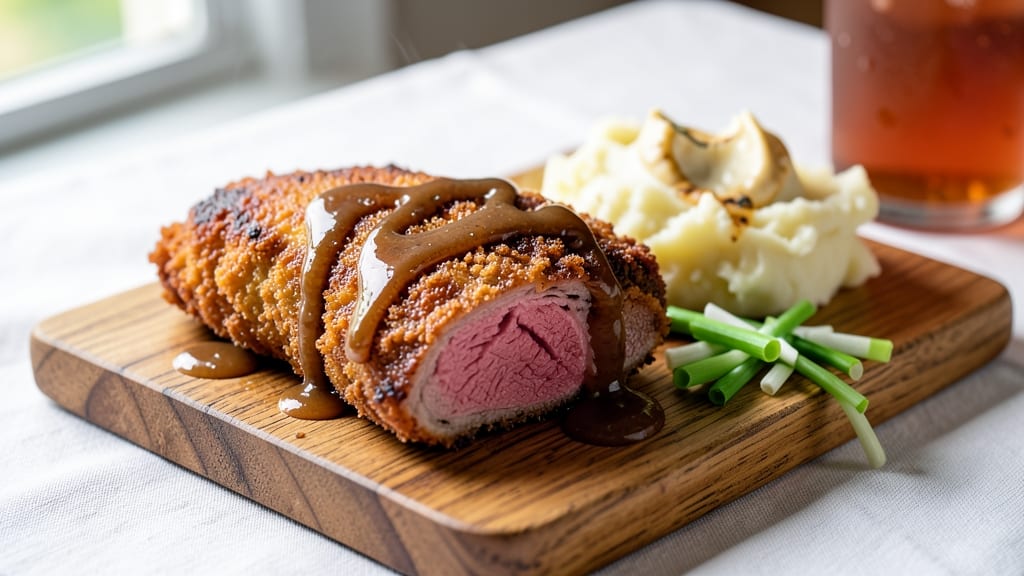
This award-winning chicken fried steak recipe delivers the perfect balance of crispy golden batter and juicy tender beef that's been simmering in buttermilk for hours.
I first tasted this classic Southern dish at a small-town diner where the chef swore by his "secret soak" technique—turns out, patience is the real secret. The buttermilk marinade transforms tough cuts into melt-in-your-mouth perfection, while the double-dredge batter creates that signature crunch that disappears the moment you bite in.
The key to winning restaurant-quality results at home lies in three techniques: a 24-hour buttermilk soak that tenderizes the meat, a light cornstarch coating that ensures crispiness without sogginess, and a slow-cooked gravy reduced to velvety perfection.
My grandmother's recipe cards mentioned "let it sit in the milk like you're being lazy"—she wasn't wrong. This isn't just comfort food; it's a showstopper that'll have your dinner guests asking for seconds before dessert even arrives.
What makes this recipe truly stand out is the restaurant-style gravy that clings to every bite like a warm hug. We're talking rich, flavorful, and just thick enough to coat those crispy edges without drowning them. The secret weapon?
A proper roux that develops deep flavor while the meat rests, then finished with pan drippings and a splash of buttermilk for that signature tang. Serve it with creamy mashed potatoes and buttery green beans for the full Southern experience.
Between you and me, I've burned more than a few batches trying to perfect this—once I even set off the smoke alarm—but each attempt brought me closer to that diner-quality result. The good news? This recipe is foolproof once you understand the science behind the soak and the slow fry.
Ready to make your kitchen smell like Sunday dinner? Let's get started with the ingredients that'll change how you think about fried steak forever.
Ingredients for award winning chicken fried steak
Fourteen ingredients transform simple beef into restaurant-quality fried steak magic.
| Ingredient | Amount | Notes |
|---|---|---|
| Cube Steak (Top Round) 🥩 | 1 ½ lb | 1-inch cubes for even cooking |
| Buttermilk 🥛 | 2 cups | Full-fat for best flavor |
| All-Purpose Flour 🌾 | 2 cups | For first batter dredge |
| Cornstarch 🌾 | ½ cup | Lightens second batter |
| Large Eggs 🥚 | 2 whole | Room temperature for even coating |
| Vegetable Oil 🫒 | 3 cups | For frying (peanut oil preferred) |
| Salt 🧂 | 1 ½ tsp | Kosher salt for seasoning |
| Black Pepper 🌶️ | ½ tsp | Freshly cracked preferred |
| Garlic Powder 🧄 | 1 tsp | For gravy depth |
| Onion Powder 🧅 | 1 tsp | For gravy base |
| Unsalted Butter 🧈 | ½ cup | For roux and gravy |
| All-Purpose Flour 🌾 | ½ cup | For gravy thickening |
| Beef Broth 🥫 | 1 cup | For gravy richness |
The cube steak is non-negotiable—top round cuts into 1-inch cubes for perfect tenderness. Costco or your butcher's counter will have it pre-cut, saving time. Look for good marbling (little white streaks) if buying whole. The buttermilk soak? 24 hours minimum—this isn't a shortcut. I keep mine in a sealed bag in the fridge, flipping the meat every 12 hours. For the flour, Bob's Red Mill all-purpose works best for that light, airy batter. Skip the self-rising—we're controlling the salt here.
No buttermilk? Milk plus 1 tbsp vinegar or lemon juice works in a pinch, but trust me on the full-fat version. Running low on cornstarch? Arrowroot powder at the same amount gives similar crispiness. The gravy's secret weapon is the roux—cook the butter and flour until it smells nutty (about 3 minutes). Too dark? You've burned it. For extra richness, swap half the beef broth for chicken broth. The eggs should be room temp—cold eggs make for a lumpy batter. And if your oil smokes before 350°F, it's time to replace it.
This keeps 3 days in the fridge, but honestly tastes better the second day as flavors meld. Freeze portions for 3 months—just thaw overnight in the fridge. Gravy reheats beautifully, so make extra. I portion mine into small jars for quick reheating. The cornstarch batter loses crispiness after 2 hours, so fry fresh batches if serving a crowd. And save those leftover drippings—they're gravy gold.
Why You'll Love This Recipe
- I swear by this method: just buttermilk, flour, and eggs—no fancy marinades or brining. Toss the cube steak in buttermilk for 20 minutes while you boil water for the gravy, and boom. Minimal effort, maximum reward.
- No-Fuss Prep: I swear by this method: just buttermilk, flour, and eggs—no fancy marinades or brining. Toss the cube steak in buttermilk for 20 minutes while you boil water for the gravy, and boom. Minimal effort, maximum reward.
- Crispy-Creamy Magic: That double-dredge (flour first, then cornstarch) gives you a crust so golden it shatters like glass, but inside? Still tender. It’s the kind of texture that makes you close your eyes and sigh—no sad, dry bites here.
- Weeknight to Dinner Party: Honestly, this feeds a crowd without stress. Double the batch, reheat in the oven, and serve with mashed potatoes or green beans. My in-laws think I slaved for hours—between us, it took me 45 minutes.
Step-by-step instructions for buttermilk-battered crispy steak
Here's how to create that legendary Southern crunch with a velvety gravy that'll win any dinner.
Prepare the Cube Steak for Maximum Flavor
Cut the 1.5 lb cube steak (top round) into 1-inch cubes for even cooking. This size ensures the steak cooks through completely while maintaining tenderness. Pat each piece dry with paper towels—this step is crucial for a proper batter adherence and crispy crust. Place the dried cubes in a shallow dish and season generously with 1.5 tsp salt and 0.5 tsp black pepper, rubbing the spices into every surface. Let them sit at room temperature for 20 minutes while you prepare the buttermilk marinade.
While the steak seasons, pour the 2 cups buttermilk into a separate shallow dish. The acidity in the buttermilk tenderizes the meat while creating the perfect foundation for our crispy batter. Here's the thing—full-fat buttermilk gives the best flavor and texture, so don't substitute with low-fat versions. Let the seasoned steak cubes sit in the buttermilk for at least 15 minutes, turning occasionally to ensure even coating.
Create the Perfect Two-Stage Batter System
In a large bowl, whisk together the 2 cups all-purpose flour, 0.5 cup cornstarch, 1 tsp garlic powder, and 1 tsp onion powder. The cornstarch is what gives this batter its signature lightness and crispy texture. Let this dry mixture sit while you prepare the eggs. In another bowl, beat the 2 whole large eggs until just combined—no need to overmix, just enough to create a smooth coating.
Here's where the magic happens: create two separate stations. One bowl contains just the dry flour mixture, and the other has the beaten eggs. This two-stage dredging ensures an extra-crispy exterior while keeping the steak tender inside. I like to work quickly here—dip each buttermilk-coated steak cube into the egg wash first, letting any excess drip off, then press it firmly into the dry flour mixture, coating all sides completely. Place the coated cubes on a wire rack set over a baking sheet to prevent sticking.
Fry to Golden Perfection with Precise Temperature Control
Fill a deep skillet with 3 cups vegetable oil and heat it to 350°F—this is critical. Too hot and you'll burn the exterior before the interior cooks; too cool and you'll get greasy steak instead of crispy. Use a deep-fat thermometer to monitor the temperature constantly. When the oil reaches 350°F, carefully add the coated steak cubes in batches, leaving space between them so they don't steam.
Fry for 3-4 minutes per side until they reach an internal temperature of 165°F and develop a deep golden brown color. You'll know they're ready when the crust is crispy and they float slightly in the oil. Remove the fried steak to a paper towel-lined plate to drain excess oil. Keep them warm in a 200°F oven while you make the gravy—this maintains their crispiness.
Craft the Ultimate Pan Gravy
Leave about ¼ cup of the rendered oil in the skillet after removing the steak. Over medium heat, add the 0.5 cup unsalted butter and let it melt completely, creating a rich base for your gravy. Sprinkle in the 0.5 cup all-purpose flour and whisk constantly for 2-3 minutes until you have a smooth, bubbling roux that's the color of peanut butter. This is your flavor foundation—don't let it burn.
Gradually whisk in the 1 cup beef broth, one ladle at a time, allowing each addition to absorb completely before adding more. Continue whisking until the gravy reaches your desired consistency—it should coat the back of a spoon but still be pourable. Season with additional salt and pepper if needed, then return the fried steak to the skillet to coat thoroughly in the gravy. Let it simmer together for 1-2 minutes so the steak absorbs all that delicious flavor.
Pro Tips For Making Award Winning Chicken Fried Steak
- Pound Steak to ¼ Inch: I learned this the hard way—thin, even steaks fry faster and absorb the buttermilk crust better. Use a meat mallet or rolling pin until every cut is consistent, or your center pieces will stay tough while the edges burn.
- Chill Buttermilk for 2 Hours: Cold buttermilk tenderizes deeper and keeps the flour from turning into glue. Pop the milk in the fridge while you prep the rest—yes, even if you’re impatient like me. Trust the process.
- Double-Fry the Steak: First fry at 350°F for 2–3 minutes per side to cook through, then crank the heat to 375°F for the final crisp. Skipping the second fry leaves you with a soggy crust, and nobody wants that.
- Mix Cornstarch Into Flour: Toss 2 tablespoons cornstarch into your flour mix—it’s the thing that makes the crust actually crunch. My grandmother swore by this, and she was right: the difference is noticeable, even if it looks weird.
Dietary considerations for this dish
Gluten-Free Adaptation
For a gluten-free version, replace the all-purpose flour and cornstarch with a 1:1 gluten-free flour blend like King Arthur Measure for Measure. Use 2 cups of the blend for the first dredge and 0.5 cup for gravy thickening.
The egg wash remains the same, but you may need to add 1 tbsp xanthan gum to improve crispiness. Fry as directed, but monitor closely—gluten-free batters can crisp faster. 🌾
Dairy-Free Options
Skip the buttermilk marinade and use 2 cups unsweetened almond milk mixed with 2 tbsp apple cider vinegar instead. For the gravy, substitute butter with vegetable shortening or olive oil, and use a dairy-free flour blend for thickening.
The texture will be slightly different, but still delicious. I've found Annie's Organic dairy-free products work well for this adaptation.
Lower-Carb Version
Cut carbs by using almond flour instead of regular flour for the batter—mix 1.5 cups almond flour with 0.5 cup cornstarch and 1 tsp psyllium husk powder for binding. Reduce the egg wash to 1 egg and add 1 tbsp water for better coating.
The result is a lighter, crispier crust with fewer carbs. For gravy, use heavy cream instead of butter and thicken with cornstarch slurry instead of flour.
Allergen-Friendly Tips
For egg allergies, replace the egg wash with 2 tbsp water mixed with 1 tbsp cornstarch as a binder. If you're avoiding corn (due to gluten-free blends), use arrowroot powder instead.
Always check labels—some gluten-free blends contain soy or other allergens. I keep a small jar of Bob's Red Mill single-ingredient flours on hand for these adjustments. 💡
Protein Swaps
While cube steak is traditional, you can use chicken thighs (for a lighter version) or pork chops (for a different flavor profile). For chicken, reduce buttermilk soak to 12 hours and fry at 325°F for 4-5 minutes per side.
Pork chops work best with a 30-minute soak and fry at 350°F for 3 minutes per side. The gravy recipe remains the same, but adjust seasonings to complement the new protein.
Nutrition facts
Frequently asked questions
Why does the recipe call for a 24-hour buttermilk soak?
The long soak is what transforms tough cube steak into melt-in-your-mouth perfection. The buttermilk's acidity breaks down the meat fibers while infusing flavor, creating that signature tender texture. My grandmother always said "patience makes the crispy crust"—she wasn't wrong! For best results, don't skip this step, even if it means planning ahead.
Can I use regular milk instead of buttermilk?
Not for this recipe—full-fat buttermilk is key for both texture and flavor. The fat content creates a richer batter while the acidity tenderizes the meat. If you absolutely must substitute, mix 2 cups milk with 2 tablespoons vinegar or lemon juice, let it sit for 5 minutes to curdle, then proceed with the recipe. The results won't be identical, but it'll still be delicious.
How do I keep the fried steak crispy while making the gravy?
Place the fried steak on a wire rack set over a baking sheet in a 200°F oven while you make the gravy. This gentle heat keeps them warm without steaming, preserving that perfect crunch. If you don't have a rack, use a cooling rack or even a slotted spoon to hold them above the counter while you work.
What's the secret to perfect gravy consistency?
The roux is everything—cook the butter and flour until it's the color of peanut butter (about 2-3 minutes) before adding the broth. Too light and your gravy will be thin; too dark and it'll taste bitter. Whisk constantly while adding the broth, and let each addition absorb completely. For extra richness, stir in 1 tablespoon of the pan drippings from the fried steak.
Can I make this ahead of time?
Fry the steak and make the gravy up to 2 days ahead, then refrigerate. Reheat gently in a skillet with a splash of milk or broth to restore crispiness. For serving, you can even freeze the steak (without gravy) for up to 3 months. Just thaw in the fridge overnight before reheating—never at room temperature.