
Main Courses
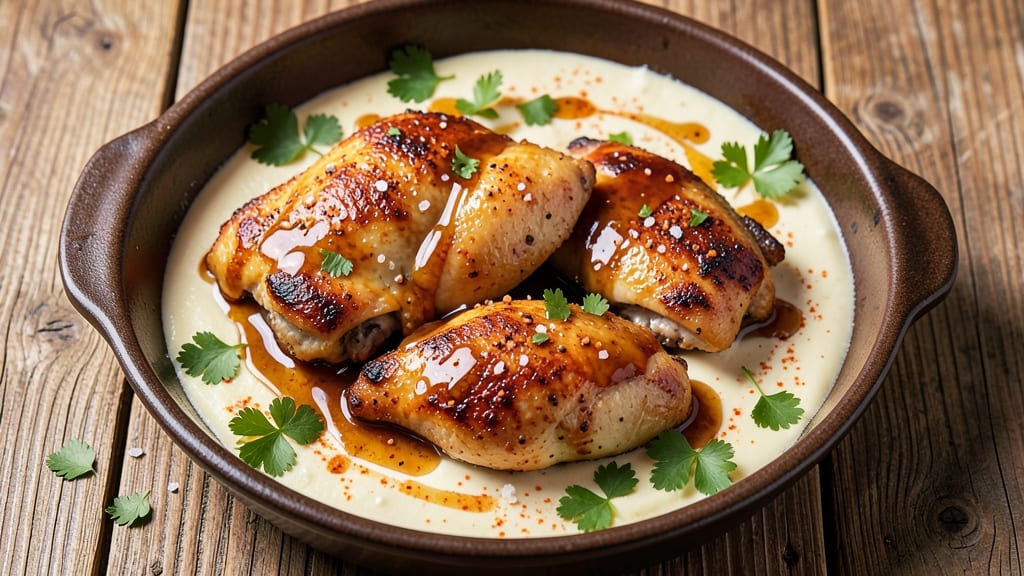
This Baked Chicken Maryland recipe delivers crispy, golden skin and tender meat with a signature tangy mustard glaze—just like the legendary dish from Baltimore's famous restaurants. The secret starts with a buttermilk brine that keeps the chicken juicy while developing that signature crispness.
Maryland cuisine is all about bold flavors and simple techniques, and this recipe captures both perfectly in a foolproof method.
The Old Bay seasoning and cayenne in the marinade give the chicken its signature kick, while the tangy mustard glaze adds that signature Maryland tang. Baked at 400°F, the skin crisps beautifully without drying out the meat inside.
This isn’t just a recipe—it’s a taste of Maryland tradition, brought straight to your oven. The result? Juicy, flavorful chicken with a glaze that’s sticky, sweet, and just spicy enough to leave everyone asking for seconds.
Pair it with classic Southern sides like cornbread, collard greens, or mac and cheese for the full Maryland experience. The glaze is easy to make ahead, so you can focus on the cooking without stress.
Whether you're hosting a weekend dinner or craving comfort food, this recipe delivers restaurant-quality results at home. Let’s get started on that crispy, flavorful masterpiece.
What makes this recipe special is the balance of crispy skin and tender meat, achieved through precise timing and the right blend of spices. The buttermilk brine ensures moisture, while the high-heat bake creates that iconic Maryland crunch.
Serve it with a side of pickled vegetables or a simple green salad to round out the meal. This is comfort food at its finest—bold, tangy, and impossible to resist.
Ingredients for baked chicken maryland
The iconic Maryland flavors start with these 14 ingredients—juicy chicken, bold spices, and that signature tangy glaze.
| Ingredient | Amount | Notes |
|---|---|---|
| Boneless, Skin-On Chicken Thighs 🍗 | 1 ½ lb | Evenly sized for consistent cooking |
| Buttermilk 🥛 | 1 cup | Full-fat for optimal flavor |
| Old Bay Seasoning 🌶️ | 2 tbsp | The signature Maryland spice blend |
| Cayenne Pepper 🔥 | ½ tsp | Adjust for desired heat level |
| Yellow Mustard 🥬 | ½ cup | For the signature tangy glaze |
| Honey 🍯 | ¼ cup | For glaze sweetness balance |
| Apple Cider Vinegar 🍏 | 2 tbsp | Enhances glaze tanginess |
| Olive Oil 🫒 | 2 tbsp | Extra-virgin for richness |
| Garlic Cloves 🧄 | 4 cloves | Minced for glaze depth |
| Salt 🧂 | 1 tbsp | Diamond Crystal preferred |
| Black Pepper 🌶️ | ½ tsp | Freshly ground for aroma |
| Cornstarch 🌾 | 1 tbsp | For glaze thickening |
| Fresh Parsley 🌿 | ¼ cup | Chopped for garnish |
| Lemon Wedges 🍋 | 2 whole | For serving |
The chicken thighs are non-negotiable for this recipe—skin-on and bone-in deliver that signature Maryland crunch while keeping the meat juicy. Trader Joe's and Whole Foods carry excellent quality, or check the butcher section for freedom-range options. The buttermilk should be full-fat (the kind you'd use for biscuits) for that rich, creamy flavor that develops during the brine. Old Bay seasoning is the heart of this dish—look for the McCormick brand if you want consistency, though any reputable brand works. The cayenne is where you can adjust heat to your preference, but start with half a teaspoon for authentic Maryland spice levels.
No buttermilk? Substitute with milk plus 1 tablespoon vinegar—let it sit for 5 minutes to curdle. Want more depth in the glaze? Add 1 teaspoon of smoked paprika to the mustard mixture. The honey in the glaze should be light amber for balance—avoid dark molasses-style if you want that authentic Maryland sweetness. For the garlic, roast it first (wrap whole cloves in foil with olive oil, bake at 400°F for 15 minutes) for a sweeter, more complex flavor. The cornstarch is crucial for that signature sticky glaze—don't skip it, even if you're in a hurry. Fresh parsley is ideal for garnish, but dried parsley at one-third the amount works in a pinch.
The chicken brine can sit in the refrigerator for up to 12 hours—this is where the magic happens for that crispy skin. The glaze keeps well in the fridge for 5 days in an airtight container, so make extra for sandwiches. Reheat gently in a saucepan over low heat, stirring occasionally, until it thickens slightly. The cooked chicken reheats beautifully—warm in a 350°F oven for 15-20 minutes covered with foil to retain moisture. Store leftovers in the fridge for 3 days or freeze for 3 months by wrapping tightly in plastic wrap and foil.
Why You'll Love This Recipe
- No-Fuss Prep: I swear, this takes less effort than ordering takeout. Toss the thighs in buttermilk, slap on Old Bay and cayenne, and throw them in the oven—no marinating overnight, no fancy techniques. Honestly, I’ve made this while scrolling through my phone.
- Crispy-Creamy Magic: That skin gets golden while the inside stays juicy, and the mustard-buttermilk glaze? It’s got this tangy kick that makes you want to eat it straight from the pan. Here’s what sold me—the Old Bay and cayenne team up for a flavor that’s bold but not overwhelming.
- Weeknight or BBQ Hero: Between us, this works for everything. Serve it with mashed potatoes for a lazy Sunday, toss it in sandwiches for game day, or pack it for lunch—it’s that versatile. My daughter even sneaks bites when I’m not looking.
- Budget Stretch: Skin-on thighs are cheaper than breasts, and a batch feeds four for dinner and leftovers that taste just as good reheated. I’ll be real: I’ve had this three nights in a row, and no one’s complained. Solid, reliable, and my wallet thanks me.
Step-by-step instructions for buttermilk brined chicken Maryland
Master this Maryland classic with crispy skin and a perfect balance of sweet, tangy glaze.
Prepare the Buttermilk Brine
In a large bowl, whisk together the 1 cup buttermilk, 2 tablespoons Old Bay seasoning, ½ teaspoon cayenne pepper, 1 tablespoon salt, and ½ teaspoon black pepper. This brine will tenderize the chicken while infusing it with the signature Maryland flavor profile. The Old Bay's paprika and celery salt work together to create that iconic coastal taste.
Place the 1.5 lb boneless, skin-on chicken thighs in a resealable plastic bag and pour the brine over them. Seal the bag, pressing out any excess air, and refrigerate for at least 4 hours or up to 12 hours. This long brining ensures maximum flavor penetration and helps create that signature crispy skin. The buttermilk's acidity will also break down the skin proteins slightly, making them more prone to browning.
Create the Mustard Glaze
In a small saucepan, combine the ½ cup yellow mustard, ¼ cup honey, 2 tablespoons apple cider vinegar, 2 tablespoons olive oil, and 4 minced garlic cloves. Place over medium heat and bring to a gentle simmer, stirring constantly to prevent scorching. The mixture should thicken slightly as it reduces, which typically takes 5-7 minutes.
Remove from heat and whisk in the 1 tablespoon cornstarch mixed with 2 tablespoons water to create a smooth, glossy glaze. The cornstarch will help thicken the sauce just enough to cling to the chicken without being overly syrupy. Taste and adjust seasoning with additional salt or pepper if needed. Let the glaze cool completely before using—this prevents the chicken from steaming instead of browning.
Bake the Chicken to Golden Perfection
Preheat your oven to 425°F with a rack positioned in the lower third. Line a baking sheet with parchment paper and arrange the brined chicken thighs skin-side up, leaving 1 inch between pieces for even air circulation. The high heat is crucial for achieving that signature crispy skin while keeping the meat juicy.
Bake for 25-30 minutes, rotating the pan halfway through, until the skin is deep golden brown and crispy, and the internal temperature reaches 165°F when measured in the thickest part of the thigh. The skin should release easily from the meat, indicating proper browning. If the skin browns too quickly but the chicken isn't done, tent loosely with foil and return to the oven for additional time.
Glaze and Finish
Remove the chicken from the oven and transfer it to a serving platter. Immediately brush or spoon the cooled mustard glaze evenly over the tops of the chicken thighs. Return to the oven for 3-5 minutes to allow the glaze to set and caramelize slightly. This final step creates that signature glossy finish while adding another layer of flavor.
Garnish with ¼ cup chopped fresh parsley and serve with the 2 lemon wedges on the side. The glaze should be sticky but not dripping, with a perfect balance of sweet honey and tangy mustard. Each bite should deliver crispy skin, juicy meat, and a burst of flavorful glaze that's neither too sweet nor too sharp.
Pro Tips For Making Baked Chicken Maryland
- CRISP THE SKIN FIRST: The skin’s the star here—pat it bone-dry with paper towels, then rub with a pinch of cayenne and salt before buttermilk. After marinating, hit it with a hot oven blast (450°F for 10 minutes) to render fat and lock in that crisp. I used to skip this, and my skin always ended up soggy—don’t make that mistake.
- MARINATE LONGER THAN YOU THINK: Buttermilk + Old Bay is magic, but don’t rush it. Let thighs sit in the mix for at least 4 hours (overnight’s even better)—the acid tenderizes, and the seasoning sinks in. I learned this after burning through two batches where the crust tasted like a sad, one-note afterthought.
- DON’T OVERCROWD THE PAN: If your thighs are touching, they’ll steam instead of crisp. Use a single layer on a wire rack over a baking sheet for airflow—no flipping needed. I crammed mine in once and got a sad, greasy mess. Trust me, the extra 5 minutes rearranging saves the dish.
- BRUSH WITH MUSTARD LAST: Save the yellow mustard for the final 10 minutes of baking—it’s not just flavor, it’s the glue for that iconic crust. Brush it on after the initial sear, right before the oven hits 375°F. I tried mixing it in earlier and ended up with a sticky, uneven coating. Timing matters.
Regional styles of these flavors
Baltimore Roots
The original Maryland chicken recipe traces back to Baltimore’s 19th-century seafood markets, where vendors served crispy fried chicken with a tangy mustard sauce to complement their seafood. The dish evolved into what we know today as Chicken Maryland—a baked version with that signature crispy skin and sweet-tangy glaze.
Restaurants like The Crab House and The Point in Baltimore popularized it, making it a Chesapeake Bay staple. 🍗
Old Bay’s Signature Role
No Maryland chicken is complete without Old Bay seasoning, created in 1939 by John T. Overton in Baltimore. This iconic blend of paprika, celery salt, cayenne, and black pepper gives the dish its signature heat and depth.
For authenticity, use McCormick’s Old Bay—the brand’s celery salt and paprika are the gold standard. The seasoning isn’t just a spice; it’s the heart of Maryland’s coastal cuisine. 🌶️
Coastal vs. Inland Twists
In coastal Maryland (Baltimore, Annapolis), the dish leans into seafood-inspired flavors—think Old Bay-heavy brines and lemony glaze finishes. Inland regions, like Western Maryland, often use more honey in the glaze for a sweeter balance, reflecting local farm influences.
Try adding 1 teaspoon of smoked paprika to the glaze for a smoky twist inspired by the state’s rural traditions.
Modern Maryland Adaptations
Today’s chefs are putting their own spin on the classic. Fusion versions swap honey for maple syrup (a nod to local farms) or add gochujang for a Korean-Maryland mashup. In Baltimore’s Little Italy, some restaurants serve it with spicy Italian sausage on the side.
For a lighter take, brush the baked chicken with pesto instead of mustard glaze—it’s a hit at Baltimore’s Baltimora restaurant.
Regional Side Dishes
No Maryland meal is complete without the right sides. Coastal areas pair chicken with steamed crabs, corn on the cob, or crab cakes, while inland regions lean toward cornbread, collard greens, or mac and cheese.
For authenticity, serve with buttery hush puppies—a Maryland diner classic—or pickled okra for tangy contrast. The glaze also works perfectly on grilled shrimp for a seafood twist. 🍽️
Local Ingredient Swaps
Maryland’s farms and waters provide fresh, local ingredients to elevate the dish. Swap honey for local wildflower honey from Maryland farms like Baker’s Honey for a richer flavor. Use Maryland-grown garlic (like Garlic Growers of Maryland) in the glaze for extra depth.
For the brine, try Maryland blue crabshells (crushed) instead of extra salt—it adds a subtle briny note that’s pure Chesapeake Bay. 🦀
Nutrition facts
Frequently asked questions
Can I use chicken breasts instead of thighs for this Maryland recipe?
Chicken thighs are ideal for their juiciness and fat content, which creates crispy skin. For breasts, pat them very dry, increase the baking temperature to 425°F, and reduce baking time to 20-25 minutes—but expect slightly less crispy skin. The buttermilk brine still works, but breasts are leaner and may dry out faster.
How do I make the glaze ahead of time?
The mustard glaze keeps well in an airtight container in the fridge for 5 days or 3 months frozen. Reheat gently in a saucepan over low heat, stirring until smooth. For extra shine, add 1 teaspoon water when reheating. The glaze thickens as it cools, so adjust with water if needed before using.
What if my chicken skin isn't crispy enough?
Try these fixes: Pat the chicken extra dry before baking, increase oven temp to 450°F for the last 5 minutes, or broil for 2 minutes at the end. Another trick is to place a metal cooling rack on the baking sheet—this allows air to circulate underneath for even crisping.
Can I grill this Maryland chicken instead of baking?
Grill over medium-high heat for 6-8 minutes per side, brushing with glaze in the last 2 minutes. For indirect heat, place chicken over coals on one side and cook for 12-15 minutes, flipping once. The skin will crisp beautifully, though grill marks may differ from baked results.
What's the best way to reheat leftovers?
Warm in a 350°F oven for 15-20 minutes covered with foil to retain moisture. For crispy skin, broil for 2-3 minutes at the end. Avoid microwaving—it makes the skin soggy. Store leftovers in the fridge for 3 days or freeze for 3 months wrapped tightly in plastic.