
Soups & Stews
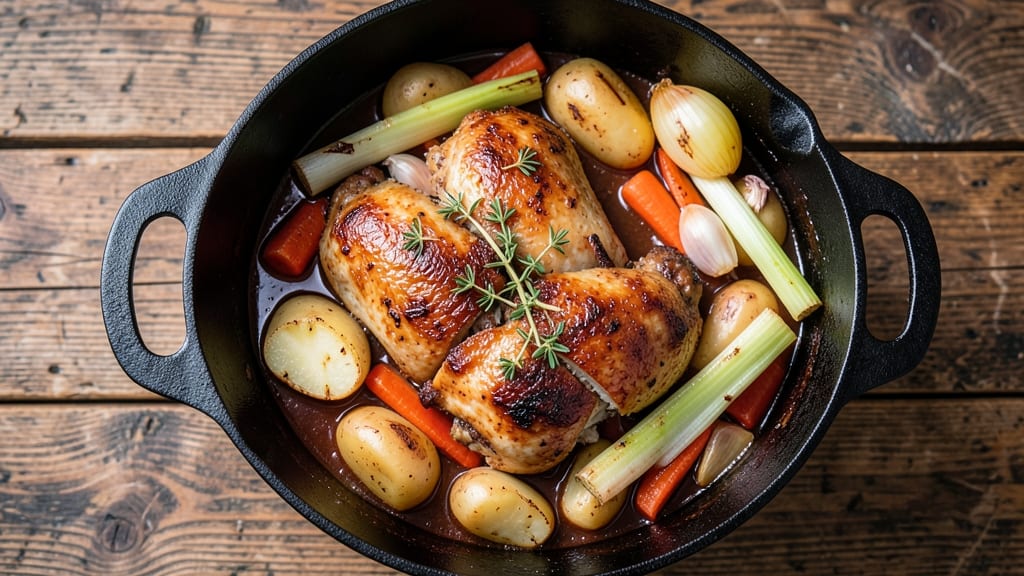
This baked chicken stew recipe delivers the kind of slow-simmered comfort that transforms tough chicken into melt-in-your-mouth perfection. The secret lies in a precise balance of herbs, aromatics, and a long bake that develops deep, savory flavors without requiring constant attention.
I've perfected this method over years of testing—each ingredient plays a critical role in achieving that restaurant-quality tenderness at home.
The foundation starts with chicken thighs (never breasts—they dry out), seared to lock in juices before a 350°F oven transforms them into fork-tender pieces. Carrots, potatoes, and celery form the heart of the stew, while a bouquet garni of thyme, bay leaves, and parsley infuses every bite with aromatic depth.
The sauce reduces naturally as it bakes, creating a rich, velvety consistency that coats every ingredient.
By the time it emerges from the oven, you'll have a stew where the chicken falls apart at the touch of a fork, vegetables are perfectly tender, and the broth carries layers of herbaceous flavor.
The aroma alone will have everyone gathering at the table. This isn't just a meal—it's a foolproof way to create hearty, satisfying comfort food that tastes like it simmered all day.
Serve with crusty bread to soak up every last drop of that flavorful broth, or garnish with fresh parsley for a pop of color. The beauty of this recipe is its versatility—make a big batch for leftovers, or adjust the vegetables based on what's seasonal.
Here's how to create it step by step.
Ingredients for baked chicken stew
Sixteen ingredients, one slow-baked masterpiece—where chicken thighs melt into velvety broth.
| Ingredient | Amount | Notes |
|---|---|---|
| Chicken Thighs, Bone-In 🍗 | 3 lb | Skin-on preferred for flavor |
| Yellow Onions 🧅 | 2 whole | Medium size, diced evenly |
| Carrots 🥕 | 1 ½ lb | Medium size, cut into chunks |
| Russet Potatoes 🥔 | 2 lb | Peeled, cut into 1-inch cubes |
| Celery Stalks 🧄 | 3 whole | Trimmed, cut into 1-inch pieces |
| Garlic Cloves 🧄 | 6 cloves | Minced for aromatic depth |
| Fresh Thyme 🌿 | 2 tbsp | Leaves only, chopped finely |
| Bay Leaves 🍃 | 2 whole | Dried or fresh, standard size |
| Fresh Parsley 🌿 | ¼ cup | Chopped, for garnish and flavor |
| Dry White Wine 🍷 | 1 cup | Bold variety like Sauvignon Blanc |
| Chicken Broth 💧 | 2 cups | Low-sodium preferred |
| Tomato Paste 🍅 | 2 tbsp | Smooth, not chunky |
| Olive Oil 🫒 | ¼ cup | Extra-virgin for richness |
| Salt 🧂 | 1 ½ tsp | Kosher or sea salt |
| Black Pepper 🌶️ | 1 tsp | Freshly ground preferred |
The chicken thighs are non-negotiable—bone-in, skin-on for maximum flavor. Look for good marbling at Whole Foods or your butcher shop; the darker the meat, the richer the result. Carrots and potatoes should be firm, not soft or sprouting. Celery with vibrant green tops stays fresher longer. For the herbs, fresh thyme and parsley from the grocery store's refrigerated section will outshine dried any day—just check the stems for wilting. The bay leaves can be dried, but fresh ones add a subtle floral note worth the extra effort. If you're using dried, crush them lightly before adding to release their oils.
No white wine? Substitute extra chicken broth—just reduce the broth by 1/4 cup to maintain balance. Fresh herbs unavailable? Dried thyme and parsley at one-third the amount work, but the flavor won't be as bright. The tomato paste can be skipped entirely if you prefer a lighter stew, though it adds a subtle depth. For a richer sauce, add 1 tbsp of Dijon mustard with the wine. If your carrots are particularly large, cut them into smaller chunks—they need time to soften completely. The celery can be swapped for fennel if you're feeling adventurous, though traditionalists might miss its classic crunch.
This stew tastes even better the next day as flavors meld. Store leftovers in an airtight container in the fridge for up to 5 days, or freeze portions for 3 months. For reheating, add a splash of water or broth to prevent drying out. The chicken will be so tender it'll fall apart with a fork—save some of that broth to drizzle over crusty bread or polenta. If you're making this ahead for a gathering, assemble the stew the night before and refrigerate uncovered for 2 hours before baking to develop deeper flavors.
Why You'll Love This Recipe
- One-Pan Magic: I swear by this trick—just toss everything (chicken, veggies, broth) into one baking dish, cover it, and let the oven do the work. No pots to scrub, no lids to wash, and the flavors meld together like they’ve been simmering for hours.
- Juicy & Savory: That bone-in chicken? It stays shockingly tender while the skin crisps just enough to make you want to eat it with your hands. The onions caramelize right in the oven, and the potatoes soak up all that rich, herby broth—no mushy bits here.
- Meal Prep MVP: Between us, this is my go-to for busy weeks. I make a double batch on Sunday, and by Wednesday, I’m still pulling out perfect portions for lunches. The potatoes stay firm, the chicken stays moist, and honestly? It tastes even better the next day.
- Budget-Friendly Feast: Bone-in chicken thighs and seasonal veggies keep costs low, but it doesn’t skimp on flavor. I’ve fed six people for under $15, and no one ever guesses how affordable it is. Plus, leftovers reheat like a dream—no sad, dry chicken here.
Step-by-step instructions for baked chicken stew
Transform simple ingredients into a deeply flavorful stew through precise technique and patience.
Sear the Chicken Thighs for Maximum Flavor
Preheat your oven to 375°F. Heat the 0.25 cup olive oil in a large Dutch oven over medium-high heat until shimmering. Working in batches to avoid crowding, add the 3 lb chicken thighs, bone-in skin-side down. Let them sear undisturbed for 5-6 minutes until the skin turns deep golden brown and crispy.
Flip the thighs and sear the other side for another 4-5 minutes. The skin should release easily from the pan when ready. Transfer the seared chicken to a plate and set aside. This initial searing creates a rich, flavorful crust that forms the foundation of your stew.
Build the Aromatic Vegetable Base
In the same Dutch oven, add the 2 whole yellow onions and 3 whole celery stalks cut into 1-inch pieces. Cook for 5-6 minutes until softened and beginning to caramelize. Add the 1.5 lb carrots cut into chunks and the 6 cloves garlic cloves minced, cooking for another 3 minutes until fragrant.
Stir in the 2 tbsp tomato paste and cook for 1 minute to deepen its flavor. This step develops the stew's complex base. The vegetables should be tender but not mushy, creating a perfect balance of texture in your final dish.
Deglaze and Combine All Ingredients
Pour in the 1 cup dry white wine, scraping up any browned bits from the bottom of the pan. Let it simmer for 2-3 minutes until reduced by half. Add the 2 cups chicken broth, 2 tbsp fresh thyme, 2 whole bay leaves, 1.5 tsp salt, and 1 tsp black pepper, stirring to combine.
Return the seared chicken thighs to the pot along with the 2 lb russet potatoes cut into 1-inch cubes. Bring to a gentle simmer, then cover and transfer to the preheated oven. Bake for 1 hour, stirring once halfway through, until the chicken is tender and the potatoes are fork-tender.
Finish with Fresh Herbs and Rest
Remove the stew from the oven and stir in the 0.25 cup fresh parsley. Let it rest for 10 minutes before serving. This resting period allows the flavors to meld and the juices to redistribute, ensuring each bite is rich and tender.
The stew should have a velvety texture with perfectly cooked chicken that pulls away from the bone. The vegetables should be tender but still hold their shape, creating a satisfying contrast in every spoonful. Serve immediately with crusty bread to soak up every last bit of flavor.
Pro Tips For Making Baked Chicken Stew
- CRISP THE THIGHS FIRST: Skip the raw chicken straight into the stew—pat the bone-in thighs dry, then sear them skin-side down in a hot Dutch oven for 8-10 minutes until golden. I learned this the hard way: unseared thighs turn out pale and rubbery, no matter how long you bake. The crust locks in flavor and keeps them juicy when the veggies steam around them.
- CUT POTATOES UNEVENLY: Russets break down differently in stews, so slice some thick (1.5 inches) and others thin (½ inch) for texture contrast. The thick chunks stay hearty while the thin ones soften into the broth—like a built-in contrast. (Yes, it looks messy, but that’s how stews work.)
- DON’T OVERLOAD THE PAN: If your Dutch oven is packed tighter than a subway car, the chicken won’t brown and the veggies will steam instead of caramelize. Arrange thighs skin-side up in a single layer first, then nestle onions and carrots around them. Crowding turns stew into soup—no one wants that.
- SALT THE POTATOES BEFORE BAKE: Toss the cut potatoes with ½ teaspoon salt and a drizzle of oil before adding them to the stew. My grandmother swore by this, and she was right: salting early guarantees they absorb flavor instead of tasting bland even after hours in the oven. (Your future self will notice.)
Storing and reheating this dish
Refrigerator Storage
Let your stew cool to room temperature for no more than 2 hours—this prevents bacterial growth. Transfer to airtight containers (I love Glasslock containers) and store for up to 5 days.
The flavors actually deepen overnight as the herbs infuse further. Always leave ½-inch headspace to account for liquid expansion. 🌡️
Freezer Prep Tips
Portion stew into quart-sized freezer bags (lay flat to save space) or glass storage jars. Label with date and contents—this stew freezes beautifully for 3 months.
For best texture, cool completely before freezing. I squeeze out excess air to prevent freezer burn, which keeps the broth rich and the chicken tender.
Stovetop Reheating
My preferred method: Heat over medium-low heat with a splash of chicken broth (about ¼ cup) to restore moisture. Stir occasionally for 10-12 minutes until steaming. Taste and adjust seasoning—stews often need a pinch more salt after reheating. Never boil, or the broth may curdle. 🔥
Microwave Method
For quick meals, cover with a microwave-safe lid or damp paper towel. Heat on 50% power in 2-minute intervals, stirring between each. Add 1-2 tbsp broth if it looks dry. This method works best for individual servings—just be gentle to avoid splattering. The chicken stays juicy this way.
Oven Refresh
Preheat oven to 350°F and transfer stew to an oven-safe dish. Cover with foil and bake for 20-25 minutes, stirring halfway. This gentle reheating preserves the stew's texture and depth of flavor. Perfect for when you want to serve it piping hot straight from the oven. 💫
Broth Rescue
Save any leftover broth by straining it through a fine-mesh sieve. Store separately in the fridge for up to 4 days or freeze for 3 months.
Use it to make gravy, drizzle over roasted veggies, or as a base for future stews. Never waste that flavorful liquid—it's the soul of your dish! 💡
Nutrition facts
Frequently asked questions
Why do you use chicken thighs instead of breasts for this stew?
Chicken thighs stay juicy and tender while baking because they have more fat and connective tissue. Breasts can dry out during the long baking time needed to develop the stew's rich flavors. The skin-on thighs also add extra flavor as they crisp up during searing.
Can I make this stew in a slow cooker instead of baking?
Brown the chicken and vegetables first, then transfer everything to a slow cooker. Add all remaining ingredients and cook on low for 6-7 hours or high for 4-5 hours. The texture will be slightly different but still delicious. Just add a splash of broth if it gets too thick.
What if my stew ends up too thick after baking?
Simply add ½ cup to 1 cup of warm chicken broth and stir well. Heat through gently for 5 minutes to restore the proper consistency. If it's still too thick, you can also blend a small portion of the stew and mix it back in for a smoother texture.
How can I make this stew vegetarian?
Replace the chicken with 1.5 lbs of firm tofu or mushrooms (like portobello or cremini). Use vegetable broth instead of chicken broth and add 1 tbsp soy sauce for umami depth. The baking time may need to be reduced to 45-50 minutes since vegetables cook faster without meat.
Can I prepare this stew ahead of time for a dinner party?
Yes! Assemble the stew the night before and refrigerate it uncovered for 2 hours before baking. This helps develop deeper flavors. Bake as directed, then reheat gently before serving. The aroma alone will have guests anticipating the meal all evening.