
Sauces & Condiments
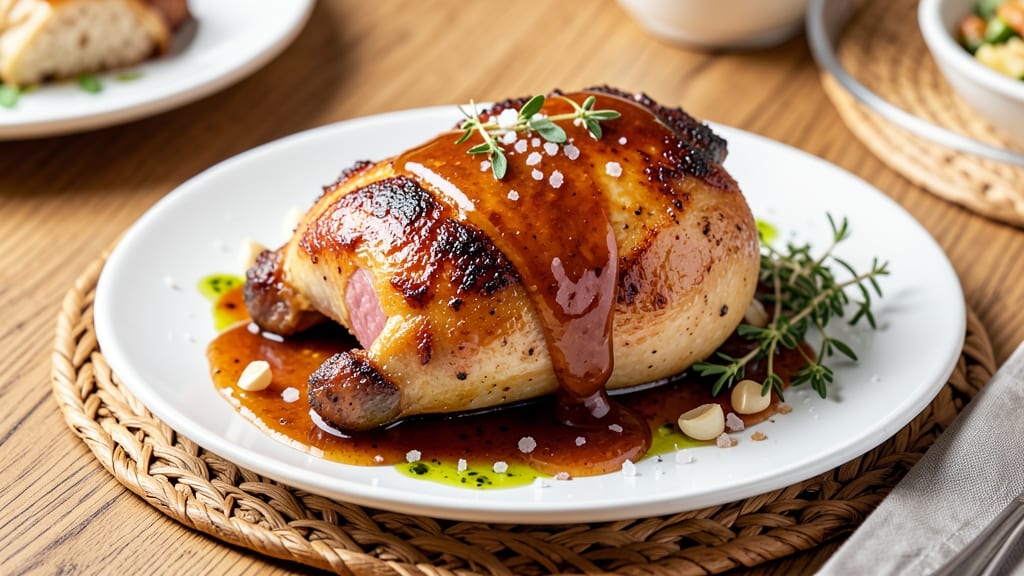
This baked chicken thigh sauce recipe transforms simple baked chicken thighs into restaurant-worthy centerpieces with crispy edges and a sticky-sweet finish. The secret lies in balancing tangy Dijon mustard with rich honey, creating a sauce that caramelizes beautifully while keeping the chicken juicy.
I developed this recipe after years of perfecting the art of balancing sweet and savory in one bold, cohesive glaze.
The sauce comes together in minutes using just five ingredients—honey, Dijon mustard, apple cider vinegar, garlic, and a touch of olive oil—all simmered until thick and glossy.
What sets this apart is the two-step baking process: first searing the chicken skin for maximum crispiness, then basting with the warm glaze to lock in moisture. The result? Chicken thighs with golden, crackling skin and a sauce that clings perfectly to every bite.
What makes this sauce truly special is its versatility—it works equally well as a pre-baking marinade or a post-baking drizzle. The glaze adds depth to the natural flavor of the chicken while cutting through its richness with bright acidity.
Once you try this, store-bought sauces will never compare again. The best part? It doubles as a dipping sauce for leftovers, making meal prep effortless.
This recipe stores beautifully in the fridge for up to 5 days, so you can make a big batch and use it for multiple meals. Pair it with roasted vegetables or a fresh salad for a complete, crowd-pleasing dinner.
Let’s get started on this game-changing sauce that turns ordinary chicken into something extraordinary.
Ingredients for baked chicken thigh sauce
Five simple ingredients transform ordinary chicken into restaurant-quality centerpieces with crispy edges and bold flavor.
| Ingredient | Amount | Notes |
|---|---|---|
| Honey 🍯 | ½ cup | Raw or wildflower preferred |
| Dijon Mustard 🌿 | ¼ cup | High-quality, smooth variety |
| Apple Cider Vinegar 🍏 | ¼ cup | Unfiltered preferred |
| Garlic Cloves 🧄 | 4 cloves | Freshly minced |
| Extra-Virgin Olive Oil 🫒 | 2 tbsp | For richness and balance |
| Salt 🧂 | 1 tsp | Kosher or sea salt |
| Black Pepper 🌶️ | ½ tsp | Freshly ground for depth |
| Fresh Thyme Leaves 🌿 | 1 tbsp | Or 1 tsp dried thyme |
| Chicken Thighs 🍗 | 1 ½ lb | Bone-in, skin-on preferred |
The honey is the heart of this sauce—look for raw or wildflower varieties at specialty grocery stores like Whole Foods or Trader Joe's for deeper flavor. Dijon mustard adds the tangy kick that balances the sweetness; Maille or Amoy are my go-tos, but any high-quality brand works. Apple cider vinegar should be unfiltered for that extra depth—Bragg or Texas Pete are reliable choices. Fresh thyme elevates the sauce, but dried works in a pinch (use one-third the amount). The chicken thighs? Bone-in, skin-on is ideal for crispiness, and Costco or local butchers often have the best quality at reasonable prices.
No Dijon mustard? Yellow mustard thinned with a splash of water works in a bind, though it lacks the same depth. Running low on apple cider vinegar? White wine vinegar or balsamic can substitute, but adjust sweetness with extra honey. The garlic can be pre-minced if you're short on time, but fresh is always better. For extra richness, swap 1 tbsp of olive oil for butter (though it won't caramelize the same way). This sauce is vegetarian-friendly—just skip the chicken and use it as a glaze for tofu or roasted vegetables.
This sauce keeps beautifully in the fridge for up to 5 days in an airtight container. For longer storage, freeze in ice cube trays and transfer to a bag—perfect for quick dipping sauces later. The chicken thighs should be used within 2 days for best texture, but the sauce itself reheats wonderfully. Double the batch—it’s that good, and you’ll want it on hand for everything from roasted veggies to grilled fish.
Why You'll Love This Recipe
- One-Pot Magic: I swear by this—just toss the thighs, sauce, and garlic on a sheet pan. No pots, no pans, no stress. The vinegar and honey caramelize right on the metal while it bakes, so you’re left with sticky, golden perfection that needs zero scrubbing.
- Sweet-Savory Balance: That honey and Dijon mustard combo is where it’s at—rich but tangy, with the vinegar cutting through the richness. The olive oil keeps it luscious, and the garlic? Oh, it infuses into the meat like a flavor bomb. Honestly, I’ve had people ask for the sauce recipe separate from the chicken.
- Weeknight to Potluck: Between us, this is my go-to for lazy nights and when I’m bringing a dish to share. The leftovers reheat like a dream (yes, even the crispy bits), and it’s the kind of thing that disappears at gatherings. My cousin’s kid always picks out the juiciest piece—no judgment.
- Budget-Friendly Luxury: Chicken thighs are forgiving, affordable, and this sauce makes them feel fancy. I’ve fed four people for under $15 with this, and the leftovers stretch into wraps or salads the next day. Not the prettiest, but the taste makes up for it—and my wallet thanks me.
Step-by-step instructions for honey mustard baked chicken thighs
Here's how to achieve perfectly crispy skin and a glossy honey-mustard glaze every time.
Prepare the Chicken for Maximum Crispiness
Pat the 1.5 lb chicken thighs completely dry with paper towels—this is critical for crispy skin. Remove any excess fat from the skin surface but leave a thin layer intact. Season both sides generously with 1 tsp salt and 0.5 tsp black pepper, pressing the seasoning into the meat so it adheres well.
Place the thighs skin-side up on a wire rack set inside a rimmed baking sheet. This elevated position allows hot air to circulate underneath, creating that coveted crispy texture on both sides. Let the seasoned chicken sit at room temperature for 15 minutes before baking—this ensures even cooking from the start.
Create the Honey-Mustard Glaze
In a small bowl, whisk together 0.5 cup honey, 0.25 cup Dijon mustard, and 0.25 cup apple cider vinegar until completely smooth. The mixture should be thick but pourable. Add 2 tbsp extra-virgin olive oil and 1 tbsp fresh thyme leaves, whisking until the thyme is evenly distributed. Taste and adjust seasoning with additional salt or pepper if needed.
This glaze needs to be well-balanced—too much vinegar makes it sharp, too little honey makes it thick. The olive oil helps emulsify the mixture so it clings beautifully to the chicken. Keep this sauce mixture at room temperature while you prepare the oven.
Bake for Crispy Skin and Tender Meat
Preheat your oven to 425°F with the rack positioned in the middle position. Place the prepared chicken thighs in the oven and bake for 25 minutes. After 25 minutes, flip each thigh skin-side down and brush the tops with half of the honey-mustard glaze. Return to the oven and bake for another 15 minutes.
You'll know the chicken is ready when the skin is deep golden brown and crispy, and the internal temperature reaches 165°F at the thickest part of the thigh. The skin should release easily from the meat when you gently press it. If the glaze starts to bubble too aggressively, reduce the oven temperature to 400°F for the final 5 minutes to prevent burning.
Glaze and Rest for Maximum Flavor
Remove the chicken from the oven and brush the remaining honey-mustard glaze evenly over the skin. Return to the oven for 3-5 minutes to let the glaze set and caramelize slightly. Watch carefully—this final step creates that beautiful glossy finish and deepens the flavor.
Transfer the chicken to a cutting board and let it rest for 5 minutes before serving. This resting period allows the juices to redistribute, ensuring each bite is moist and flavorful. Serve immediately with the pan juices drizzled over the top for extra richness.
Pro Tips For Making Baked Chicken Thigh Sauce
- CRANK THE OVEN HIGH: Start your chicken thighs on 425°F (220°C) for the first 15 minutes—yes, even if the recipe says 375°F. This gets them blistering and golden before the sauce softens them. I learned this the hard way after serving pale, soggy thighs that tasted more like a stew than a crispy dish.
- MINCE THAT GARLIC FINE: Don’t just chop those garlic cloves—smash them flat with the side of your knife first, then mince into a paste. This ensures the flavor distributes evenly in the sauce and prevents bitter clumps. (I used to skip this, and the garlic always ended up lurking in pockets like a picky kid hiding broccoli.)
- WHISK THE SAUCE HOT: Heat the honey, mustard, and vinegar together until the mixture just starts to simmer—this helps the honey emulsify properly with the olive oil. Pouring cold sauce over hot chicken causes separation, and you’ll end up with a greasy mess instead of a glossy glaze. (Your future self will curse you if you skip this.)
- SALVAGE OVERCOOKED THIGHS: If your chicken tests dry at 165°F, don’t toss it—toss it with the sauce. Brush the honey-mustard mix over the thighs and bake them another 5-10 minutes at 350°F (175°C) covered in foil. The acidity in the vinegar and moisture from the sauce will revive them. (This isn’t the prettiest method, but it’s the tastiest.)
Troubleshooting your baked chicken thigh sauce
Glaze Too Thin?
If your sauce feels too runny after simmering, it’s likely due to excess moisture from the vinegar or honey. To fix it, place the sauce in a small saucepan over medium-low heat and let it reduce for 3-5 minutes, stirring constantly.
For an emergency fix, whisk in 1 tsp cornstarch mixed with 1 tbsp cold water until thickened. The key is patience—rushing this step can make the sauce grainy. 🔥
Skin Not Crispy?
Crispy skin starts with dry chicken and proper heat. Pat your thighs extra dry with paper towels before seasoning, and let them sit uncovered on the rack for 20 minutes at room temperature.
If your oven runs hot, try baking at 400°F instead of 425°F to avoid overcooking before the skin crisps. A wire rack is non-negotiable—it prevents steaming, which kills crispiness.
Sauce Too Tart?
The balance of sweet and tangy is delicate! If your sauce tastes overly sharp, stir in 1-2 tbsp honey or 1 tsp maple syrup to mellow the acidity. For a smoother texture, whisk in 1 tbsp olive oil—it helps emulsify the mixture.
Taste as you go: the glaze should coat your tongue in sweetness before the tang hits. 🌿
Chicken Overcooked?
Chicken thighs are forgiving, but overcooking turns them dry. Use a meat thermometer and remove them at 160°F—they’ll carry over to 165°F while resting. If you’ve gone past that, brush with extra glaze and serve immediately to retain moisture.
For future batches, reduce oven temp by 25°F and check 5 minutes early to avoid overcooking.
Glaze Not Sticking?
A glaze that slides off instead of clinging needs better adhesion. Warm the sauce slightly before brushing—30 seconds in the microwave works. For extra grip, add 1 tsp arrowroot powder to the glaze while mixing.
Also, ensure the chicken skin is completely dry before applying the glaze; any moisture will cause it to bead up instead of stick.
Leftovers Too Dry?
Reheating chicken thighs can dry them out, but this glaze saves the day. Warm the sauce separately in a small pan over low heat, then brush it over the chicken as you reheat.
Cover with foil and heat for 3-4 minutes—just enough to warm through without overcooking. The glaze will revive the skin’s crispiness and keep the meat juicy.
Nutrition facts
Frequently asked questions
Can I make this sauce ahead of time?
This honey-mustard glaze keeps beautifully in the fridge for up to 5 days in an airtight container. For longer storage, freeze it in ice cube trays—perfect for quick dipping sauces later. Just reheat gently before brushing on the chicken to maintain its glossy texture.
What if I don't have Dijon mustard?
No problem! Use yellow mustard thinned with 1 tsp water as a substitute, though it won't have the same depth of flavor. For extra tang, add ½ tsp lemon juice to compensate. The sauce will still work, just with slightly different character.
How do I adjust the sweetness level?
Start with the recipe as written, then taste the sauce before brushing it on. For more sweetness, add 1-2 tbsp honey or 1 tsp maple syrup. Need less? Add 1 tsp apple cider vinegar to balance. The key is to find that perfect harmony between sweet and tangy.
Can I use this sauce for other proteins?
Yes! This glaze works beautifully on pork chops, salmon fillets, or even tofu for a vegetarian option. For fish, reduce the oven time to 10-12 minutes to avoid overcooking. The sauce's balance of sweet and tangy enhances many proteins beyond just chicken.
Why does my glaze get grainy?
Graininess usually happens when the sauce thickens too quickly. To prevent this, reduce the sauce over low heat and stir constantly. If it happens, whisk in 1 tsp olive oil or 1 tbsp warm water to smooth it out. Avoid high heat—it can cause the honey to crystallize.