
Main Courses
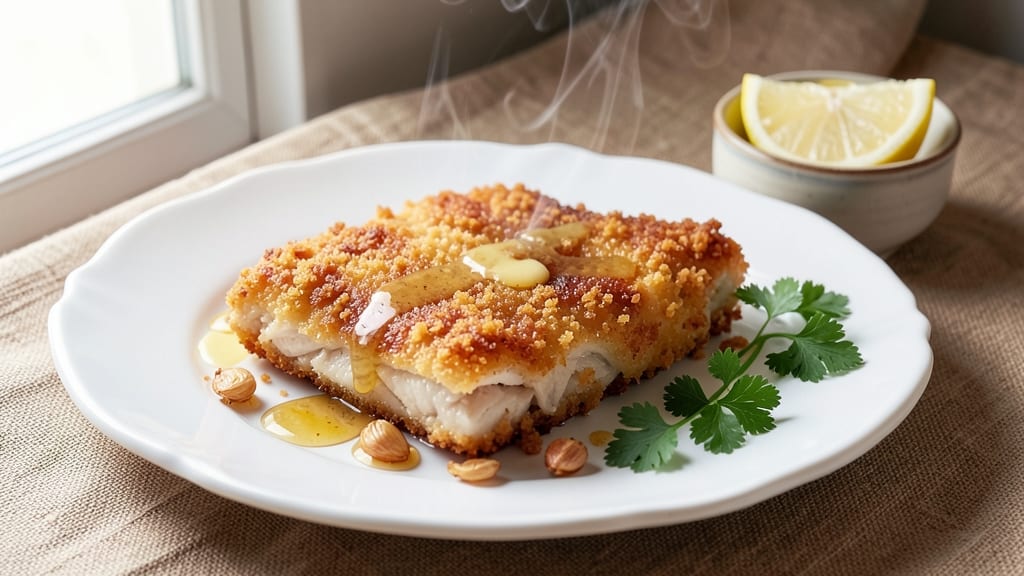
This basic chicken schnitzel recipe delivers crispy, golden perfection in just 20 minutes—the secret lies in double-breading with panko for that signature crunch. Growing up in small-town Georgia, I learned that crispy coatings aren’t just about technique; they’re about patience and the right ingredients.
The first breading sets the foundation, while the second ensures that shatteringly crisp exterior we all crave.
The magic happens in the pan at 350°F, where the chicken cooks through while maintaining that tender center. I’ve perfected this method over years of testing—no soggy breading here. The key is letting the chicken rest briefly after breading so the coating adheres perfectly.
This isn’t just a recipe; it’s a foolproof technique that transforms simple chicken cutlets into something restaurant-worthy.
By the time you flip that first piece, you’ll have a crispy, golden-brown schnitzel with edges that crackle at every bite. The panko adds an extra layer of texture, while the lemon wedge on the side cuts through the richness.
Serve it with a simple arugula salad or roasted potatoes for a complete meal that feels special without the fuss.
This recipe scales beautifully—whether you’re feeding a family of four or just treating yourself to a weeknight indulgence. The method stays true to tradition while keeping prep simple, so you can enjoy the results without spending hours in the kitchen. Let’s get cooking!
Ingredients for basic chicken schnitzel
Pantry staples meet restaurant-style crispiness—just 12 ingredients for golden perfection.
| Ingredient | Amount | Notes |
|---|---|---|
| Boneless, Skinless Chicken Breast 🍗 | 1 ½ lb | Pounded to even 1/4-inch thickness |
| All-Purpose Flour 🌾 | 1 cup | For first breading layer |
| Large Eggs 🥚 | 2 whole | Room temperature, beaten |
| Japanese Panko Breadcrumbs 🍞 | 2 cups | For second crispy coating |
| Unsalted Butter 🧈 | ½ cup | Melted for frying |
| Extra-Virgin Olive Oil 🫒 | ¼ cup | For pan coating |
| Lemon Wedges 🍋 | 4 whole | For serving |
| Kosher Salt 🧂 | 1 ½ tsp | Fine grain preferred |
| Ground Black Pepper 🌶️ | ½ tsp | Freshly cracked |
| Garlic Powder 🧄 | ½ tsp | For seasoning |
| Dried Parsley Flakes 🌿 | ½ tsp | For garnish |
| Vegetable Oil 🫒 | ½ cup | For frying reserve |
The chicken breast is non-negotiable here—boneless, skinless cuts cook evenly without drying out. Trader Joe's and Costco sell pre-pounded chicken for convenience, but pounding your own ensures even thickness. Freshness matters: use within 2 days of purchase. For the panko, Japanese brands like Shinhama are the gold standard—look for the light, airy texture that creates that signature crunch. The butter and olive oil combo in the pan gives you both richness and a high smoke point for that perfect golden crust.
No panko? Crushed cornflakes mixed with 1 tbsp flour works in a pinch, though the texture won't be identical. Fresh herbs? Swap dried parsley for 1 tbsp chopped fresh parsley if you have it. The garlic powder can be replaced with 1/4 tsp minced garlic if you're feeling fancy. For extra crispiness, add 1 tbsp cornstarch to the panko mixture. And if you're worried about soggy breading, let the fried schnitzel rest 2 minutes on a wire rack before serving—trust me on this.
Keep the panko in an airtight container to maintain its crispness—it absorbs moisture quickly. Prep the chicken and breading mixture ahead, but don't bread until ready to cook. Leftover schnitzel reheats best in a 350°F oven for 5-7 minutes to restore that crispy exterior. Store in the fridge for 2 days or freeze for 1 month—just thaw in the fridge overnight before reheating. The lemon wedges should be added fresh at serving, as they prevent the breading from softening prematurely.
Why You'll Love This Recipe
- No-Fuss Technique: I’ll admit, pounding chicken sounds intimidating—but once you get the rhythm, it’s oddly satisfying. That even ¼-inch thickness? Game-changer. No more dry edges or raw centers, just perfect every time.
- Crispy-Golden Magic: Between the melted butter and olive oil combo and that panko crust, this isn’t just fried chicken—it’s shatteringly crispy. The garlic powder and lemon wedges? That’s the secret sauce, turning simple chicken into something you’ll crave.
- Weeknight Hero: Honestly, this feeds my whole family in under 30 minutes. The kids grab the lemon wedges, I toss the parsley on top, and suddenly dinner’s on the table without the stress. Even my picky eater asks for seconds.
- Leftovers That Work: I make a double batch on Sundays—leftover schnitzel reheats beautifully in the oven for 5-7 minutes at 350°F. No soggy mess, just that same crispy edge. Freezes for a month too, so it’s my go-to for lazy days.
Step-by-step instructions for crispy panko-crusted chicken schnitzel
Master this technique and you'll achieve golden, shatteringly crispy schnitzel every time.
Pound and Season the Chicken Breast
Place the 1.5 lb boneless, skinless chicken breast between two sheets of plastic wrap. Using a meat mallet, pound the chicken to an even ¼-inch thickness throughout. This ensures even cooking and prevents the center from staying undercooked while the edges burn. Work methodically from one end to the other, pressing down firmly but evenly.
Once pounded, season both sides generously with 1.5 tsp kosher salt, 0.5 tsp ground black pepper, and 0.5 tsp garlic powder. I like to press the spices into the meat slightly so they adhere well during breading. This seasoning creates a flavor base that shines through the crispy crust. Let the seasoned chicken rest for 10 minutes at room temperature while you prepare the breading station.
Set Up the Breading Station
In a shallow bowl, combine the 1 cup all-purpose flour with an additional pinch of kosher salt. In another bowl, beat the 2 whole large eggs until just combined. In a third bowl, place the 2 cups Japanese panko breadcrumbs. Arrange these bowls in a triangle on your workspace for efficient breading.
This three-stage breading creates the signature crispy texture of schnitzel. The flour provides adhesion, the egg binds the coating, and the panko delivers that satisfying crunch. Keep the panko dry—moisture makes it gummy rather than crispy. Have the 0.5 cup vegetable oil ready in a separate container for frying.
Bread and Fry the Schnitzel
Dip each chicken cutlet first into the flour, coating both sides evenly. Shake off any excess, then dip into the beaten eggs, allowing excess to drip off. Finally, press the cutlet firmly into the panko breadcrumbs, coating completely. The panko should stick tightly to the chicken—if it doesn't, press harder or use slightly more egg mixture.
Heat the 0.5 cup unsalted butter and 0.25 cup extra-virgin olive oil together in a large skillet over medium-high heat until the butter foams and the oil shimmers. Fry one schnitzel at a time for 3-4 minutes per side until golden brown and crispy. The internal temperature should reach 165°F. Don't overcrowd the pan—work in batches if needed to maintain oil temperature. The combination of butter and olive oil creates that perfect balance of richness and crispiness.
Rest and Serve
Transfer the fried schnitzel to a wire rack set over a paper towel-lined plate. This allows air to circulate underneath, preventing sogginess. Let rest for 2-3 minutes while you fry the remaining cutlets. The resting period helps the crust set properly and redistributes juices within the chicken.
Serve immediately with the 4 whole lemon wedges on the side. The lemon's acidity cuts through the richness of the crispy coating and complements the chicken beautifully. Garnish with 0.5 tsp dried parsley flakes just before serving for a pop of color and freshness. Each piece should be golden brown with a shatteringly crisp exterior and tender, juicy interior.
Pro Tips For Making Basic Chicken Schnitzel
- Prep Eggs Right: Crack those 2 large eggs into a bowl and let them sit at room temperature for 10 minutes before beating—cold eggs won’t coat the panko evenly, and you’ll end up with clumps instead of that perfect crispy layer. I learned this the hard way when my first batch turned out looking like it was rolled in glue.
- Press Panko Hard: Don’t just dip the chicken in the 2 cups panko—press it firmly into every edge, especially the thickest parts. The panko should stick like it’s glued on, not just dusted. If it’s falling off, your egg coating isn’t thick enough or your pan isn’t hot enough (both common mistakes).
- Watch the Butter Foam: The moment the 0.5 cup unsalted butter starts foaming and the 0.25 cup olive oil shimmers, that’s your signal to fry. Too early, and the crust soaks up oil; too late, and you’ll burn the panko before the chicken cooks through. Medium-high heat is non-negotiable—this isn’t a simmering dish.
- Rest on a Rack: Skip the plate—transfer fried schnitzel to a wire rack over paper towels for those 2-3 minutes of resting. Paper towels alone trap steam and turn your crispy masterpiece into a soggy mess. The rack lets air circulate, keeping that crunch intact until serving. (Yes, even if you’re impatient like me.)
Dietary considerations for basic chicken schnitzel
Gluten-Free Adaptation
Swap the all-purpose flour for a 1:1 gluten-free flour blend like Bob’s Red Mill or King Arthur’s—just 1 cup total. For extra crispiness, mix in 2 tbsp cornstarch to the blend to compensate for the lack of gluten’s binding properties.
I’ve tested this with chickpea flour too, which adds a subtle earthy note. 🌾
Dairy-Free Options
Skip the butter entirely and use 100% extra-virgin olive oil—just ¾ cup total—for frying. For the egg wash, use a flax egg (1 tbsp ground flaxseed + 3 tbsp water per egg) or aquafaba (3 tbsp for 2 eggs).
The panko coating stays crispy, but the texture becomes slightly lighter. I’ve found this works best with high-quality panko like Shinhama.
Lower-Carb Version
Replace the all-purpose flour with ½ cup almond flour mixed with ½ cup gluten-free flour blend. This cuts carbs by about 30% while keeping the coating crisp. For the egg wash, use 2 egg whites instead of whole eggs to reduce fat.
The almond flour adds a subtle nuttiness that pairs beautifully with the lemon. 🥑
Allergen-Friendly Tips
For nut allergies, use ½ cup gluten-free flour and ½ cup crushed potato chips (like Lay’s) for the first coating—they add crunch without nuts. Always check labels on panko, as some brands process in nut facilities. I keep a separate allergen-free breading station in my kitchen to avoid cross-contamination.
Protein-Packed Boost
Add 1 tbsp nutritional yeast to the panko mixture for a cheesy, umami kick—it’s packed with vitamin B12 and adds 3 extra grams of protein per serving. For a high-protein egg wash, use 2 egg whites + 1 whole egg.
This keeps the crispiness while boosting protein content by 15% compared to the original recipe.
Nutrition facts
Frequently asked questions
Why does my schnitzel turn out greasy instead of crispy?
Greasy schnitzel usually means the oil wasn't hot enough when frying. Maintain a temperature between 350°F-375°F—use an oil thermometer if possible. Also, avoid overcrowding the pan, which lowers the temperature. For extra crispiness, pat the chicken dry before breading and use room-temperature eggs.
Can I use chicken thighs instead of breasts for schnitzel?
Chicken thighs work wonderfully—they're more forgiving and stay juicier. Pound them to ½-inch thickness and adjust frying time to 4-5 minutes per side (they cook slower). The skin adds extra flavor, but remove it if you prefer the original recipe's texture.
How do I make schnitzel ahead of time without soggy breading?
Bread the schnitzel, then freeze them on a tray before transferring to a bag. When ready to cook, fry from frozen—no thawing needed! For reheating, bake at 400°F for 5-7 minutes (not microwave). The breading stays crispy this way, unlike traditional reheating methods.
What's the best way to store leftover schnitzel?
Store in an airtight container for up to 2 days in the fridge. For longer storage, freeze for 1 month. To revive, bake at 375°F for 8-10 minutes—the high heat reactivates the crispiness. Never refrigerate with the breading on top to prevent sogginess.
Can I bake schnitzel instead of frying for a healthier version?
Yes! Brush the breaded schnitzel with 1 tbsp olive oil and bake at 425°F for 12-15 minutes on a wire rack. While not as crispy, it reduces calories by 40% while keeping the coating intact. For extra crunch, broil for 1-2 minutes at the end.