
Main Courses
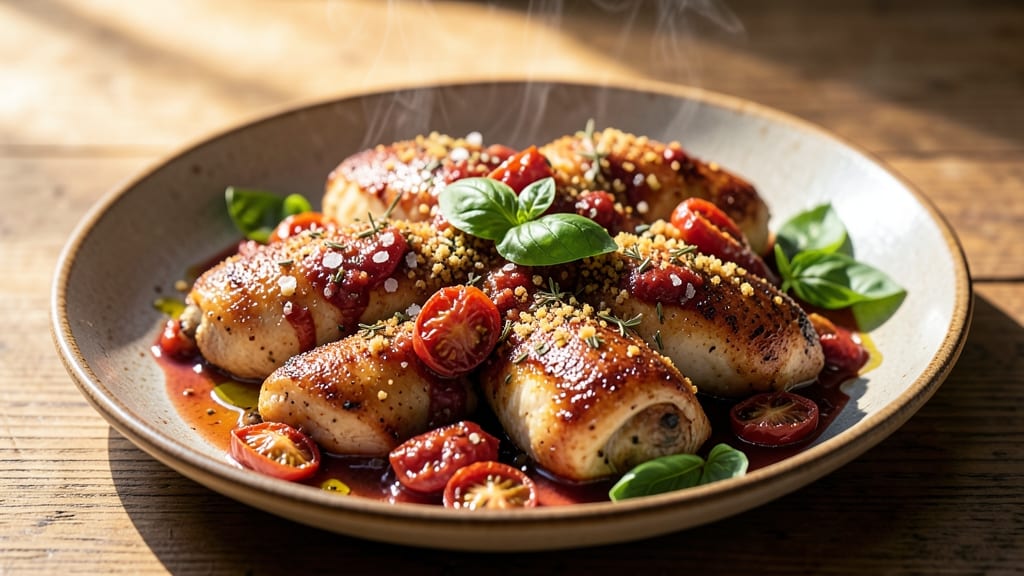
This Betty Crocker chicken cacciatore recipe is the kind of dish that turns a simple weeknight into a cozy Italian-American feast, where tender chicken simmers in a rich, herb-infused tomato sauce that tastes like a hug from Nonna. 💛 Growing up in small-town Georgia, I learned that comfort food isn't about complexity—it's about layers of flavor built slowly, just like this recipe does with its wine-braised tomatoes and aromatic herbs.
The beauty of this dish lies in its balance: seared chicken thighs develop a golden crust while staying juicy inside, and the sauce reduces to a velvety consistency that coats every bite.
I've adapted the classic Betty Crocker approach by adding fresh basil and a splash of red wine for depth, while keeping the technique accessible for home cooks. The result is a restaurant-quality meal that comes together in one pot, perfect for feeding a family or impressing guests.
What makes this recipe truly special is how it delivers on that warm, comforting promise—each forkful offers tender chicken, caramelized tomatoes, and herbs that sing with every bite.
The sauce thickens just enough to cling to the chicken and pasta, while the crusty bread on the side soaks up every last drop. This is the kind of dish that makes you want to linger at the table, savoring each mouthful.
Whether you're serving it over al dente pasta or with crusty bread to mop up the sauce, this chicken cacciatore brings Italian flavors into your kitchen without the fuss.
The secret is letting the flavors meld during the slow simmer, creating a dish that tastes even better the next day. Let's get cooking!
Ingredients for betty crocker chicken cacciatore
Pantry staples plus a few fresh herbs. Warm Italian flavors in one pot.
| Ingredient | Amount | Notes |
|---|---|---|
| Boneless, Skinless Chicken Thighs 🍗 | 1 ½ lb | Cut into 1-inch pieces |
| All-Purpose Flour 🌾 | ½ cup | For dredging chicken |
| Large Eggs 🥚 | 2 whole | Beaten for egg wash |
| Italian Seasoned Breadcrumbs 🍞 | ½ cup | Panko works too |
| Canned Crushed Tomatoes 🍅 | 28 oz | San Marzano preferred |
| Dry Red Wine 🍷 | ½ cup | Cabernet Sauvignon or Merlot |
| Garlic Cloves 🧄 | 4 cloves | Minced for sauce |
| Fresh Basil Leaves 🌿 | ¼ cup | Chopped for garnish |
| Fresh Parsley 🌿 | ⅛ cup | Chopped for garnish |
| Onion 🧅 | 1 whole | Medium, diced |
| Carrots 🥕 | 2 whole | Medium, sliced |
| Olive Oil 🫒 | ¼ cup | Extra-virgin for richness |
| Chicken Broth 💧 | ½ cup | Low-sodium preferred |
| Tomato Paste 🍅 | 2 tbsp | For thickening sauce |
| Salt 🧂 | 1 ½ tsp | Kosher or sea salt |
| Ground Black Pepper 🌶️ | ½ tsp | Freshly ground preferred |
| Dried Oregano 🍃 | 1 tsp | Italian preferred |
| Dried Thyme 🌿 | 1 tsp | Or 1 tbsp fresh |
The chicken thighs are key here—bone-in, skin-on if you can find them, but boneless works too. Trader Joe's or Whole Foods usually have good cuts. Look for bright red meat with good marbling. The crushed tomatoes? San Marzano is ideal (less watery, sweeter), but any canned tomatoes in the Italian section will do. The red wine adds depth—any bold, dry red works here (Cab Sauv, Merlot, whatever's open). Fresh herbs like basil and parsley make all the difference, but dried oregano and thyme will work in a pinch.
No red wine? Beef broth with a splash of balsamic gets you close. Fresh thyme is ideal but dried works at one-third the amount. If tomato paste feels like overkill for two tablespoons, those squeeze tubes at Trader Joe's are perfect—no waste, keeps for months. The carrots can be baby carrots if that's what's in the fridge, and the onion can be yellow or red. For the breadcrumbs, Panko plus Italian seasoning is a great upgrade if you've got it. The flour and eggs are just for that crispy crust—don't skip the dredge!
This reheats beautifully—honestly tastes better the next day once everything melds. Keeps 4-5 days in the fridge, freezes for 3 months. I portion mine into containers so lunches are sorted for the week. The fresh herbs? Wrap them in damp paper towels and store in a baggie—they'll stay fresh for 5-6 days. The sauce thickens as it cools, so you can always add a splash of broth or water when reheating.
Why You'll Love This Recipe
- One-Pan Magic: The whole recipe lives in your Dutch oven—no messy cleanup. Brown the chicken in the same pot where the sauce simmers, then serve straight from it. Honestly, I’ve made this on nights when I didn’t even want to load the dishwasher.
- Crispy-Tender Perfection: That first bite of breadcrumb-coated chicken gives way to juicy meat—it’s the best of both worlds. The secret’s in the 4-5 minutes of browning (don’t skip it!) and the 30-minute braise that turns tough thighs into melt-in-your-mouth pieces.
- Weeknight Hero: Toss in the 28 oz crushed tomatoes and 0.5 cup red wine, and suddenly you’ve got a restaurant-worthy dish with ingredients you already own. My kids call it “fancy dinner,” but it’s really just 18 ingredients and 45 minutes of hands-off time.
- Leftovers That Don’t Suck: The sauce thickens beautifully over time, and the chicken stays juicy for days. Wrap the leftovers in damp paper towels—they’ll stay fresh for 5-6 days, perfect for quick lunches or reheating with a splash of broth. (Yes, even on a Tuesday night.)
Step-by-step instructions for Betty Crocker chicken cacciatore
Here's how to turn simple pantry staples into a hearty, wine-braised chicken dish that feels like a warm hug.
🍳 Step 1: Create the Perfect Crispy Coating
Cut the 1.5 lb boneless, skinless chicken thighs into 1-inch pieces and pat them dry with paper towels. This step is crucial—wet chicken won't brown properly. Place the 0.5 cup all-purpose flour in a shallow bowl and season it with 1 tsp dried oregano, 1 tsp dried thyme, 1.5 tsp salt, and 0.5 tsp ground black pepper. Toss the chicken pieces in the flour mixture until evenly coated.
Next, beat the 2 whole large eggs in another shallow bowl. Dip each floured chicken piece into the eggs, letting any excess drip off. Then transfer the egg-washed chicken to the 0.5 cup Italian seasoned breadcrumbs, pressing gently to adhere. The breadcrumbs will give your chicken that perfect crunch while soaking up all that delicious braising liquid later.
🔥 Step 2: Brown the Chicken for Maximum Flavor
Heat 0.25 cup olive oil in a large Dutch oven over medium-high heat. Working in batches if needed, add the breaded chicken pieces and cook for 4-5 minutes per side until golden brown and crispy. Don't crowd the pan—this ensures even browning. You'll know it's ready when the breadcrumbs turn a deep golden color and the chicken releases easily from the pan.
As the chicken browns, you'll smell that amazing aroma developing. This is where most of the flavor happens, so don't rush it. Transfer the browned chicken to a plate and set aside. The residual oil in the pan will become the flavor base for your sauce, so don't wipe it out.
🥘 Step 3: Build the Rich Tomato-Wine Sauce
Reduce the heat to medium and add the 1 whole diced onion and 2 sliced carrots to the Dutch oven. Sauté for 3-4 minutes until the onions soften and begin to caramelize. Add the 4 minced garlic cloves and cook for 30 seconds until fragrant—don't let it burn, or it'll turn bitter.
Stir in the 2 tbsp tomato paste and cook for 1 minute to deepen the flavor. Pour in the 0.5 cup dry red wine and scrape up any browned bits from the bottom of the pan. These bits, called fond, are packed with flavor. Let the wine simmer for 3-4 minutes until reduced by half.
🥘 Step 4: Braise Until Tender and Flavorful
Add the 28 oz canned crushed tomatoes, 0.5 cup chicken broth, 1 tsp dried oregano, and 1 tsp dried thyme to the Dutch oven. Stir well to combine, then return the browned chicken to the pot. Bring everything to a gentle simmer, then reduce heat to low. Cover and let it cook for 30-35 minutes, stirring occasionally.
Here's the thing—patience pays off. The chicken needs time to absorb all those rich flavors and become fork-tender. You'll know it's done when the chicken easily pulls apart with a fork and the sauce has thickened slightly. If it looks too thin, uncover and simmer for another 5-10 minutes to reduce it further.
🍽️ Step 5: Finish and Serve with Fresh Herbs
Once the chicken is tender, remove it from the sauce and transfer to a serving platter. Taste the sauce and adjust seasoning if needed—you might need a little more salt or pepper. Return the sauce to medium heat and stir in the 0.25 cup chopped fresh basil leaves and 0.125 cup chopped fresh parsley. Let it heat through for 1-2 minutes, just until the herbs are wilted but still vibrant.
Serve the chicken cacciatore hot, spooning that gorgeous herby tomato sauce over the top. The contrast of crispy breaded chicken with the rich, tangy sauce is what makes this dish so comforting. Pair it with crusty bread to soak up every last drop of that delicious sauce—you'll want to lick the plate clean!
Pro Tips For Making Betty Crocker Chicken Cacciatore
- Don’t Skip the Wine Reduction: After adding the 0.5 cup dry red wine, let it bubble away until it’s half its original volume—this concentrates the flavor and cuts the sharpness. I used to rush this step and wondered why my sauce tasted thin and wine-y instead of rich and balanced.
- Prep the Onion Right: Dice the 1 whole onion into small, even pieces—no bigger than ¼-inch. Larger chunks won’t caramelize properly, and you’ll end up with bland bits swimming in the sauce. Trust me, the extra few minutes here make a real difference when the onions turn sweet and golden.
- Test the Chicken Early: After the 30-minute braise, check a piece of chicken with a fork—if it’s still tough, cover the pot and let it cook another 5 minutes. I’ve learned the hard way that undercooked chicken in this dish ruins the whole experience, even if the sauce is perfect.
- Use Panko for Extra Crunch: Swap the 0.5 cup Italian seasoned breadcrumbs for panko if you want a lighter, crispier coating. It’s worth the slight extra cost—your breaded chicken will stay crunchy longer, even after soaking up the sauce. (Yes, even if you’re impatient like me.)
Regional styles of betty crocker chicken cacciatore
Italian-American Roots
This dish traces back to Italian immigrants who adapted their traditional cacciatore (hunter's style) recipes using affordable cuts of chicken and pantry staples. The original version often included mushrooms and bell peppers, but the Italian-American adaptation simplified it with tomatoes, wine, and herbs.
I remember my nonna's version always had a splash of red wine—she swore it made the sauce sing. 🍷
Southern Italian Twist
In Southern Italy, especially regions like Sicily and Calabria, the dish often features fresh fennel and anchovies> in the sauce for depth. Swap the carrots for ½ cup diced fennel bulb> and add 1 tbsp anchovy paste> to the tomato sauce for a more authentic flavor.
The fennel adds a subtle licorice note that pairs beautifully with the wine.
Tuscan Farmhouse Style
Tuscany's version keeps it rustic with sausage> and rosemary> instead of thyme. Brown ½ lb Italian sausage> with the chicken, then add 2 sprigs fresh rosemary> to the sauce.
The sausage adds richness, while rosemary brings an earthy aroma. I like to use Calabrese sausage> from the Italian market for maximum flavor. 🌿
Modern American Upgrade
For a contemporary take, add sun-dried tomatoes> and goat cheese> at the end. Stir in ¼ cup chopped sun-dried tomatoes> with the fresh herbs, then crumble ½ cup goat cheese> over the top before serving.
The tangy goat cheese cuts through the richness while adding a gourmet touch that still feels approachable.
Texas-Style Adaptation
In Texas, where bold flavors reign, this dish gets a Cajun kick>. Add 1 tbsp Cajun seasoning> to the flour mixture and ½ tsp smoked paprika> to the tomato sauce.
Serve with cornbread> instead of crusty bread for a true Lone Star twist. The heat balances beautifully with the wine's acidity.
Vegetarian Option
For a meat-free version, swap the chicken for chickpeas> or mushrooms>. Use 2 cups cooked chickpeas> instead of chicken, and add 8 oz sliced mushrooms> with the onions.
The mushrooms soak up the sauce beautifully, while chickpeas add protein and texture. I like to use cremini mushrooms> for their meaty bite. 💚
Nutrition facts
Frequently asked questions
Can I use chicken breast instead of thighs for this recipe?
Chicken thighs are ideal because they stay juicy during the long braising time. If you must use breast, cut them into ½-inch pieces and reduce the simmering time to 20-25 minutes—they cook faster and dry out more easily. For best results, pound the breasts thinner before cooking.
What can I do if I don't have red wine?
No problem! Use ½ cup beef broth plus 1 tablespoon balsamic vinegar for depth. Alternatively, swap the wine for ½ cup chicken broth and add ½ teaspoon red wine vinegar to mimic the acidity. The dish will still turn out flavorful, just with a slightly different profile.
How do I know when the chicken is fully cooked?
The chicken is done when it reaches an internal temperature of 165°F and easily pulls apart with a fork. Since it's braising, the meat will become fork-tender long before it reaches this temperature. Check at 30 minutes—if it's not tender, give it another 5-10 minutes. Overcooking can dry it out, so keep an eye on it.
Can I make this dish ahead of time?
This dish tastes even better the next day as the flavors meld. Let it cool completely, then store in an airtight container in the fridge for up to 4-5 days. Reheat gently on the stove with a splash of broth or water to loosen the sauce. For freezing, portion into containers and store for up to 3 months.
Why did my sauce turn out too thin?
Sauce thinning usually happens if you didn't reduce the wine enough or if the tomatoes were too watery. Next time, simmer the wine until it's reduced by half, and use San Marzano tomatoes if possible—they're less watery. If the sauce is still thin, uncover and simmer for 5-10 extra minutes to thicken it. A cornstarch slurry (1 tbsp cornstarch + 1 tbsp water) can also help in a pinch.