
Main Courses
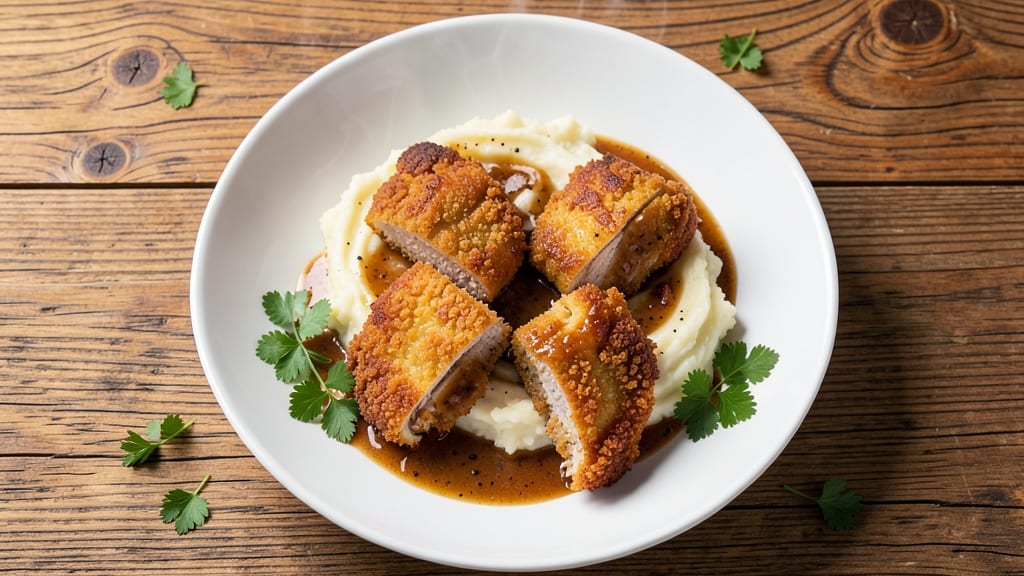
This Bisquick chicken fried steak recipe delivers all the crispy, golden comfort of a Southern classic—without the hours in the kitchen.
Growing up in small-town Georgia, I learned that the secret to perfect chicken fried steak lies in three things: a thin, even breading, hot oil, and patience while frying. The result?
A tender, juicy cutlet with a crust so crisp it shatters like glass, served alongside rich, velvety gravy that ties it all together.
The beauty of this method is how it balances tradition with modern efficiency. While traditional recipes call for hand-cutting steaks, I’ve refined the process to work with store-bought sirloin or flank steak, saving time without sacrificing flavor.
The Bisquick batter creates that signature crunch, and the gravy—made from the pan drippings—adds depth that turns a simple weeknight dinner into a restaurant-worthy meal. It’s the kind of dish that feels like a hug on a plate.
What sets this apart is the foolproof technique for achieving crispy crusts every time, even if you’re not an experienced fryer. The steak cooks in just 15 minutes, while the gravy simmers in another 10, making it a 30-minute comfort meal that’s perfect for busy weeknights.
Serve it with fluffy mashed potatoes or buttery green beans, and you’ve got a full Southern spread without the fuss.
Between you and me, the real magic happens in the frying step—where hot oil and a light touch transform a simple cut of meat into something extraordinary. Trust me, once you master this, you’ll never go back to store-bought fried steak again. Let’s get started on making yours.
Ingredients for bisquick chicken fried steak
Pantry staples meet Southern tradition—just a few ingredients for crispy perfection.
| Ingredient | Amount | Notes |
|---|---|---|
| Sirloin Steak 🥩 | 1 ½ lb | Thin cutlets, pounded even |
| All-Purpose Flour 🌾 | 1 cup | For dredging before batter |
| Bisquick Baking Mix 🍞 | 1 ½ cups | Original recipe preferred |
| Large Eggs 🥚 | 2 whole | Lightly beaten for batter |
| Whole Milk 🥛 | ½ cup | Full-fat for creaminess |
| Vegetable Oil 🫒 | 4 cups | For deep frying (350°F) |
| Salt 🧂 | 1 ½ tsp | Kosher or sea salt |
| Ground Black Pepper 🌶️ | ½ tsp | Freshly ground preferred |
| Garlic Powder 🧄 | ½ tsp | For seasoning steaks |
| Onion Powder 🧅 | ½ tsp | For seasoning steaks |
| Unsalted Butter 🧈 | 2 tbsp | For gravy, melted |
| All-Purpose Flour 🌾 | ½ cup | For gravy thickening |
| Beef Broth 🍲 | ½ cup | Low-sodium preferred |
The steak cut matters here. Sirloin is my go-to because it’s lean but tender enough to stay juicy. Look for cuts that are about 1/4-inch thick—thinner than a steakhouse cut but not too delicate. Costco or Whole Foods usually carry pre-cut sirloin steaks in the meat department, but if you’re buying a whole cut, ask the butcher to slice it thin. Pounding the steaks to an even 1/8-inch thickness is key—use a meat mallet or roll pin. If you don’t have one, zip-top bags work in a pinch (just place the steak inside and gently pound with a pan). The Bisquick should be the original recipe—it’s got the right balance of flour and leavening for that signature crunch. Grab a box if you don’t have it; it’s a Southern pantry staple.
No Bisquick? Substitute 1.5 cups all-purpose flour plus 1.5 tsp baking powder—it won’t be identical, but it’ll get you close. Short on milk? Buttermilk or even water in a bind, though the batter might be slightly denser. For the frying oil, vegetable or canola oil works best because it has a high smoke point and stays hot without burning. If you’re worried about waste, use a deep fry thermometer to keep the oil at 350°F—any hotter and the crust burns before the steak cooks through. The gravy’s the star here, so don’t skimp on the butter. European-style butter has more fat and gives a richer gravy, but regular unsalted works too. For the beef broth, low-sodium is crucial—you don’t want to over-salt your gravy.
Steaks stay crispy for about 15 minutes after frying, so serve them immediately. Store leftover gravy in the fridge for up to 5 days—it actually tastes better the next day as the flavors meld. To reheat, warm it gently on the stove, stirring constantly to prevent lumps. The Bisquick batter keeps well in a sealed container for 3 months in the pantry, so you can make a big batch ahead of time. Pro tip: Double the recipe and freeze half the cooked steaks—just reheat in a skillet for a quick weeknight meal. The oil can be reused 2-3 times if you strain it through a fine-mesh sieve after each use and store it in a cool, dark place.
Why You'll Love This Recipe
- Pantry Magic: The Bisquick does all the work—no yeast, no resting, no fuss. Just mix, dip, and fry. I keep a box in my cabinet for days like this when I’m too tired to measure spices.
- Crispy-Creamy Dream: That golden crust from the Bisquick and milk dip? Irresistible. The steak stays tender inside while the outside gets that satisfying crunch—like a hug from comfort food.
- Weeknight to Weekend: Serve it with mashed potatoes for a lazy Tuesday or dress it up with gravy and green beans for Sunday dinner. Same recipe, totally different vibes—no extra effort, just different sides.
- Leftovers That Don’t Suck: Fry a batch, reheat in the oven, and it’s just as good the second day. Honestly, I often make extra because it’s cheaper than takeout and way better than frozen dinners. Budget win.
Step-by-step instructions for Bisquick chicken fried steak
Here's the method that delivers that iconic Southern crispiness without the fuss.
Prepare the Steak Cutlets
Begin by slicing the 1.5 lb sirloin steak into 4 even cutlets, each about ½-inch thick. Place each cutlet between two sheets of plastic wrap and pound gently with a meat mallet until uniformly ¼-inch thick. This ensures even cooking and maximum crispiness.
Season both sides generously with 1.5 tsp salt, 0.5 tsp ground black pepper, 0.5 tsp garlic powder, and 0.5 tsp onion powder. Let the seasoned steaks rest for 10 minutes at room temperature while you prepare the dredging station. This step guarantees the seasoning penetrates and prevents cold spots when frying.
Create the Batter and Fry the Steaks
In a shallow bowl, whisk together the 2 whole large eggs and 0.5 cup whole milk until just combined. In another bowl, mix the 1.5 cups Bisquick baking mix with the 1 cup all-purpose flour. The batter should be thick but pourable—like heavy cream.
Heat 4 cups vegetable oil in a deep skillet to 350°F. Working with one steak at a time, dredge it in the flour mixture first, letting any excess fall off, then dip into the egg mixture, and finally coat thoroughly in the Bisquick mixture. Fry for 3-4 minutes per side until deep golden brown. Transfer to a wire rack to drain excess oil and keep warm in a 200°F oven while you fry the remaining steaks.
Make the Classic Gravy
In the same skillet (no need to clean it), melt the 2 tbsp unsalted butter over medium heat. Stir in the 0.5 cup all-purpose flour and cook for 1-2 minutes until bubbly but not browned. Slowly whisk in the 0.5 cup beef broth, stirring constantly to prevent lumps. Let the gravy simmer for 3-4 minutes until thickened to your preferred consistency.
Serve with Warm Gravy
Plate the crispy steaks immediately, spooning the rich gravy generously over each portion. The contrast of the golden crust with the creamy gravy is what makes this dish so comforting. Serve with buttered mashed potatoes or fluffy biscuits for the full Southern experience.
Here's the thing—don't skip the resting step. Keeping the steaks warm in the oven prevents them from becoming soggy while you finish the gravy. And remember, the gravy should coat the back of a spoon but still be pourable. If it thickens too much, whisk in a splash of warm milk to loosen it.
Pro Tips For Making Bisquick Chicken Fried Steak
- USE COLD STEAK: Grab that sirloin straight from the fridge—no thawing needed. Cold meat seals better when it hits the hot pan, so skip the room-temperature wait. (Yes, even if you're impatient like me.)
- DON’T SKIP THE FLOUR DREDGE: Toss the steak in flour before the Bisquick mix—it’s the glue that keeps the crust from falling apart. I learned this the hard way when my first batch turned to mush.
- COOK LOW AND SLOW: Once the steak’s in the pan, turn the heat down to medium. Too hot, and you’ll burn the outside before the inside cooks. Low and steady gives you that perfect golden crust without a crispy disaster.
- WHISK THE MILK: Beat the egg and milk until smooth—no lumps, no excuses. I used to just stir, but whisking cuts down on greasy spots in the crust. (And yes, whole milk makes all the difference here.)
Creative variations of this recipe
Southern-Inspired Twist
My Georgia upbringing taught me that chicken fried steak isn’t just a meal—it’s a celebration. For a true Southern experience, swap the sirloin for pork tenderloin and add 1 tbsp smoked paprika to the seasoning mix.
This creates a smoky depth that pairs perfectly with the crispy crust. I often serve this version with collard greens and cornbread for a full heritage spread. 🌶️
Spicy Cajun Kick
For those who love heat, transform this into a Cajun-style dish by adding 1 tsp Cajun seasoning (like Tony Chachere's) to the flour mixture. Boost the kick with ½ tsp cayenne pepper in the gravy and finish with chopped green onions.
Serve with dirty rice for a Louisiana-inspired twist that’ll wake up your taste buds.
Air Fryer Adaptation
Cutting oil? No problem—this recipe works beautifully in an air fryer. Lightly spray the steaks with cooking oil spray after dredging and air fry at 375°F for 12-15 minutes, flipping halfway.
The crust won’t be as crispy as deep-frying, but it’s a healthier alternative. Just brush the finished steaks with a little melted butter for extra richness. ✨
Breakfast Version
Turn dinner into breakfast by adding 1 tsp dried sage to the flour mixture and serving with fried eggs and crispy hash browns. The sage adds an earthy note that complements the savory steak perfectly.
Pro tip: Use thicker cutlets (about ½-inch) for this version so they hold up to the extra toppings.
Vegetarian Option
For a plant-based version, use firm tofu or extra-firm tempeh, sliced into ¼-inch thick cutlets. Press out excess moisture first—place the tofu between paper towels and weigh it down for 15 minutes.
Follow the same breading and frying process, but reduce the oil temperature to 325°F to prevent burning. The result? A surprisingly satisfying crispy crust that’ll fool even meat lovers.
Gourmet Upgrade
Elevate this classic with truffle oil—add ½ tsp to the gravy for a luxurious touch. For extra decadence, top each steak with crumbled blue cheese and thinly sliced pearl onions before serving. This version feels fancy enough for dinner parties but still delivers that comforting Southern soul. 💫
Nutrition facts
Frequently asked questions
Can I use a different type of flour instead of Bisquick?
You can substitute 1.5 cups all-purpose flour plus 1.5 teaspoons baking powder for the Bisquick, but the texture won't be identical. The original Bisquick creates that signature crispy, golden crust that's harder to replicate. If you're in a pinch, this combo works in a bind, but for the best results, stick with the original recipe.
How do I keep the steaks from getting soggy?
Keep the fried steaks warm in a 200°F oven on a wire rack while you finish the gravy. This prevents steam from building up and making the crust soggy. Also, don't overcrowd the pan when frying—leave space between steaks for even cooking. The key is speed: fry, drain, and serve promptly.
What's the best way to reheat leftover chicken fried steak?
Reheat in a skillet over medium heat with a splash of milk or broth to keep the crust crispy. Cover loosely for 2-3 minutes per side until warmed through. Microwaving will make the crust rubbery, so always use a stovetop method. The gravy reheats beautifully on the stove too—just warm it gently while you reheat the steaks.
Can I make this recipe ahead of time?
You can prep the batter and seasoned steaks 1 day ahead, but fry and serve immediately for the best texture. The gravy can be made up to 5 days in advance and reheated gently. For a make-ahead meal, consider baking the steaks at 375°F for 15 minutes (instead of frying) to hold up better for reheating. Store components separately in airtight containers.
Why did my steaks turn out greasy instead of crispy?
Greasy results usually mean the oil wasn't hot enough (350°F) or the steaks were overcrowded in the pan. Test the oil temperature with a thermometer and fry steaks in batches if needed. Also, make sure to drain them on a wire rack after frying—don't stack them on paper towels, which can trap steam. A light coating of oil on the rack helps maintain crispiness.