
Soups & Stews
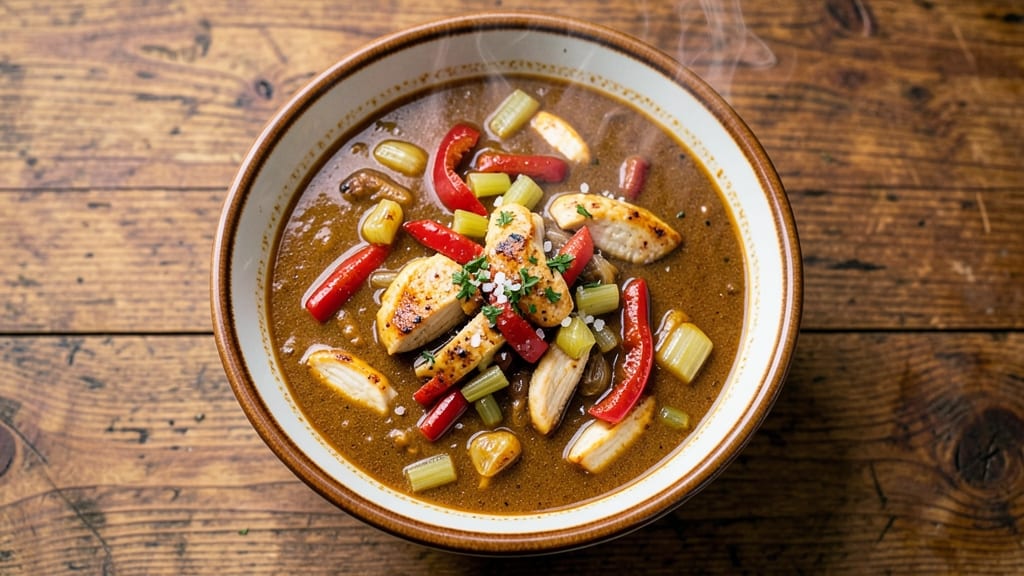
This Campbell’s Chicken Gumbo Soup Copycat Recipe brings home the soul of that legendary roux and perfectly balanced flavors. The secret lies in slow-cooking the roux until it reaches that perfect mahogany color—where the flour transforms into a flavor base that carries the entire soup.
I've perfected this technique over years of Southern cooking, and it delivers that same comforting, hearty taste you remember from the can.
The magic happens in stages: first building the roux, then adding the "holy trinity" of celery, onions, and bell peppers, followed by the chicken and spices. The celery crown garnish adds that signature crunch and visual appeal that makes this copycat version indistinguishable from the original.
This recipe delivers restaurant-quality depth with simple pantry staples and about 90 minutes of hands-off cooking time.
What you'll end up with is a bowl of soup that's rich, savory, and perfectly balanced—where each spoonful delivers tender chicken, smoky spices, and that velvety roux base. The aroma alone will have everyone gathering at your table, and the flavor lingers long after the last bite.
This is comfort food at its finest, made even better knowing you crafted it yourself.
The best part? This recipe scales effortlessly for crowds, and the leftovers reheat beautifully. Whether you're feeding a family or planning for meal prep, this copycat gumbo delivers the same soul-warming experience as the classic canned version. Let's get cooking—your taste buds will thank you.
Ingredients for campbell's chicken gumbo soup copycat
Simple pantry staples transform into restaurant-quality gumbo with that signature mahogany roux.
| Ingredient | Amount | Notes |
|---|---|---|
| All-Purpose Flour 🌾 | ½ cup | For rich roux development |
| Vegetable Oil 🫒 | ½ cup | For roux cooking |
| Celery Stalk 🥬 | 3 whole | Diced for holy trinity |
| Yellow Onion 🧅 | 1 whole | Diced for holy trinity |
| Green Bell Pepper 🌶️ | 1 whole | Diced for holy trinity |
| Chicken Breast 🍗 | 2 lb | Boneless, skinless, cut into bite-sized pieces |
| Garlic Cloves 🧄 | 4 cloves | Minced for flavor depth |
| Diced Tomatoes 🍅 | 14 ½ oz | Canned, undrained for moisture |
| Chicken Broth 💧 | 4 cups | Low-sodium preferred |
| Cajun Seasoning 🌶️ | 2 tbsp | Or homemade blend |
| Smoked Paprika 🌶️ | 1 tbsp | For smoky depth |
| Dried Thyme 🌿 | 1 tsp | Or 1 tbsp fresh |
| Bay Leaves 🌿 | 2 whole | For aromatic base |
| Salt 🧂 | 1 ½ tsp | Adjust to taste |
| Black Pepper 🌶️ | ½ tsp | Freshly ground preferred |
| Celery Leaves 🥬 | ½ cup | For celery crown garnish |
The roux is non-negotiable here—this is where the magic happens. All-purpose flour and vegetable oil cooked until mahogany (about 45 minutes) creates that velvety base. Bob's Red Mill flour works best for roux, but any all-purpose will do. The holy trinity—celery, onion, bell pepper—should be finely diced (about 1/4-inch pieces) so they melt into the soup. I always grab the freshest celery I can find (look for crisp, vibrant stalks) because it makes the celery crown garnish pop later. For the Cajun seasoning, Tony Chachere's is the gold standard, but any good blend works.
No Cajun seasoning? Mix 1 tbsp each smoked paprika, garlic powder, onion powder, dried thyme, and 1/2 tsp cayenne. The diced tomatoes can be fresh if you're feeling fancy, but Muir Glen or Hunt's work perfectly fine. Chicken broth matters—low-sodium so you control the saltiness. The celery crown is the showstopper: save the leaves from the celery you chop for the holy trinity, then blend with a little broth to make a glaze. Pro tip: Use a high-speed blender for the smoothest texture. If you're short on time, skip the celery crown—it's delicious without it, but where's the fun in that?
This soup tastes even better the next day—trust me, the flavors meld beautifully. Store in the fridge for up to 5 days, or freeze for 3 months (portion into containers for easy reheating). The roux thickens when cold, so stir in a splash of broth when reheating. For meal prep, double the batch—it's perfect for lunches or potlucks. The celery crown keeps fresh for 3 days in the fridge if stored in a sealed container. Leftovers reheat beautifully—just add a little extra broth if it's too thick.
Why You'll Love This Recipe
- One-Pot Magic: I swear by this recipe when I’m too tired to wash a million dishes—just one pot, no fuss. The dark roux (that nutty, toasty flour-and-oil base) does all the heavy lifting, and by the time you’re stirring in the holy trinity (celery, onion, bell pepper), the house already smells like a Louisiana roadside diner.
- Restaurant-Level Depth: That 15-20 minute roux isn’t just a step—it’s the soul of the soup. The smoky paprika and Cajun seasoning hit like a warm hug, while the celery leaves on top add a crisp, herbal punch that makes it taste like you slaved over it for hours. (Between us, the first time I skipped the roux? Disaster. Don’t skip it.)
- Meal Prep MVP: Make a double batch on Sunday, and you’ve got five easy lunches—just reheat and serve. The broth thickens beautifully over time, and the chicken stays tender. Honestly, my kids ask for it more than takeout, and that’s saying something after I burned their pizza once.
- Budget-Friendly Powerhouse: Chicken breast is affordable, and pantry staples like flour, oil, and canned tomatoes stretch this recipe far. Plus, the leftovers (up to 5 days in the fridge!) mean no wasted ingredients. It’s the kind of soup that makes you feel like you’re feeding a crowd without breaking the bank.
Step-by-step instructions for chicken gumbo soup
Here's how to build that signature Campbell's flavor—layer by layer, starting with the roux.
Cook the Dark Roux to Perfection
Heat the 0.5 cup vegetable oil in a large, heavy pot over medium heat. Add the 0.5 cup all-purpose flour all at once and stir constantly with a wooden spoon. This is where the magic happens—you're building the foundation of your gumbo's rich flavor.
Cook for 15-20 minutes, stirring nonstop, until the roux turns a deep, chocolate-brown color. It should smell nutty and toasty, not burnt. If it gets too dark too quickly, reduce the heat slightly. This roux will be your soup's secret weapon, giving it that unmistakable depth and thickness that sets it apart.
Build the Holy Trinity and Sear the Chicken
While the roux cooks, dice the 3 whole celery stalks, 1 whole yellow onion, and 1 whole green bell pepper into small, even pieces. These are your holy trinity—essential for that classic gumbo flavor. Add them to the pot with the roux and cook for 5 minutes, stirring constantly.
Push the vegetables to the side of the pot and add the 2 lb chicken breast, cut into bite-sized pieces. Cook for 5-7 minutes until the chicken is no longer pink in the center. Remove the chicken with a slotted spoon and set it aside. Here's the thing—this step develops the base flavors that will carry through your entire soup.
Simmer the Aromatics and Add Liquids
Add the 4 cloves garlic cloves, minced, to the pot and cook for 30 seconds until fragrant. Stir in the 14.5 oz diced tomatoes (with juice), 4 cups chicken broth, 2 tbsp Cajun seasoning, 1 tbsp smoked paprika, 1 tsp dried thyme, and 2 whole bay leaves. Bring everything to a gentle boil, then reduce heat to low and let it simmer for 20 minutes. This is where all those flavors meld together beautifully.
Return the chicken to the pot and simmer for another 10-15 minutes until the chicken is fully cooked through and tender. The broth should be thick and flavorful, with a rich, dark color. If it's too thin, simmer uncovered for another 5 minutes to reduce it to your desired consistency. This step ensures your soup has that perfect balance of thickness and flavor.
Season and Finish
Add the 1.5 tsp salt and 0.5 tsp black pepper to the pot and stir well. Taste the soup and adjust the seasoning if needed—this is where you fine-tune the flavors to your liking. The soup should be rich, slightly spicy, and deeply flavorful. Let it simmer for another 5 minutes to let all the seasonings meld together.
Remove the bay leaves before serving. Ladle the soup into bowls and garnish each serving with 0.5 cup celery leaves for that signature celery crown crunch. The celery leaves add a fresh, slightly bitter contrast that cuts through the richness of the soup and gives it that restaurant-quality finish.
Pro Tips For Making Campbell'S Chicken Gumbo Soup Copycat
- STIR CONSTANTLY OR BURN IT: I learned this the hard way—once I walked away for "just a minute" during the roux, and it went from nutty to bitter in seconds. That 15-20 minute mark? Keep your eyes on it like a hawk, even if you’re tempted to multitask.
- DICE THE HOLY TRINITY SMALL: Even pieces cook evenly, and that’s non-negotiable for gumbo. If your celery, onion, and bell pepper chunks are uneven, some will turn mushy while others stay raw. Aim for ¼-inch dice—no bigger, no smaller.
- SALT THE CHICKEN BEFORE SEARING: This isn’t optional. Pat the chicken dry, season it with half the 1.5 tsp salt (about ¾ tsp), and let it sit while you finish the roux. The crust seals better, and the flavor penetrates deeper—trust me, it makes a real difference.
- SKIP THE CELERY CROWN IF SHORT ON TIME: Fresh celery leaves are great, but if you’re out or pressed for time, swap them for a sprinkle of chopped parsley or even a pinch of dried thyme. The soup will still taste like Campbell’s—just skip the garnish fuss.
Essential equipment for great campbell's chicken gumbo soup copycat
Roux Pot Essentials
You can't make gumbo without a proper roux pot, and I swear by my Lodge 5.5-quart cast iron Dutch oven. The heavy base distributes heat evenly, preventing hot spots that can burn your roux.
A 5-7 quart pot is ideal—big enough for the soup to develop but not so large it dilutes the flavors. If you're on a budget, a Calphalon stainless steel pot with a heavy bottom works too. The key is avoiding thin, reactive metals like aluminum that can alter flavors. 🔥
Wooden Spoon Must-Have
Never use metal utensils when cooking roux—they'll scorch it instantly. My go-to is a Oxo Good Grips wooden spoon, but any sturdy wooden spoon will do. The handle should be long enough to keep your hand safe from the heat.
I keep mine near my stove at all times because it's essential for stirring that roux to perfection without breaking. Pro tip: Soak it in hot, soapy water for 10 minutes before first use to prevent warping.
High-Quality Cajun Tools
For authentic flavor, invest in a Tony Chachere's Cajun seasoning—it's the gold standard. But if you're making your own blend, you'll need a mortar and pestle to crush whole spices like black peppercorns and coriander seeds properly.
I also recommend a microplane for garlic and ginger if you're adding fresh versions. These tools elevate your gumbo from good to restaurant-quality. The difference in texture and aroma is night and day compared to pre-ground spices.
Precision Thermometer
While not strictly necessary, a Thermoworks Smoke thermometer ensures your roux reaches the perfect 230-240°F range without burning. The probe lets you monitor the oil temperature precisely, which is crucial when you're dealing with such a long cooking time.
I use mine to track both the roux temperature and the final soup temperature to ensure everything is perfectly balanced. It's an investment, but one that pays off in flavor consistency every time. 🌡️
Blender for Celery Crown
The celery crown garnish is what makes this copycat version shine, and you need a high-speed blender like a Vitamix to get that ultra-smooth texture. Regular blenders struggle with the fibrous celery leaves.
I blend mine with 2 tablespoons of broth to create a glossy glaze that sticks beautifully to the soup. If you don't have a blender, you can chop the leaves finely with kitchen shears, but it won't have the same professional finish.
Storage Containers
For leftovers, I reach for glass Pyrex storage containers with tight-sealing lids. They're durable, microwave-safe, and won't absorb odors like plastic can. The quart size works perfectly for meal prep portions. When freezing, I use vacuum-sealed bags to prevent freezer burn and maintain the soup's rich texture.
The key is leaving 1 inch of headspace to account for expansion when frozen. This keeps your gumbo tasting fresh for up to 3 months.
Nutrition facts
Frequently asked questions
Why does the roux need to be cooked so long?
The long cooking time (15-20 minutes) transforms the flour into a rich, flavorful base through a process called the Maillard reaction. This creates deep, nutty notes that become the soul of your gumbo. Skipping this step means missing that signature Campbell's depth—it's what makes homemade versions taste so much better than canned.
Can I use chicken thighs instead of breasts?
Chicken thighs add even more richness and stay juicier during cooking. For best results, use 2 lb bone-in, skin-on thighs instead of breasts. The skin renders down beautifully, adding extra flavor to the broth. Just increase cooking time by 5-7 minutes to ensure they're fully tender.
How do I fix a burnt roux?
If your roux turns too dark too quickly, immediately reduce the heat to low and keep stirring constantly. If it's already burnt, start over—there's no saving it. For future attempts, use a heavy-bottomed pot and maintain medium heat to prevent hot spots. A thermometer helps monitor the oil temperature at 230-240°F for perfect roux development.
What if my gumbo is too thin?
Simmer uncovered for 5-10 minutes to reduce the liquid naturally. If it's still too thin, mix 1 tablespoon flour with 1 tablespoon cold water to make a slurry, then stir it into the soup. Let it simmer for another 2-3 minutes until thickened. Avoid adding too much at once, or it may become gluey.
Can I make this gluten-free?
Yes! Replace the 0.5 cup all-purpose flour with 0.5 cup gluten-free flour blend (like Bob's Red Mill 1:1). For extra richness, add 1 tablespoon cornstarch to the roux. The texture will be slightly different but still delicious. Just monitor the roux closely—gluten-free flours can burn faster.