
Main Courses
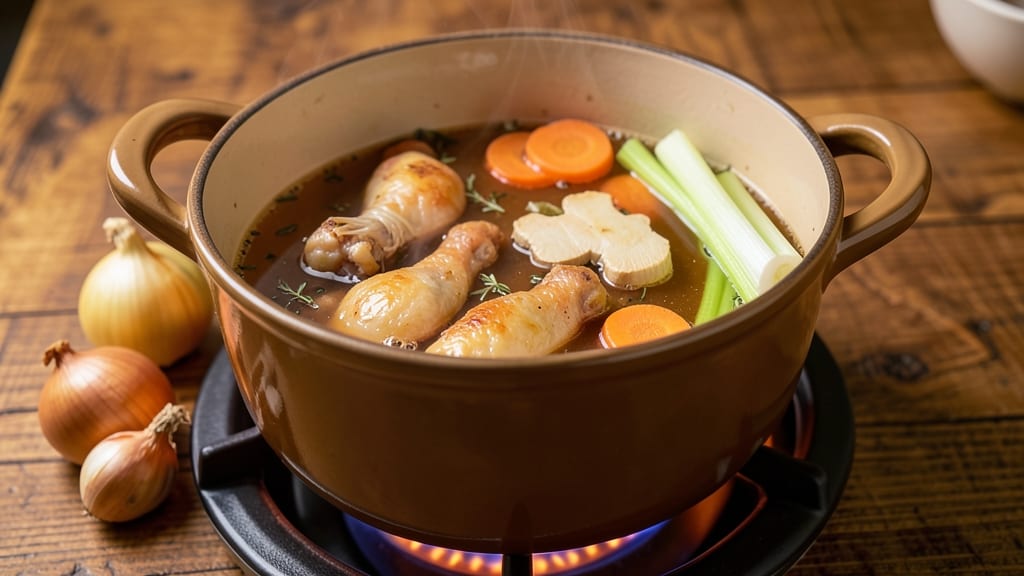
This chicken feet stock recipe transforms humble ingredients into a deeply flavorful umami base that elevates soups, stews, and braises to restaurant-quality depth. 🌟 The process—though initially daunting—yields a rich, gelatinous broth packed with collagen and natural sweetness that Asian cuisine relies on for dishes like pho or hot pot.
My version simplifies the traditional method without sacrificing authenticity, making it accessible for home cooks.
The key to success lies in thorough cleaning and slow simmering—never boiling—to preserve delicate flavors. Chicken feet provide collagen for a velvety texture, while aromatics like ginger, star anise, and bay leaves infuse layers of complexity.
This stock isn’t just for traditional dishes; it’s a secret weapon in modern sauces, ramen, or even braised meats where depth matters most.
By the time you strain the finished broth, you’ll have a golden, aromatic liquid that’s far beyond store-bought versions. The gelatinous quality makes it perfect for chilled soups or as a base for rich stews.
What starts as a labor-intensive process becomes a rewarding foundation for countless meals—once you master it, you’ll never reach for basic broth again.
Use it immediately for pho or hot pot, or store it in the freezer for up to three months. The versatility is its greatest strength—this isn’t just stock; it’s a flavor multiplier that transforms ordinary dishes into extraordinary ones. Let’s get started on building your umami powerhouse.
Ingredients for chicken feet stock
A handful of humble ingredients. One pot. Restaurant-quality umami depth you'll never want to skip again.
| Ingredient | Amount | Notes |
|---|---|---|
| Chicken Feet 🦶 | 2 ½ lb | Cleaned, trimmed of excess skin |
| Yellow Onions 🧅 | 1 whole | Peeled, cut into quarters |
| Carrots 🥕 | 4 whole | Scrubbed, cut into large chunks |
| Celery Stalk 🌿 | 3 whole | Trimmed, cut into 2-inch pieces |
| Fresh Ginger 🌿 | 2 tbsp | Grated, skin-on for maximum flavor |
| Garlic Cloves 🧄 | 8 cloves | Peeled, smashed lightly |
| Star Anise 🌟 | 2 whole | Lightly cracked for aroma |
| Bay Leaves 🍃 | 4 whole | Dried, standard size |
| Black Peppercorns 🌶️ | 1 tbsp | Crushed lightly for depth |
| Salt 🧂 | 1 tsp | Kosher or sea salt |
| Cumin Seeds 🌿 | 1 tbsp | Toasted lightly for warmth |
| Water 💧 | 8 cups | Filtered or spring water preferred |
The chicken feet are the star—look for plump, pale yellow ones with minimal odor (that's a good sign). Asian markets often have the best selection, but check the meat section of regular grocery stores too. I always buy a pound extra—you'll want leftovers for future batches. The aromatics (ginger, star anise, bay leaves) are non-negotiable for that authentic depth. Whole Spice or Penzeys carry excellent quality star anise if your local store's is dusty. For the ginger, fresh is mandatory—dried just won't cut it here. Toast your cumin seeds in a dry pan for 30 seconds before adding to release their oils—trust me on this.
No star anise? 1 cinnamon stick or ½ tsp ground cinnamon works in a pinch, though it'll be slightly different. Short on chicken feet? Add 1 lb chicken necks or backs for extra collagen. The water should be cold—hot water extracts bitterness. If you're using a pressure cooker, reduce water by 2 cups since it won't evaporate as much. For the ginger, if you can't find fresh, powdered ginger at ½ the amount is better than nothing, but it's not ideal. The carrots and celery can be frozen if you're prepping ahead—just thaw before using. And yes, you can use organic chicken feet if you prefer, but conventional is perfectly fine here.
This stock keeps for 3 months in the freezer—portion into ice cube trays for easy single-use amounts. In the fridge, it's good for 5-7 days, but the gelatin sets beautifully when chilled. For maximum collagen extraction, skim fat weekly and return the broth to the pot. The first batch will be cloudy—strain it well for clear stock. Use within 2 weeks for best flavor, or freeze immediately. Pro tip: Label your containers with the date—you'll thank yourself later when you pull out a perfectly preserved batch.
Why You'll Love This Recipe
- Golden-Crisp Start: The 20-minute oven sear on those chicken feet transforms them from ordinary to flavor bombs—that crispy skin crackles with caramelized depth, and suddenly your stock has this irresistible richness. No fancy techniques, just 425°F and a sheet pan while you prep the rest.
- Umami Bomb Combo: Between the ginger’s zing, star anise’s warmth, and cumin’s earthy toast, this stock tastes like someone’s been simmering a secret for hours. The smashed garlic and peppercorns add layers—it’s not just savory, it’s complex, like a hug in liquid form.
- Weeknight Workhorse: Freeze it in ice cube trays to toss into ramen, soups, or even marinades—no thawing needed. I keep a batch in my freezer for lazy nights when I want restaurant-quality depth without the effort. Three months of flavor, one slow simmer.
- Budget Magic: Chicken feet are the unsung hero of affordable cooking—this recipe stretches into gallons of stock for pennies per serving. Honestly, the cost per cup makes me feel like I’m cheating the system, and the gelatin-rich result turns watery dishes into velvety masterpieces.
Step-by-step instructions for chicken feet stock
Transform humble ingredients into a velvety umami masterpiece with this slow-cooked stock.
🔥 Step 1: Sear the Chicken Feet for Depth
Preheat your oven to 425°F and line a baking sheet with parchment paper. Arrange the 2.5 lb chicken feet in a single layer, skin-side down. Roast for 20-25 minutes until the skin turns deep golden brown and crispy—this caramelization unlocks intense flavor.
Here's the thing—don't skip this step. The Maillard reaction happening on those feet creates complex, savory compounds that infuse the stock. Flip them halfway through for even browning. Once crispy, transfer the feet to a large stockpot and set aside.
🍳 Step 2: Build the Aromatic Base
In the same stockpot, add 2 tablespoons fresh ginger (skin-on for maximum flavor), 8 cloves garlic cloves (smashed lightly), 1 tablespoon cumin seeds (toasted lightly for warmth), and 1 tablespoon black peppercorns (crushed for depth). Stir briefly to release their oils.
Add the 1 whole yellow onion (quarters), 4 whole carrots (large chunks), and 3 whole celery stalks (2-inch pieces). Pour in the 8 cups water and bring to a rolling boil over high heat. Once boiling vigorously, reduce to a gentle simmer—you should see just a few bubbles breaking the surface.
🥘 Step 3: Simmer and Infuse the Stock
Add the seared chicken feet back to the pot, along with the 2 whole star anise (lightly cracked) and 4 whole bay leaves. Sprinkle in the 1 teaspoon salt and stir gently. Here's where patience pays off: cover and simmer for 3-4 hours until the meat is fork-tender and the stock has reduced slightly.
I know it seems long, but this slow extraction develops the stock's rich, collagen-laden body. Skim any foam or impurities that rise to the surface during the first 30 minutes—this ensures a crystal-clear finish. The stock should smell like a warm, spiced autumn forest when ready.
⏰ Step 4: Strain and Finish
After simmering, remove the stockpot from heat and let it sit for 10 minutes to allow any settled particles to sink. Line a fine-mesh strainer with cheesecloth or a coffee filter for extra clarity. Strain the stock through this setup into a clean bowl or pitcher.
Discard the solids in the strainer—they've given everything they've got. Taste the stock and adjust seasoning if needed; you might want to add a pinch more salt or a splash of water to reach your desired consistency. This stock keeps beautifully in the refrigerator for up to 5 days or can be frozen for months.
Pro Tips For Making Chicken Feet Stock
- Skip the Boil: Once you add the water, bring it to a rolling boil for 30 seconds—just enough to break the ginger and garlic. Then drop to a simmer immediately. Boiling too long at the start bleaches the ginger’s spice and burns the garlic, turning your stock from aromatic to flat. I learned this the hard way after making stock that smelled like nothing but water.
- Grate Ginger Skin-On: That ginger skin isn’t just for show—it’s packed with peppery heat and earthy depth. Grate it with the flesh still attached, and don’t peel it. I used to waste time peeling, only to realize the stock lacked that extra layer of complexity. Skin-on ginger makes this stock taste like it’s been simmering for days, not hours.
- Simmer, Don’t Stagnate: After the first 30 minutes, skim the foam, then let the stock bubble gently—just a few tiny breaks at the surface. If it’s rolling hard, turn the heat down or move to a lower burner. A vigorous boil breaks down collagen faster than it builds flavor, and you’ll end up with a thin, murky liquid instead of a rich, gelatinous stock. Trust me, the low-and-slow approach is worth it.
- Toast Cumin First: Dry-toast those cumin seeds in a separate pan for 30 seconds until they smell nutty and fragrant—before adding them to the pot. This step unlocks their warmth without bitterness. I used to toss them in raw, and the stock always tasted dull compared to when I took the extra 30 seconds. It’s a small effort for a big payoff.
Wine and beer pairings for this recipe
Asian-Inspired Wine
For this umami-rich stock, a dry Riesling from Germany or Pinot Noir from Oregon cuts through the deep, savory flavors beautifully. I reach for Dr. Loosen Blue Slate Riesling—its crisp acidity and subtle mineral notes balance the stock's richness without overpowering it.
The slight sweetness in Riesling also complements the natural sweetness of the chicken feet. 🍷
Crisp Lager Pairings
A German Helles Lager like Weihenstephaner Original is my go-to beer pairing. Its clean, malty profile and effervescence refresh your palate between sips of the stock.
For a hoppier option, try a Belgian Witbier like Stella Artois—the coriander and citrus notes add a bright contrast to the stock's earthy depth. Serve both chilled to enhance their crispness.
Umami-Enhanced Sake
If you're serving this stock in hot pot or pho, a dry junmai sake like Dassai 23 elevates the dish. The sake's subtle sweetness and umami undertones mirror the stock's flavor profile.
For a stronger pairing, try Nigori sake—its cloudy texture and lingering sweetness create a harmonious match. Serve slightly warmed to release the sake's aromatic qualities.
Spiced Red Wine
For a bolder pairing, a Syrah with spicy notes—like Côtes du Rhône—works wonders. The peppery undertones in Syrah complement the star anise and cumin in the stock. I love Guigal Côtes du Rhône Rouge for its balance of fruit and spice.
Decant it for 30 minutes before serving to soften its tannins and enhance its aromatic profile.
Non-Alcoholic Options
Don’t drink alcohol? A sparkling ginger beer like Feather Ginger Beer adds a zesty kick that cuts through the stock's richness. For a more traditional approach, try Yuzu-infused iced tea—the citrusy brightness contrasts beautifully with the umami depth. Serve both well-chilled for the best experience. ✨
Nutrition facts
Frequently asked questions
Why do I need to sear the chicken feet before simmering?
The searing step is crucial because it creates the Maillard reaction—those golden brown spots develop deep, savory flavors that dissolve into the stock during simmering. Skipping this step means missing out on complex umami notes that make homemade stock taste restaurant-quality.
Can I use frozen chicken feet instead of fresh?
Yes, but thaw them completely first in the refrigerator overnight. Frozen feet work fine, but they may release more water during cooking. If using frozen, reduce your simmering time slightly to 2.5-3 hours since they'll cook faster once thawed. Always choose feet that are plump and pale yellow, even when frozen.
What can I do if my stock smells fishy or bitter?
Fishy smells usually mean the chicken feet weren't cleaned properly. Rinse them thoroughly before roasting, and consider soaking them in cold water for 30 minutes to remove any residual odors. For bitterness, ensure you're using a gentle simmer (not a rolling boil) and skim foam regularly during the first hour. Adding a splash of rice vinegar (1 tsp) at the end can help balance any harsh flavors.
How do I know when the stock is fully infused?
The stock is ready when the chicken feet are fork-tender (they should pull apart easily) and the liquid has reduced slightly, becoming more concentrated. It should smell rich and aromatic—like a mix of ginger, garlic, and warm spices. The color will deepen to a golden amber, and you'll see gelatinous strands forming when chilled.
Can I make this stock in a slow cooker or Instant Pot?
For a slow cooker, follow the same steps but reduce water to 6 cups and cook on low for 6-8 hours. In an Instant Pot, use 6 cups water, sear the feet first, then pressure cook for 45 minutes (natural release). The Instant Pot version will be faster but slightly less gelatinous. Both methods work, but the stovetop simmer gives the most authentic texture.