
Soups & Stews
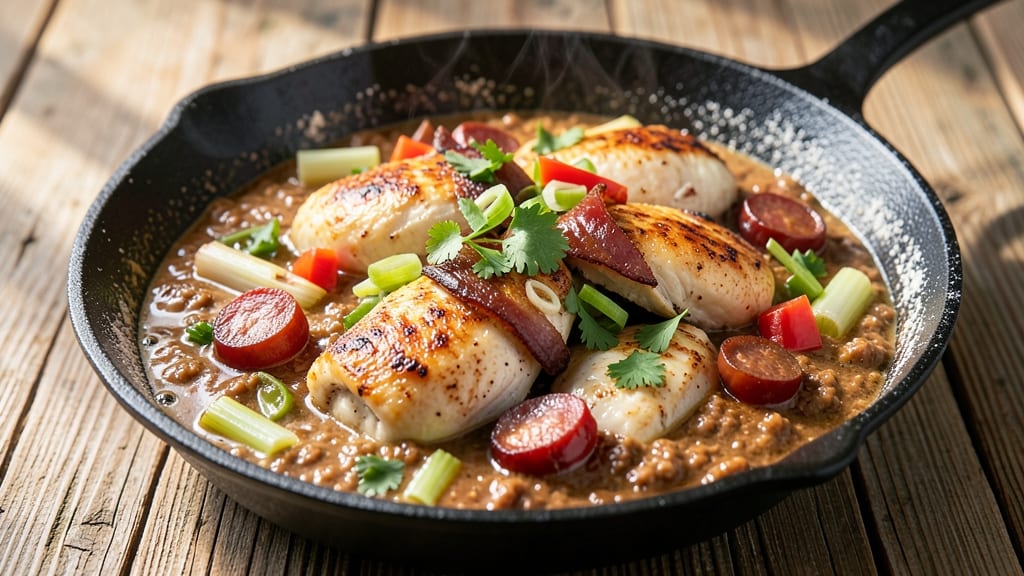
Mastering chicken gumbo recipe means unlocking the soul of Cajun cuisine—where dark roux, smoky okra, and tender chicken create a dish that tastes like home.
The secret lies in patience: letting that roux develop its deep, nutty flavor before building layers of flavor with the "holy trinity" of onions, bell peppers, and celery. I've perfected this recipe over years of weekend dinners, and it delivers restaurant-quality gumbo with every spoonful.
What sets this gumbo apart is the balance of textures and flavors—a rich, velvety broth thickened just enough to coat the chicken and sausage, while okra adds that signature silky body without overpowering.
The roux, cooked low and slow, transforms from peanut butter-like to a deep mahogany color, forming the foundation of authentic gumbo. It takes about 45 minutes of active cooking, but the results are worth every minute.
By the time you serve this gumbo over steamed white rice, you'll have a dish that's hearty enough for a family gathering but still feels special enough for company. The aroma alone—smoky, spicy, and deeply savory—will have everyone gathering around the table.
Garnish with fresh green onions and a sprinkle of filé powder for that final touch of earthy depth.
This recipe serves 6-8 people, making it perfect for weekend meals or holiday gatherings. The leftovers reheat beautifully, so you'll have gumbo for days. Let's get cooking—your taste buds will thank you.
Ingredients for chicken "gumbo
A few pantry staples plus a couple specialty items. The roux alone transforms this into restaurant-quality gumbo.
| Ingredient | Amount | Notes |
|---|---|---|
| Boneless, Skinless Chicken Thighs 🍗 | 2 ½ lb | Cut into 1.5-inch pieces |
| Andouille Sausage 🌭 | 1 lb | Cajun-style, sliced into rounds |
| Yellow Onion 🧅 | 2 whole | Diced, holy trinity base |
| Green Bell Pepper 🌶️ | 1 whole | Diced, holy trinity base |
| Celery Stalks 🥬 | 4 whole | Diced, holy trinity base |
| All-Purpose Flour 🌾 | 1 cup | For dark roux foundation |
| Vegetable Oil 🫒 | 1 ½ cups | For roux cooking |
| Fresh Okra 🥒 | 1 lb | Sliced into 0.5-inch rounds |
| Dried Thyme 🌿 | 1 tbsp | Or 1 tbsp fresh thyme leaves |
| Garlic Cloves 🧄 | 6 cloves | Minced, for depth |
| Cayenne Pepper 🔥 | 1 tsp | Adjust for heat preference |
| Smoked Paprika 🌶️ | 1 tbsp | For smoky flavor |
| Salt 🧂 | 2 tsp | Kosher or sea salt |
| Black Pepper 🌶️ | 1 tsp | Freshly ground |
| Chicken Broth 💧 | 4 cups | Low-sodium preferred |
| Green Onions 🧅 | 4 whole | Sliced, for garnish |
| Filé Powder 🌿 | 2 tbsp | Ground sassafras leaves |
| Long-Grain White Rice 🍚 | 2 cups | Uncooked, for serving |
The roux is non-negotiable here—it's the soul of gumbo. All-purpose flour and vegetable oil are your base, but patience is key. Cook low and slow until it reaches that deep mahogany color (about 45 minutes). Whole Foods or Walmart carry good-quality andouille sausage—look for the spicy, smoky kind. Fresh okra is best, but frozen works in a pinch. I always grab extra filé powder at Penzeys—it's worth the splurge for that earthy kick.
No filé powder? Cornstarch at half the amount thickens the gumbo, though it lacks that signature flavor. Short on okra? Substitute 1 cup sliced mushrooms for body, but it won't be traditional. The holy trinity (onions, bell pepper, celery) can be swapped for frozen veggie mix if you're in a hurry, though fresh has more flavor. For the roux, butter works too—just add it after the oil to prevent burning. The chicken thighs? Drumsticks work better if you want extra flavor, but boneless thighs cook faster.
Gumbo tastes even better the next day—honestly, the flavors meld into perfection. Store leftovers in the fridge for 4-5 days, or freeze for 3 months. I like to portion it into containers with rice so lunches are ready to grab. The roux can be made ahead and refrigerated for 1 week—just reheat gently before adding broth. Fresh herbs like thyme and green onions should be added last to keep their brightness.
Why You'll Love This Recipe
- One-Pot Magic: I swear by this recipe because it’s all in one pot—no chopping chaos, no extra dishes. Just dice the holy trinity (onion, bell pepper, celery), brown the sausage, and let the roux do its thing while you stir. Honestly, the only cleanup is a Dutch oven and a wooden spoon.
- Smoky, Deep Flavor: That dark roux—45 minutes of patient stirring—transforms into a rich, nutty base that’s the soul of gumbo. Add the andouille’s spicy kick, the okra’s subtle sliminess, and the thyme’s earthy warmth, and you’ve got a bowl that tastes like a Louisiana kitchen hug.
- Weeknight Crowd-Pleaser: This feeds six without breaking the bank, and it’s the kind of dish that disappears fast. Serve it over rice with green onions on top, and suddenly you’re the hero of game day, potlucks, or even a lazy Sunday. (Yes, even on a Tuesday night.)
- Leftovers That Don’t Let You Down: The roux can chill for a week, and the gumbo itself keeps for 4-5 days—freezer-friendly for three months. Between us, the second day is often better because the flavors marry even more. Plus, reheating it just means stirring and savoring.
Step-by-step instructions for chicken gumbo
Here's how to build this rich, smoky gumbo from scratch—layer by layer.
Build the Dark Roux Foundation
Heat the 1.5 cups vegetable oil in a heavy Dutch oven over medium-low heat. Add the 1 cup all-purpose flour and stir constantly with a wooden spoon to prevent burning. This is where the magic happens—watch closely as the mixture transforms from pale to nutty brown.
Cook for 45-60 minutes, stirring every 5-7 minutes, until the roux reaches a deep, chocolate-brown color. This dark roux gives gumbo its signature depth and thickness. If it starts to smoke, reduce the heat immediately—burnt roux ruins everything. Once it reaches the perfect dark brown stage, remove from heat and set aside for now.
Sauté the Holy Trinity and Sausage
Return the Dutch oven to medium heat and add the 2 whole yellow onion, 1 whole green bell pepper, and 4 whole celery stalks—all diced. Cook for 8-10 minutes until softened and slightly caramelized. This is your holy trinity, the flavor base of gumbo.
Push the vegetables to the side and add the 1 lb andouille sausage, sliced into rounds. Cook for 5-6 minutes until browned on all sides. Stir occasionally to prevent sticking. Here's the thing—don't rush this step. The deeper the color of the vegetables and sausage, the richer your gumbo will taste.
Add Chicken and Okra for Depth
Increase heat to medium-high and add the 2.5 lb boneless, skinless chicken thighs, cut into 1.5-inch pieces. Cook for 6-8 minutes until lightly browned. Remove the chicken and set aside temporarily.
In the same pot, add the 1 lb fresh okra, sliced into 0.5-inch rounds. Cook for 5 minutes until slightly softened. Okra adds that signature gumbo texture and subtle earthiness. Stir in the 6 cloves garlic cloves (minced) and cook for 30 seconds until fragrant. This is where the smoky flavors start to meld together.
Combine and Simmer the Broth
Return the chicken to the pot and pour in the 4 cups chicken broth. Stir in the 1 tbsp smoked paprika, 1 tsp cayenne pepper, 1 tbsp dried thyme, 2 tsp salt, and 1 tsp black pepper. Bring to a gentle boil, then reduce heat to low and let it simmer uncovered for 45-60 minutes. This slow cook allows all the flavors to develop and the chicken to become tender.
After 30 minutes, skim off any foam that rises to the surface. This ensures a cleaner, smoother gumbo. The broth should reduce slightly, but you want to maintain enough liquid to coat the ingredients. If it gets too thick, add a splash of water or broth.
Finish with Filé Powder and Serve
Remove the chicken from the gumbo and shred it using two forks. Return the shredded chicken to the pot and stir in the 2 tbsp filé powder just before serving. This thickens the gumbo and adds that classic gumbo flavor. Be careful not to add it too early—it can make the gumbo slimy if cooked too long.
Ladle the gumbo over 2 cups long-grain white rice (cooked separately) and garnish with 4 whole green onions, sliced. Serve immediately with crusty bread. The gumbo should be rich, smoky, and full of texture—each bite should deliver layers of flavor from the dark roux, andouille, and okra.
Pro Tips For Making Chicken "Gumbo
- Stir Like Your Life Depends on It: I learned this the hard way—when making the dark roux, constant stirring is non-negotiable. Every 5-7 minutes, even if you’re distracted, or that nutty brown turns to burnt disaster. Use a wooden spoon and commit to the rhythm, or you’ll end up with a pot of bitter regret instead of rich, velvety gumbo.
- Dice the Holy Trinity Small: The holy trinity—onions, bell pepper, and celery—needs to be uniformly diced into tiny, even pieces. Big chunks won’t caramelize properly and will sit like dull, soggy lumps in your gumbo. Take the extra 5 minutes to chop them small; your flavor base will thank you with deep, sweet development.
- Don’t Skimp on Sausage Browning: That 5-6 minutes browning the andouille sausage might feel slow, but it’s the difference between bland and smoky, crackling perfection. Push the veggies to the side, let the sausage sear in batches if needed, and resist the urge to rush—deep color means deep flavor, and that’s what gumbo’s all about.
- Save the Filé Powder for Last: Adding the 2 tbsp filé powder too early turns your gumbo into a gluey mess. Stir it in right before serving—just a quick toss—and watch it thicken the broth instantly. If you’re skeptical, trust the process: gumbo purists swear by this, and it’s the secret to that signature texture.
Storing and reheating your leftovers
Refrigerator Storage
Let your gumbo cool completely before transferring to airtight containers—I use glass Pyrex bowls with tight lids. Store in the fridge at 40°F or below for up to 4-5 days.
Honestly, the flavors deepen overnight as the spices meld together. The roux remains stable, so you won’t lose that rich, nutty foundation. 💡
Freezer Prep
For longer storage, portion gumbo into freezer-safe containers (leave 1 inch headspace for expansion) or quart-sized freezer bags. Seal tightly to prevent freezer burn, and label with the date.
It keeps for 3 months without losing texture or flavor. I like freezing it with rice already layered in—just reheat the whole thing!
Reheating on Stovetop
For the best texture, reheat gumbo in a heavy-bottomed pot over medium-low heat. Add ¼ cup water or broth to prevent sticking, and stir occasionally. Heat for 10-15 minutes until steaming.
Taste and adjust seasonings—gumbo often needs a pinch of salt or a dash of cayenne after reheating. The slow method preserves the roux’s thickness. 🔥
Microwave Method
For quick lunches, transfer gumbo to a microwave-safe bowl and cover with a damp paper towel. Heat on medium power (70%) for 2-3 minutes, stir, then continue in 30-second intervals until hot (165°F).
Avoid overcooking—this can make the okra mushy. A splash of broth restores lost moisture if needed.
Roux Revival
If you made the roux ahead (up to 1 week), reheat it gently in a light-colored pot over low heat before adding broth. Stir constantly to prevent burning—it should return to a peanut butter-like consistency before proceeding. This step is key for maintaining that signature gumbo depth. 🌶️
Serving Leftovers
Garnish reheated gumbo with fresh green onions and a sprinkle of filé powder (add this last to avoid sliminess). Serve over steamed rice or crusty bread. Pro tip: Add a drizzle of hot sauce or a side of pickled vegetables to cut through the richness.
Leftovers taste just as good as day one—sometimes even better! ✨
Nutrition facts
Frequently asked questions
Why does gumbo need such a long roux cooking time?
The 45-60 minute roux development transforms simple flour and oil into the flavor foundation of gumbo. This slow process creates complex caramelization and nutty flavors that can't be achieved quickly. The deeper the color (dark mahogany), the richer the final dish—don't rush this critical step or you'll miss the soul of authentic gumbo.
Can I make gumbo without filé powder?
Yes! If you don't have filé powder, substitute 1 tbsp cornstarch mixed with 1 tbsp cold water as a thickener. For authentic flavor, consider using ½ tsp ground sassafras (the source of filé's flavor), though it's harder to find. The gumbo will still be delicious—just slightly less traditional in texture.
How do I prevent my roux from burning?
Keep the heat at medium-low and stir constantly every 5-7 minutes. If it starts smoking, immediately reduce heat or remove from heat temporarily. Use a heavy Dutch oven for even heat distribution. A burnt roux will taste bitter and ruin your gumbo—patience is key here!
What's the best way to serve gumbo?
Always serve gumbo over hot, steamed white rice—it soaks up the rich broth beautifully. Garnish with fresh green onions and a sprinkle of filé powder right before serving. For extra flair, add a side of crusty bread or pickled vegetables to cut through the richness.
Can I use chicken breast instead of thighs?
While possible, chicken thighs work best because they stay juicy during the 45-60 minute simmer. If using breasts, cut them into 1-inch pieces and add them later in the cooking process (after the okra) to prevent drying out. You may need to reduce simmering time to 30 minutes to keep them tender.