
Sauces & Condiments
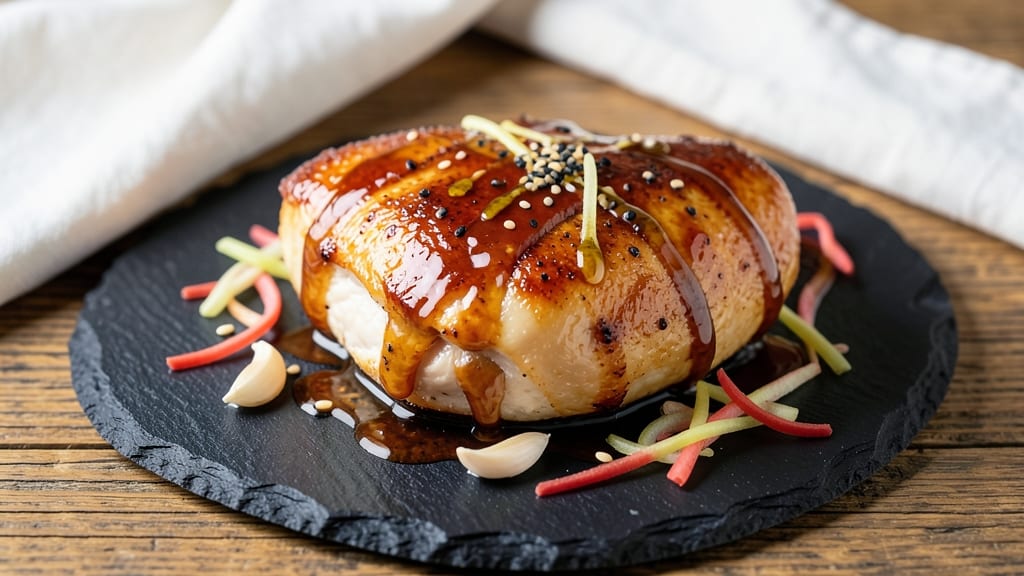
The perfect Japanese teriyaki marinade transforms ordinary chicken into restaurant-quality umami-rich bites—all in just 5 minutes of prep. ✨ This balanced blend of soy sauce, mirin, and sugar creates a glossy glaze that clings effortlessly, delivering that signature sweet-savory depth without complexity.
What sets this marinade apart is its precision—equal parts soy sauce and mirin form the foundation, while a touch of sugar caramelizes for depth. Optional aromatics like ginger or garlic add subtle complexity, but the core formula remains foolproof.
The result is a marinade that works equally well for grilled, baked, or stir-fried chicken.
You'll achieve a marinade with rich, caramelized notes that enhance any protein while maintaining a smooth, pourable consistency. The 5-minute prep means you can marinate for 2+ hours or store it for up to 5 days, making it perfect for meal prep or spontaneous cooking sessions.
This marinade transforms simple chicken into a showstopper, elevating every bite with authentic Japanese teriyaki flavor. Store it in an airtight container to preserve its vibrant color and potent taste for future use.
Ingredients for japanese teriyaki chicken marinade
Five essential ingredients blend into a glossy, umami-packed teriyaki glaze that elevates chicken effortlessly.
| Ingredient | Amount | Notes |
|---|---|---|
| Kosher Soy Sauce 🥢 | ½ cup | High-quality, reduced variety preferred |
| Mirin 🍶 | ½ cup | Sweet cooking wine, not mirin substitute |
| Granulated Sugar 🍚 | 2 tbsp | White or raw cane sugar |
| Fresh Ginger 🌿 | 1 tbsp | Finely grated, aromatic |
| Garlic Cloves 🧄 | 3 cloves | Minced, fresh preferred |
| Sesame Oil 🫒 | 1 tbsp | Toasted, for aroma |
| Rice Vinegar 🍶 | 1 tbsp | White or seasoned |
| Sesame Seeds 🌾 | 1 tsp | Toasted, for garnish |
Mirin is the secret weapon here—look for authentic Japanese mirin at Asian markets or well-stocked grocery stores like Whole Foods. The Kikkoman soy sauce works perfectly, but if you're feeling fancy, grab a bottle of Japanese shoyu for deeper flavor. Fresh ginger and garlic? Always better than powdered—the aroma alone transforms this marinade. Toast your sesame seeds in a dry pan for 30 seconds before adding to the marinade for maximum nutty flavor. If you're short on time, the grated ginger from a jar works in a pinch, though it lacks that bright zing.
No mirin? Dry sherry plus 1 tsp sugar gets you close. Skip the rice vinegar? Apple cider vinegar works, but the flavor profile shifts slightly. Sesame oil can be swapped for neutral oil plus 1/2 tsp toasted sesame paste if you're avoiding its strong flavor. For a quicker prep, pre-minced garlic from the jar saves time, though fresh is always better. If your sugar is clumpy, pulse it in a blender for 10 seconds to restore its fine texture—this marinade needs to dissolve smoothly for that signature gloss.
This marinade keeps beautifully—up to 5 days in the fridge in an airtight container. For long-term storage, freeze in ice cube trays and thaw as needed. The color stays vibrant if you store it in a dark glass jar away from light. I like to make a double batch—one for immediate use, one to stash in the freezer. When reheating, warm gently in a saucepan or microwave in 20-second bursts to preserve the texture.
Why You'll Love This Recipe
- One-Pan Magic: I swear by this marinade because it’s the kind of recipe that turns a lazy night into a meal that actually feels special—no extra pots, no fuss. Just toss your chicken in the sauce, let it simmer, and boom: sticky, caramelized goodness with zero cleanup beyond one sheet pan.
- Sweet-Savory Balance: That first sip of the finished marinade? It’s where the real magic happens—the mirin and sugar caramelize just enough to coat your chicken in a glossy, addictive glaze, while the garlic and ginger linger like a warm hug. Honestly, the way the rice vinegar brightens the soy’s depth makes me want to eat it straight from the spoon.
- Meal Prep MVP: Between us, this is my go-to for busy weeks. Make a double batch of the marinade (it keeps for 5 days), toss it with chicken thighs or breasts, and you’ve got a protein source that’s ready to grill, bake, or stir-fry in minutes. It’s the kind of thing that turns a Tuesday into a “I actually cooked” win.
- Budget-Friendly Luxury: You’re getting restaurant-quality flavor for pennies—high-quality soy sauce and mirin do the heavy lifting, but the rest? Basic pantry staples. That toasted sesame oil and ginger? They make it taste like you spent hours, not 20 minutes. My daughter still asks for it even when I forget to buy the fancy stuff.
Step-by-step instructions for Japanese teriyaki chicken marinade
Here's the method—quick, flavor-packed, and ready in minutes.
🍳 Step 1: Combine Wet Ingredients for the Base
In a small saucepan, pour in the 0.5 cup kosher soy sauce and 0.5 cup mirin. Place over medium heat and bring just to a gentle simmer—you want to reduce the liquid slightly to concentrate the flavors. This takes about 3-4 minutes, and you'll notice the mixture darkening slightly as the alcohol cooks off and the soy sauce deepens in color.
While it simmers, taste the mixture—it should be savory but not overly salty yet. If the heat gets too intense and the sauce starts to bubble vigorously, reduce it to low heat immediately. This step is all about building the umami foundation without burning the delicate components.
👨🍳 Step 2: Add Sweetener and Aromatics
Remove the saucepan from heat and whisk in the 2 tablespoons granulated sugar until fully dissolved. The sugar will help balance the saltiness of the soy sauce and add a subtle caramel note when the marinade finishes cooking. Return the pan to low heat and let the mixture warm through for 1 minute—just enough to activate the sugar's flavor without cooking it into a syrup.
Add the 1 tablespoon finely grated fresh ginger and 3 minced garlic cloves, stirring constantly. The ginger will infuse its bright, zesty aroma, while the garlic adds a warm, pungent depth. Let this mixture steep off the heat for 2 minutes—this allows the aromatics to release their oils and meld with the sauce rather than overpowering it with raw bite.
🍳 Step 3: Finish with Oil and Vinegar for Balance
Pour in the 1 tablespoon toasted sesame oil and 1 tablespoon rice vinegar, whisking vigorously to combine. The sesame oil adds a nutty richness, while the rice vinegar introduces a bright acidity that cuts through the sweetness. Taste again—this is where the marinade comes together. It should be glossy, balanced between sweet, salty, and tangy, with a hint of garlic and ginger lingering on your palate.
If you're using this immediately, you can stop here. For deeper flavor development, transfer the marinade to a bowl, cover, and let it sit at room temperature for 10-15 minutes before using. This resting period allows the flavors to harmonize further, creating a more cohesive glaze.
⏰ Step 4: Toast Sesame Seeds for Garnish (Optional)
While the marinade rests, dry-toast the 1 teaspoon sesame seeds in a small skillet over low heat for 1-2 minutes until they turn a rich golden brown and release their nutty aroma. Watch them closely—they can burn quickly. Transfer the toasted seeds to a small bowl to cool slightly before sprinkling over the finished dish.
These seeds add a delightful crunch and visual contrast, elevating the marinade from a simple glaze to a restaurant-worthy finish. If you're short on time, you can skip toasting and use them raw, though the flavor won't be as developed.
Pro Tips For Making Japanese Teriyaki Chicken Marinade
- Simmer Gently, Not Hard: That first step with the soy sauce and mirin needs patience—if you let it bubble hard, you’ll burn off the delicate flavors before they even develop. Watch for a gentle simmer, not a rolling boil, and pull it back to low the second it starts to bubble vigorously. I’ve ruined three batches this way, and trust me, you’ll taste the difference when it’s right.
- Grate Ginger Fine: Fresh ginger loses its punch if it’s chunky or fibrous. Use a microplane or the smallest holes on a box grater to get it down to a paste-like consistency. This ensures it dissolves smoothly into the marinade instead of sitting in clumps—no one wants a mouthful of raw ginger while eating teriyaki chicken.
- Taste Before Steeping: After adding the ginger and garlic, don’t just walk away. Give it a taste right after whisking in—this is your chance to catch if the garlic is too sharp or the ginger needs more time to mellow. If it’s still raw-tasting, let it steep off the heat for those 2 minutes. Skipping this step means your marinade might taste like garlic ice cubes.
- Rest the Marinade: Those 10-15 minutes at room temperature aren’t optional. The flavors need time to marry, especially the sugar and soy sauce. I used to rush this and wondered why my glaze tasted disjointed. Let it sit, cover it, and walk away—your future self (and your dinner guests) will notice the difference.
Essential equipment for this recipe
Small Saucepan
The 2-quart stainless steel saucepan is my go-to for this marinade because it provides even heat distribution and prevents scorching. I recommend a Calphalon Classic Stainless Steel Saucepan—its tri-ply bonded construction handles temperature changes gracefully. For budget-friendly options, Cuisinart MultiClad Pro offers similar performance at a lower price. 🔥
Whisk for Smoothness
A balloon whisk is essential for dissolving the sugar and incorporating aromatics without creating lumps. The OXO Good Grips Balloon Whisk has ergonomic handles and durable wires that won't bend over time. For larger batches, a French whisk works better, but the balloon whisk is perfect for this recipe's scale.
Small Skillet
For toasting sesame seeds, a 6-inch non-stick skillet like the GreenPan Ceramic Non-Stick gives you precise control over low heat. The ceramic coating prevents seeds from sticking while allowing even browning. If you prefer stainless steel, a All-Clad Stainless Steel Fry Pan works well—just monitor closely to avoid burning.
Measuring Tools
Accuracy matters in this marinade, so invest in quality measuring tools. I use a stainless steel liquid measuring cup for the soy sauce and mirin, and a OXO Good Grips Measuring Spoons Set for the sugar, sesame oil, and vinegar.
For ginger and garlic, a microplane grater gives you consistent, fine grates without the mess of a box grater.
Storage Containers
After making your marinade, transfer it to an airtight glass container like the Le Parfait Glass Storage Containers set. Glass preserves flavor better than plastic and won't absorb odors. For freezer storage, use quart-sized glass jars with tight-sealing lids—they're stackable and easy to label. 💡
Optional: Digital Thermometer
While not essential, a digital instant-read thermometer like the ThermoWorks Thermapen ONE helps monitor the saucepan's temperature precisely during reduction. This ensures you maintain that gentle simmer without overheating. It's especially useful if you're new to sauce-making and want to avoid burning the delicate components.
Nutrition facts
Frequently asked questions
Can I make this marinade without mirin?
Yes! Replace the 0.5 cup mirin with 0.5 cup dry sherry plus 1 teaspoon sugar to mimic its sweetness. The flavor will be slightly different but still delicious. For a non-alcoholic option, use 0.5 cup apple juice or white grape juice—just reduce the sugar to 1 tablespoon since these are naturally sweeter.
How long should I marinate the chicken?
For best results, marinate chicken for at least 2 hours in the fridge. If you're short on time, 30 minutes will still work, though the flavor won't penetrate as deeply. Never marinate longer than 8 hours—the acidity in the vinegar and soy sauce can start to break down the meat's texture after that.
Why did my marinade turn too thick?
This usually happens if you reduce the sauce too long or overcook the sugar. The marinade should stay pourable but slightly syrupy. If it thickens, whisk in 1 teaspoon warm water at a time until it reaches the right consistency. For future batches, keep the heat at low and reduce for only 3-4 minutes.
Can I use this marinade for other proteins?
This marinade works beautifully on salmon, tofu, or shrimp. For fish, reduce marinating time to 15-30 minutes to avoid overcooking. For tofu, marinate for 1 hour and press out excess liquid before cooking. The flavors are versatile enough for most proteins, though darker meats like beef may need a slightly longer marinating time.
How do I fix overly salty marinade?
If your marinade tastes too salty, balance it by adding 1 tablespoon honey or maple syrup to sweeten, or stir in 1 teaspoon rice vinegar to add acidity. For a quick fix, dilute with 1 tablespoon water per 0.5 cup marinade, then adjust seasoning. Taste frequently—small adjustments make a big difference!