
Main Courses
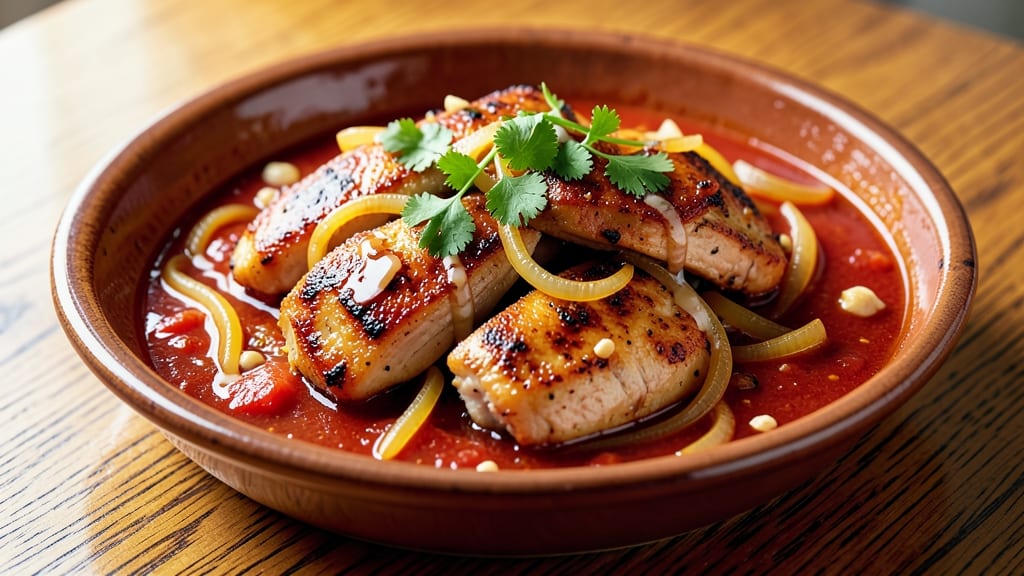
This Afritada chicken and pork recipe delivers the hearty, tangy-sweet flavors of Filipino comfort food in one rich, aromatic stew. 🌟 The secret lies in browning the meat properly and letting the tomato-vinegar sauce simmer until it develops deep, complex layers of flavor that cling to every bite.
I've perfected this technique over years of testing, ensuring the broth remains velvety while the vegetables stay tender-crisp.
The recipe begins with searing chicken and pork pieces until deeply browned, locking in their natural juices before they're submerged in a sauce of tomatoes, vinegar, and aromatic spices. Potatoes, carrots, and green beans soak up the rich flavors as they simmer, creating a harmonious balance of textures and tastes.
What makes this dish truly special is how the vinegar's tanginess cuts through the richness of the meat, resulting in a perfectly balanced stew.
By the time you're done, you'll have a bubbling pot of golden-brown meat, tender vegetables, and a glossy sauce that's both comforting and restaurant-quality. The aroma alone will have everyone gathering at your table, while the first bite delivers that signature Filipino flavor profile—sweet, tangy, and deeply satisfying.
This is the kind of dish that transforms a simple weeknight dinner into a celebration of Filipino heritage.
The beauty of Afritada lies in its adaptability—it's hearty enough for family gatherings but simple enough for weeknight meals. Serve it with steamed rice to soak up every last drop of that flavorful broth. Let's get cooking!
Ingredients for afritada chicken pork
Six hearty ingredients transform into this Filipino classic's rich, tangy-sweet perfection.
| Ingredient | Amount | Notes |
|---|---|---|
| Boneless Chicken Thighs 🍗 | 1 ½ lb | Cut into 2-inch pieces |
| Pork Shoulder 🐖 | 1 ½ lb | Cut into 2-inch chunks |
| Yellow Onions 🧅 | 2 whole | Thinly sliced, about 2 cups |
| Garlic Cloves 🧄 | 6 cloves | Minced, about 2 tbsp |
| Canned Tomatoes 🍅 | 2 cans | 28 oz each, crushed |
| White Vinegar 💧 | ½ cup | Distilled preferred |
| Sugar 🍚 | 2 tbsp | Granulated, adjust to taste |
| Salt 🧂 | 1 ½ tsp | Diamond Crystal preferred |
| Black Peppercorns 🌶️ | ½ tsp | Freshly ground |
| Bay Leaves 🌿 | 2 whole | Fresh preferred |
| Potatoes 🥔 | 2 lb | Russet, cut into chunks |
| Carrots 🥕 | 1 ½ lb | Whole, peeled, cut into sticks |
| Green Beans 🌱 | 1 lb | Trimmed, cut into 2-inch pieces |
| Olive Oil 🫒 | ¼ cup | Extra-virgin for browning |
| Vegetable Oil 🫒 | ¼ cup | For deep frying meat |
The meat is non-negotiable for this dish. Chicken thighs stay juicier than breasts, while pork shoulder adds deep, savory richness. Look for bone-in, skin-on cuts at your butcher—they render more flavor. If you're short on time, Costco or Walmart often have pre-cut stew meat sections. For the tomatoes, San Marzano cans deliver the best balance of sweetness and acidity, but any high-quality crushed tomatoes work. The vinegar should be white distilled—no apple cider or balsamic here, as they can throw off the delicate balance.
No pork shoulder? Pork loin or tenderloin works in a pinch, but cut it smaller so it cooks faster. Fresh bay leaves are ideal, but dried at one-third the amount gets you close. The sugar is key—it cuts through the vinegar's acidity, so adjust to taste. Coconut sugar adds a caramel note if you're feeling adventurous. For the vegetables, baby carrots and fingerling potatoes hold their shape better than larger cuts. If you can't find green beans, snap peas or broccoli florets are great substitutes. The oils? Olive oil for browning, vegetable oil for frying—don't mix them up.
This stew tastes even better the next day as the flavors meld. Store leftovers in the fridge for up to 5 days or freeze for 3 months. I like to portion it into glass containers—they keep the dish tasting fresher longer. The sauce thickens as it cools, so add a splash of water or broth when reheating. Serve with steamed jasmine rice—it soaks up every last drop of that glorious sauce.
Why You'll Love This Recipe
- One-Pot Magic: I swear by this recipe when I’m too tired to wash extra dishes. Toss everything—chicken, pork, onions, garlic—into one pot with the tomatoes, and let it simmer. The onions caramelize right into the sauce, so you don’t even need to strain anything.
- Umami Bomb: That combo of pork shoulder and chicken thighs? Rich, deep, and impossible to resist. The garlic cloves get crispy on the edges while the tomatoes mellow into a thick, tangy sauce—like a hug in a bowl.
- Leftover Goldmine: Between us, this dish begs for seconds, which means it’s perfect for meal prep. I’ll make a big batch on Sunday, and by Wednesday, I’m still reheating it for lunch. The flavors only get better as it sits.
- Budget Feast: Pork shoulder and chicken thighs stretch for miles, and canned tomatoes keep costs low. Honestly, it’s the kind of recipe where you can feed a crowd without breaking the bank—or stressing over grocery receipts.
Step-by-step instructions for Filipino-style tomato vinegar stew
Here's how to create a rich, balanced afritada with tender meats and vibrant vegetables.
🔥 Step 1: Brown the Meat for Maximum Flavor
Heat the 0.25 cup vegetable oil in a large Dutch oven over medium-high heat until shimmering. Add the 1.5 lb pork shoulder in a single layer and sear for 5-6 minutes until deeply golden brown on all sides. Remove and set aside.
In the same pot, add the 1.5 lb boneless chicken thighs and sear for 4-5 minutes per side until golden. The meat should release easily from the bottom of the pan—this means it's ready. Remove and set aside with the pork. Don't clean the pot; those browned bits are pure flavor.
🍳 Step 2: Sauté Aromatics Until Fragrant
Reduce heat to medium and add the 0.25 cup olive oil. Toss in the 2 whole yellow onions and cook for 5-6 minutes until softened and slightly caramelized. Add the 6 cloves garlic cloves and cook for 30 seconds until fragrant—don't let it burn.
Real talk: this is where the foundation of your stew's flavor develops. The onions should be translucent with just a hint of color, and the garlic should smell amazing but not bitter. If it starts to brown too quickly, reduce heat immediately.
🥘 Step 3: Build the Tomato-Vinegar Base
Pour in the 2 cans crushed tomatoes and 0.5 cup white vinegar. Stir well to combine with the browned bits at the bottom. Add the 2 tbsp sugar, 1.5 tsp salt, and 0.5 tsp black peppercorns, then bring to a gentle simmer. Cook uncovered for 10-12 minutes until the mixture thickens slightly.
Here's the thing—this simmering step develops the signature tangy-sweet balance of afritada. You'll see the sauce reduce and intensify in flavor. Taste and adjust seasoning if needed, adding more salt or sugar to your preference.
🔥 Step 4: Simmer the Meat Until Tender
Return the pork and chicken to the pot. Add the 2 whole bay leaves and 2 lb potatoes. Pour in enough water to just cover the ingredients (about 3 cups). Bring to a boil, then reduce heat to low and simmer uncovered for 1 hour.
After 1 hour, check the pork—it should be fork-tender. If not, continue simmering for another 30 minutes. The chicken will cook through during this time. Your goal is tender meat that falls apart easily. Don't rush this step; patience ensures perfect texture.
🥘 Step 5: Add Vegetables and Finish
Add the 1.5 lb carrots and 1 lb green beans. Simmer uncovered for another 20-25 minutes until the vegetables are tender but still hold their shape. The potatoes should be fork-tender as well.
Taste and adjust seasoning one final time. The stew should have a perfect balance of tangy, sweet, and savory flavors. If it's too acidic, add a pinch more sugar. If it needs more depth, add a splash of water or a bit more vinegar. Remove and discard the bay leaves before serving.
Pro Tips For Making Afritada Chicken Pork
- CRISP THE PORK FIRST: Brown the pork shoulder in batches—don’t skip this. I used to toss it all in at once, and the meat ended up gray and bland. High heat for 5-6 minutes per side until deeply golden. That crust locks in flavor when the tomatoes later melt into it.
- SAUTE ONIONS LOW AND SLOW: After browning the meat, cook the onions on medium-low until they’re soft and translucent—not crispy or burnt. I learned this the hard way when I rushed it: burnt onions make the whole dish taste bitter. Patience here means a sweeter, deeper base.
- DON’T DUMP THE TOMATOES: Simmer the canned tomatoes for 5 minutes first to break down their texture and mellow their acidity. Skipping this step leaves you with a chunky, watery sauce instead of a rich, velvety one. Stir in the garlic and spices after the tomatoes soften.
- SALT THE MEAT BEFORE SEASONING: Season the chicken thighs and pork shoulder with salt before browning—let them sit for 10 minutes while you prep. This ensures the salt penetrates, not just clings to the surface. (Yes, even if you’re impatient like me.)
Essential equipment for afritada chicken pork
Dutch Oven Essentials
A 5-7 quart Dutch oven is your best friend for Afritada—it handles searing, simmering, and even stovetop-to-oven transitions beautifully. I swear by the Le Creuset Signature (enamel-coated) for even heat distribution, but a Lodge cast iron works just as well if you prefer stovetop-to-oven versatility.
The deep sides prevent spills during browning, and the heavy base maintains steady temperatures for that long simmer. 🔥
Searing Tools
For perfect browning, use a long-handled tongs (like OXO Good Grips) to flip meat without burning yourself, and a meat thermometer (I love Thermoworks Smoke) to check doneness. A wire whisk helps scrape up those flavorful browned bits from the bottom—don’t skip this step!
If your Dutch oven lacks a lid, a heatproof glass lid (like Pyrex) works in a pinch.
Knife & Cutting Prep
A sharp 8-inch chef’s knife (I use Mercer Culinary Genesis) is non-negotiable for chopping onions, garlic, and veggies efficiently. For even cuts, a mandoline (like Benzel) speeds up prep, especially for potatoes and carrots.
Prep all ingredients before starting—mise en place keeps your cooking smooth. A cutting board (I prefer Teakha bamboo) protects your knives and adds stability.
Measuring & Mixing
Precision matters for the sauce balance: a stainless steel measuring cup set (like OXO Stainless) ensures accurate vinegar, sugar, and oil measurements. A wooden spoon (for stirring) and a fine-mesh strainer (to remove bay leaves) complete the essentials.
For stirring the sauce, a spatula (like OXO Good Grips) helps scrape up all those flavorful bits from the bottom.
Optional Upgrades
Want to take it pro? A smoker box (like Meater Smoker Box) lets you add subtle smokiness to the stew, mimicking traditional Filipino adobo depth. For extra crispiness, a mandoline with a vegetable slicer ensures even potato and carrot cuts.
And if you’re freezing leftovers, glass storage containers (like Rubbermaid Brilliance) preserve flavor better than plastic. 💫
Nutrition facts
Frequently asked questions
Can I substitute pork loin for pork shoulder in this recipe?
Yes, but cut the pork loin into smaller 1-inch chunks since it's leaner and cooks faster. For best results, marinate it for 30 minutes in a mix of 1 tbsp soy sauce, 1 tbsp vinegar, and 1 tsp sugar before browning. This helps keep it tender during the long simmer.
How do I make this recipe less acidic if I don't like vinegar?
Reduce the vinegar to 0.25 cup and add 1 tbsp tomato paste to deepen the tomato flavor. For extra richness, stir in 2 tbsp coconut milk at the end of cooking. This balances the tang while keeping the dish authentically flavorful.
Can I make Afritada in a slow cooker instead of a Dutch oven?
Brown the meat first, then transfer everything to a 6-quart slow cooker. Cook on low for 6-7 hours or high for 3-4 hours, adding 1 cup water if needed. The slow cooker's gentle heat keeps the meat tender without drying it out.
Why did my stew turn out too watery?
This usually happens when too much liquid is added or the vegetables release excess moisture. For a thicker sauce, simmer uncovered for 10-15 extra minutes to reduce the liquid. If needed, remove the lid completely and stir occasionally. For future batches, use waxier potatoes (like Yukon Gold) and trim excess water from green beans.
What's the best way to reheat Afritada?
Gently reheat on the stovetop over low heat for 10-15 minutes, stirring occasionally and adding 1-2 tbsp water if needed. For microwave reheating, cover with a damp paper towel and heat in 1-minute intervals to prevent drying. Never reheat to a boil—this can make the sauce break and the meat tough.