
Main Courses
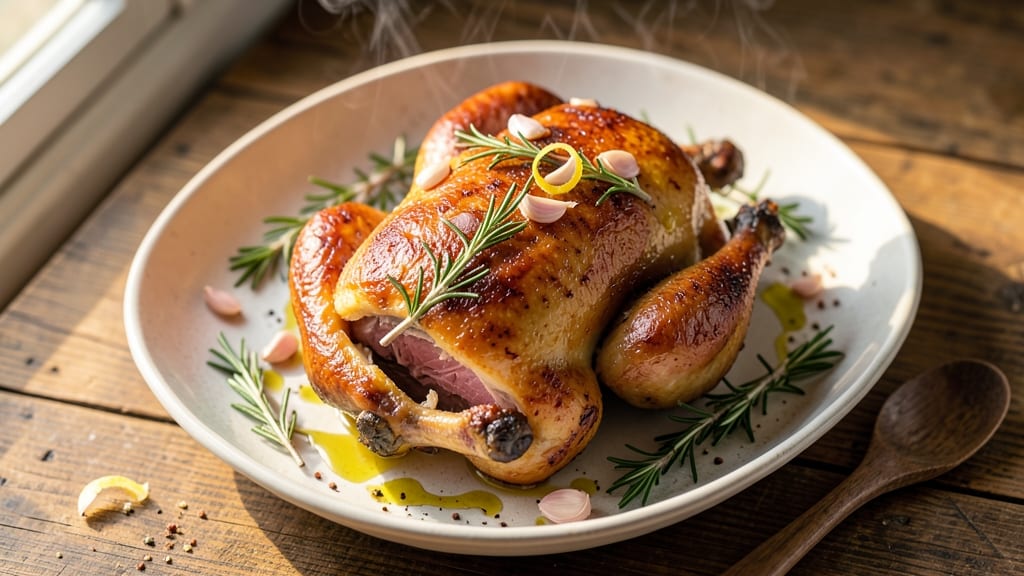
Alice Waters' roasted chicken recipe redefined home cooking by proving simple techniques can yield restaurant-quality results. Her method—dry-brining, high heat, and crispy skin—transforms an everyday dish into something extraordinary.
The secret lies in patience: letting the chicken rest overnight in the fridge before roasting ensures juicy meat and skin that shatters with the first bite.
What makes this recipe special is its focus on quality over quantity. Waters champions seasonal ingredients and minimal intervention, letting the natural flavors shine. The herb-infused skin—garlic, thyme, and rosemary—adds layers of aroma without overpowering the chicken's inherent richness.
At 375°F, the oven creates the perfect balance of crispy exterior and tender interior.
By the time it emerges from the oven, you'll have a golden-brown chicken with skin so crisp it practically dissolves into flakes. The meat stays juicy thanks to the dry-brine method, while the herbs infuse every bite with aromatic depth.
This is the kind of dish that elevates a weeknight dinner into a memorable meal—proof that great food starts with respect for the ingredients.
Serve with roasted seasonal vegetables or a simple grain salad to honor Waters' farm-to-table philosophy. The technique is straightforward, but the results are anything but ordinary. Let's get cooking.
Ingredients for alice waters roasted chicken
Seasonal ingredients and precise technique create Waters' legendary crispy-skinned roasted chicken.
| Ingredient | Amount | Notes |
|---|---|---|
| Whole Chicken 🍗 | 4 lb | Fresh, preferably organic, skin-on |
| Kosher Salt 🧂 | 2 tbsp | Diamond Crystal preferred, coarse grain |
| Fresh Garlic Cloves 🧄 | 6 cloves | Peeled, lightly crushed |
| Fresh Thyme Leaves 🌿 | ¼ cup | From 4-5 sprigs, finely chopped |
| Fresh Rosemary Sprigs 🌿 | ⅛ cup | From 3-4 sprigs, finely chopped |
| Extra-Virgin Olive Oil 🫒 | 2 tbsp | High quality, fruity variety |
| Black Peppercorns 🌶️ | 1 tsp | Freshly cracked, coarse grind |
| Unsalted Butter 🧈 | 2 tbsp | Cold, cubed for basting |
The chicken is non-negotiable—look for organic pastured birds at Whole Foods or your local butcher if possible. 4 pounds yields generous portions for four, with leftovers perfect for salads. The skin's crispiness comes from the dry brine and high heat, so avoid pre-brined or injected chickens. For herb quality, Chef's Garden or McCormick organic blends work well, but fresh is ideal. If using frozen herbs, thaw and pat dry thoroughly to prevent moisture in the skin. The garlic should be plump, firm cloves—avoid soft or sprouting bulbs. Store fresh herbs in damp paper towels** in the fridge for up to 5 days.
No fresh thyme? Dried works at one-third the amount, but fresh yields superior aroma. Substitute rosemary with fresh sage for a different but complementary flavor profile. For olive oil, California-based brands like Corto or Lucini excel in flavor complexity. The butter must be unsalted—added salt disrupts the delicate balance. If you're short on time, pre-crush the peppercorns in a mortar and pestle for maximum aroma release. The dry brine transforms the chicken; skip it at your peril. For a smoky twist, add a 1/2 tsp smoked paprika** to the salt mix.
Prep the chicken 24 hours ahead for optimal dry-brine absorption. Store it unwashed in the fridge on a wire rack over a tray to catch drips. The herb mixture keeps for 3 days in an airtight container. Leftover chicken reheats best in a 350°F oven for 15-20 minutes, covered loosely with foil. For meal prep, portion the meat and freeze in single servings for up to 3 months. The crispy skin loses its texture when reheated, so enjoy it fresh or use leftovers in grain bowls or sandwiches where texture matters less.
Why You'll Love This Recipe
- Foolproof Prep: I swear by this—just salt the chicken, stuff it with garlic and herbs, and let the oven do the work. No brining, no basting, no stress. The magic happens while you’re making dinner plans or watching the news.
- Herb-Packed Crisp: That rosemary and thyme tucked under the skin? It turns into a fragrant, caramelized crust you’ll want to eat by the handful. The garlic? Oh, it melts into every bite like a secret weapon.
- Leftovers That Shine: This chicken stays juicy for days—perfect for sandwiches, salads, or reheating with a splash of broth. I’ve turned it into tacos, pasta, and even a pot pie, and it never lets me down.
Step-by-step instructions for Alice Waters' roasted chicken
Master the art of crispy, herb-infused skin with this refined technique inspired by Waters' philosophy.
Prepare the Chicken with Herbs and Salt
Remove the whole chicken from its packaging and place it on a clean cutting board. Pat the skin completely dry with paper towels—this is critical for achieving crispy skin. I press firmly, especially under the wings and in the cavity where moisture tends to hide.
In a small bowl, combine the 0.25 cup fresh thyme leaves, 0.125 cup fresh rosemary sprigs, 6 cloves fresh garlic cloves, and 1 tsp black peppercorns. Pulse in a food processor until finely chopped, but not into a paste. This ensures even distribution of flavor without losing texture.
Apply the herb mixture generously under the skin of the chicken breast, working your fingers between the skin and meat to create pockets. Rub the remaining mixture all over the exterior skin, pressing firmly so the herbs adhere. Sprinkle the 2 tbsp kosher salt evenly over the entire surface, including the cavity. Let the chicken sit uncovered on a wire rack in the refrigerator for at least 4 hours, preferably overnight. This dry-brining technique ensures maximum flavor penetration and crispiness.
Create the Herb Oil and Season the Skin
In a small bowl, combine the 2 tbsp extra-virgin olive oil with the remaining herb mixture from the food processor. Whisk until emulsified into a thick paste. This herb oil will become the secret to that signature shattering skin.
Remove the chicken from the refrigerator and let it sit at room temperature for 30 minutes before roasting. Using your fingers, spread the herb oil mixture all over the chicken skin, working it into every crevice. The oil will help create a protective barrier that crisps beautifully in the oven.
Place the chicken on a wire rack set inside a rimmed baking sheet. The rack elevates the chicken, allowing hot air to circulate underneath for even cooking. This is particularly important for achieving crispy skin on all sides, not just the top.
Roast with Precision for Perfect Texture
Preheat your oven to 425°F with the rack positioned in the middle position. This high temperature is essential for creating that signature crispy skin. Place the baking sheet on the middle rack and roast the chicken for 45 minutes, then reduce the heat to 375°F.
After the initial 45 minutes, the chicken skin should be deeply golden with some areas beginning to crisp. This is where patience pays off—resist the urge to open the oven door. Every time you open it, you lose valuable heat and steam, which can prevent proper browning.
Continue roasting for an additional 45-60 minutes, or until an instant-read thermometer inserted into the thickest part of the thigh (avoiding the bone) registers 165°F. The skin should be deep golden brown and crisp enough that it shatters slightly when pressed with tongs. If the skin isn't crispy enough at this point, return it to the oven for another 10-15 minutes at 375°F.
Rest and Baste for Maximum Juiciness
Transfer the chicken to a cutting board and tent loosely with aluminum foil. Let it rest for 20 minutes before carving. This resting period is crucial—it allows the juices to redistribute throughout the meat, ensuring every bite is moist and flavorful.
While the chicken rests, melt the 2 tbsp unsalted butter in a small saucepan over low heat. Using a pastry brush, baste the chicken skin with the melted butter. This final step adds an extra layer of richness and helps maintain that crispy texture. The butter should be warm but not hot to avoid melting the skin.
Carve and Serve with Confidence
After resting, carefully remove the foil and carve the chicken into serving pieces. I like to make a few deep cuts along the breastbone to separate the breast meat cleanly. For the thighs, cut between the leg and thighbone, then slice the thigh meat away from the bone.
Serve immediately with the pan juices strained and reduced slightly if desired. The chicken should have skin that shatters with the slightest pressure, revealing juicy, golden meat underneath. Each bite should deliver a perfect balance of crispy, herby skin and tender, flavorful meat—a testament to Alice Waters' philosophy of simple ingredients elevated through precise technique.
Pro Tips For Making Alice Waters Roasted Chicken
- USE A THERMOMETER: The recipe’s magic happens at 165°F in the thickest part of the thigh—no guessing. I learned this the hard way by pulling chicken too early (dry) or too late (overcooked). A cheap instant-read thermometer is your best friend here.
- SMASH GARLIC CLOVES: Skip the minced garlic—crush whole cloves with the flat side of your knife first, then chop. This releases more flavor and sticks better to the skin. (Yes, it looks messy, but it works.)
- DON’T SKIP THE COLD START: Take the chicken out of the fridge 30 minutes before roasting. Cold meat steams instead of browns, and you’ll end up with sad, pale skin. Let it sit—your future crispy skin will thank you.
- STUFF THE CAVITY WITH HERBS: Pack the cavity with thyme and rosemary sprigs before roasting—it infuses the meat from the inside out. I used to just tuck them under the skin, but this makes a real difference in depth of flavor. (Bonus: Save the liver and heart for extra richness if you’re feeling fancy.)
Wine and beer pairings for this dish
Classic White Wine
Alice Waters' herb-infused chicken pairs beautifully with a crisp Sauvignon Blanc from New Zealand or Loire Valley, France. The bright acidity and citrus notes cut through the rich, herby skin while complementing the garlic and thyme.
I reach for Cloudy Bay Sauvignon Blanc—its vibrant flavors and mineral finish elevate the dish without overpowering it. Serve slightly chilled (45-50°F) to enhance the wine's refreshing qualities. 🍷
Medium-Bodied Red
For a red wine option, a Pinot Noir from Oregon or Burgundy brings harmony to the meal. The red fruit and earthy undertones mirror the rosemary and black pepper in the chicken. Domaine Serene Pinot Noir is my go-to—its delicate tannins and silky texture make it a perfect match.
Let the wine breathe for 10 minutes before pouring to soften its structure and release aromatic notes.
Light Beer Pairings
A German Hefeweizen or Belgian Witbier adds a refreshing contrast to the rich chicken. The banana and clove notes in Weihenstephaner Hefeweizen complement the thyme and rosemary beautifully.
For a lighter option, try Hoegaarden—its citrusy brightness cleanses the palate between bites. Serve these beers well-chilled (40-45°F) to preserve their effervescence and flavor.
Bold Rosé Option
If you prefer something in between red and white, a Provence-style rosé like Château d'Esclans Whispering Angel is ideal. Its pale hue and crisp acidity balance the dish's richness, while subtle peach and citrus notes enhance the herbaceous flavors. Serve slightly chilled (48-50°F) to highlight its delicate bouquet.
Non-Alcoholic Pairings
For a non-alcoholic option, a sparkling apple cider like Martinelli’s Sparkling adds a festive touch. The effervescence and tart apple flavors refresh the palate, while the slight sweetness complements the savory chicken.
Alternatively, a ginger beer like Fever-Tree provides a spicy kick that pairs well with the black pepper in the recipe.
Dessert Wine Finish
To complete the meal, serve a Moscato d’Asti or Riesling Kabinett with dessert. The light sweetness and effervescence of Moscato or the crisp acidity of Riesling provide a perfect palate cleanser. These wines also pair wonderfully with seasonal fruit compotes or a simple vanilla ice cream.
Nutrition facts
Frequently asked questions
Why does Alice Waters' recipe require dry-brining overnight?
The overnight dry-brine creates an ultra-crispy skin and deeply seasoned meat. The salt penetrates the chicken slowly, breaking down proteins for better moisture retention while the herbs infuse deeply. Skipping this step means less flavor and potentially dry meat—worth the wait for that signature shattering skin!
Can I use bone-in chicken thighs instead of a whole chicken?
Yes! For thighs, reduce the cooking time to 35-40 minutes at 375°F until the internal temp reaches 165°F. Skip the high-heat start—just roast at 375°F from the beginning. The skin will still crisp beautifully, though thighs cook faster than breasts. Double-check doneness with a meat thermometer!
What's the secret to getting skin that shatters like in the recipe?
Four key factors: 1) Pat the skin completely dry before seasoning, 2) Use a wire rack to allow airflow underneath, 3) Roast at 425°F for the first 45 minutes to render fat quickly, then 375°F to finish, and 4) Let the chicken rest 20 minutes before carving. The resting time is non-negotiable for that perfect texture!
Can I make this recipe with frozen chicken?
Not ideal—but if you must, thaw the chicken completely in the fridge (24 hours for a whole bird) before dry-brining. Never thaw at room temperature, as this promotes bacterial growth. For best results, buy fresh chicken and follow the overnight dry-brine method. The texture and flavor won't be identical, but it's better than raw chicken!
How do I adjust this for a holiday meal with 8+ people?
Scale up to a 6-8 pound chicken and increase herbs/salt proportionally (use 3 tbsp salt and 1.5 tbsp oil). Roast at 425°F for 60 minutes, then 375°F until 165°F internal temp. For extra crispiness, add a 10-minute broil at the end. Serve with roasted root vegetables and a grain salad to stretch it further.