
Main Courses
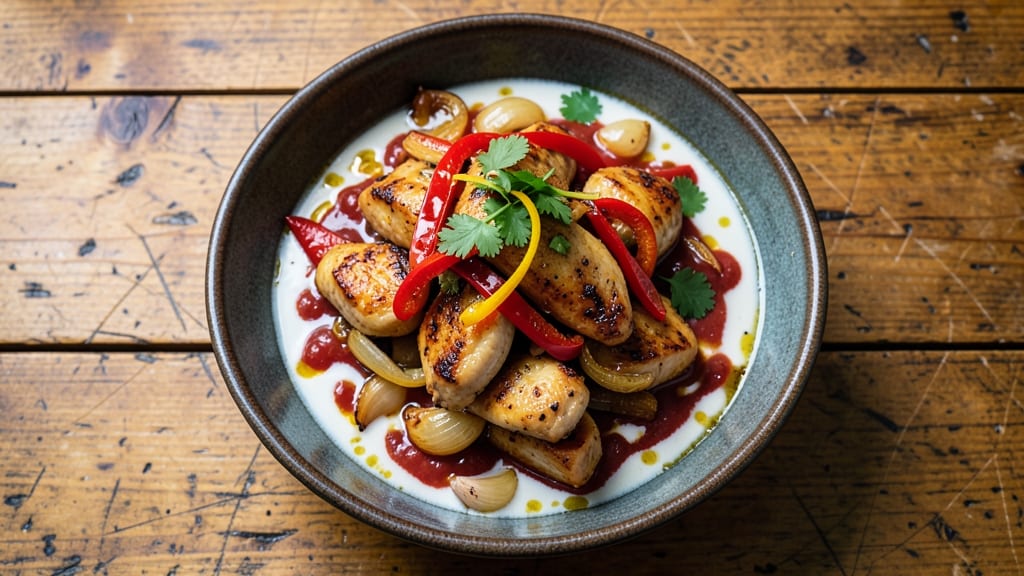
This American chicken curry recipe blends bold Indian spices with familiar American ingredients for a dish that's both comforting and exciting. The smoky coconut and turmeric base creates layers of flavor that'll have everyone asking for seconds.
I developed this recipe to bridge the gap between traditional curry and what most American home cooks can easily find in their pantries.
The secret lies in balancing heat and creaminess—bell peppers add natural sweetness, tomatoes create depth, and coconut milk delivers that signature velvety texture. Unlike many curries that require hard-to-find ingredients, this version uses pantry staples while still delivering restaurant-quality results. The chicken cooks until fork-tender, absorbing all those aromatic spices.
What makes this curry truly special is how it adapts to American tastes—rich enough to stand alone but versatile enough to pair with rice, naan, or even crusty bread.
The aroma alone will transform your kitchen into a cozy dinner spot, while the flavors satisfy both curry lovers and newcomers alike. Ready in about 45 minutes, it's the perfect weeknight dinner that feels like a celebration.
Serve with basmati rice for the full experience, or let guests build their own bowls with optional toppings like cilantro, green onions, or a squeeze of lime.
The sauce thickens beautifully as it sits, making leftovers even more flavorful. This is comfort food with a global twist—exactly what makes home cooking so rewarding.
Ingredients for american chicken curry
Pantry staples meet bold spices for this restaurant-worthy American curry.
| Ingredient | Amount | Notes |
|---|---|---|
| Boneless Chicken Thighs 🍗 | 1 ½ lb | Cut into 1-inch pieces |
| Coconut Milk 🥥 | 13 ½ oz | Full-fat canned preferred |
| Red Bell Pepper 🌶️ | 1 whole | Diced into 0.5-inch pieces |
| Yellow Onion 🧅 | 1 whole | Finely chopped |
| Garlic Cloves 🧄 | 4 cloves | Minced |
| Canned Tomato Sauce 🍅 | 14 ½ oz | No sugar added preferred |
| Ground Turmeric 🌿 | 1 tbsp | Freshly ground preferred |
| Ground Cumin 🌿 | 1 tbsp | Toasted for depth |
| Smoked Paprika 🌶️ | 1 tbsp | For smoky flavor |
| Ginger Root 🌿 | 1 tbsp | Freshly grated |
| Chicken Broth 💧 | 1 cup | Low-sodium preferred |
| Olive Oil 🫒 | 2 tbsp | Extra-virgin for richness |
| Salt 🧂 | 1 ½ tsp | Kosher or sea salt |
| Black Pepper 🌶️ | ½ tsp | Freshly ground |
| Fresh Cilantro 🌿 | ¼ cup | Chopped for garnish |
The coconut milk is non-negotiable here—full-fat canned delivers that signature velvety texture. Thai Kitchen or Goya brands work perfectly, and you'll use the whole can. For the chicken, thighs stay juicier than breasts during the long simmer. Look for bone-in, skin-on if you want extra flavor, but boneless works too. Fresh turmeric and ginger make all the difference, but if you're using dried, toast them lightly in a dry pan first to deepen the flavor. The bell pepper adds natural sweetness that balances the spices beautifully.
No smoked paprika? Regular paprika plus a pinch of liquid smoke gets you close. Short on ginger? Substitute galangal if you have it, or use an extra 0.5 tbsp of ground ginger. The canned tomato sauce should be no-sugar-added—Muir Glen is my go-to. If you're using crushed tomatoes instead, add 1 tbsp of tomato paste to thicken the sauce. The chicken broth can be substituted with water, but low-sodium is key—you don't want to over-salt the dish. For extra depth, add a splash of fish sauce (if not vegetarian) or soy sauce.
This curry tastes even better the next day as the flavors meld. Store in an airtight container in the fridge for up to 5 days, or freeze for 3 months. I like to portion it into containers with rice already cooked and chilled—just reheat together. The sauce thickens as it cools, so if it seems too thick after chilling, stir in a splash of water or broth. Garnish with fresh cilantro right before serving, as it wilts quickly when added to hot dishes.
Why You'll Love This Recipe
- No Chopping Nightmare: I swear by this recipe because it’s the only curry I’ll make when I’m too tired to dice onions into perfect matchsticks. One onion and a bell pepper get roughly chopped—no fancy techniques, no crying over food prep.
- Creamy Without the Guilt: That coconut milk? It turns this into a velvety dream, but the real magic happens when the chicken thighs get tender enough to fall apart. Honestly, the first time I made it, I ate it straight from the pot with a spoon—no judgment.
- Leftover Hero: Between us, this curry tastes better the next day. The flavors meld into something richer, and it reheats like a dream. I make a double batch on Sundays just so I can grab it for lazy nights or pack it for work.
- Budget-Friendly Feast: Chicken thighs are cheap, coconut milk stretches far, and you’re not buying exotic spices. Yet somehow, it feels like a restaurant-worthy dish. My college roommate and I lived on this for a month—no complaints.
Step-by-step instructions for smoky coconut chicken curry
This method delivers rich, aromatic curry with tender chicken and vibrant spices every time.
Prep and Sear the Chicken
Cut the 1.5 lb boneless chicken thighs into 1-inch pieces and pat them dry with paper towels. Heat 2 tablespoons olive oil in a large Dutch oven over medium-high heat until shimmering. Working in batches if needed, add the chicken pieces and sear for 4-5 minutes per side until golden brown and cooked through to 165°F internally.
The high heat creates a flavorful crust while ensuring the chicken cooks evenly. Don't crowd the pan—this prevents steam buildup that makes the chicken tough. Once browned, remove the chicken and set it aside on a plate.
Build the Aromatic Base
In the same Dutch oven, add 2 tablespoons olive oil if needed and reduce heat to medium. Add the finely chopped yellow onion and cook for 3-4 minutes until softened and translucent. Stir in the minced garlic cloves and cook for 30 seconds until fragrant—this prevents the garlic from burning.
Add the diced red bell pepper and cook for another 3-4 minutes until slightly softened. This step develops the base flavors that will carry through the entire curry. The peppers should retain some texture rather than turning mushy.
Toast the Spices
Reduce heat to medium-low and stir in the 1 tablespoon ground turmeric, 1 tablespoon ground cumin, and 1 tablespoon smoked paprika. Cook for 1 minute until the spices are fragrant and the oil begins to bubble gently. This step activates the spices' flavors and prevents bitterness.
Add the 1 tablespoon freshly grated ginger root and cook for another 30 seconds until the raw ginger smell disappears. The spices should coat the vegetables evenly, creating a flavorful paste that forms the foundation of your curry.
Simmer the Sauce
Pour in the 14.5 oz canned tomato sauce, 1 cup chicken broth, and 13.5 oz coconut milk. Stir well to combine, then return the chicken pieces to the pot. Bring to a gentle simmer over medium heat, then reduce heat to low. Cover and let it cook for 20-25 minutes, stirring occasionally.
The sauce should thicken slightly as it simmers, but it should remain creamy rather than dry. If it gets too thick, add 1-2 tablespoons water to maintain the right consistency. The chicken should be fully tender and easily flaked with a fork.
Season and Finish
Uncover the pot and increase heat to medium. Add the 1.5 teaspoons salt and 0.5 teaspoon black pepper, stirring to combine. Let the curry simmer uncovered for 5-7 minutes to allow excess moisture to evaporate and the flavors to meld.
Taste and adjust seasoning if needed—this is your chance to balance the flavors. The curry should be rich, slightly sweet from the coconut milk, and deeply spiced with a smoky depth from the paprika. Garnish with 0.25 cup chopped fresh cilantro just before serving to add a bright, fresh finish.
Pro Tips For Making American Chicken Curry
- Sear the Chicken Hard: Don’t just brown the thighs—get them deep golden, almost crispy, in a hot pan with oil for 4-5 minutes per side. I used to skip this and wondered why my curry tasted flat; the Maillard reaction here builds flavor that nothing else can.
- Blanch the Bell Pepper: Toss the red bell pepper strips in boiling water for 30 seconds before adding them to the curry. This softens the texture without turning it to mush—trust me, your mouth will notice the difference.
- Simmer, Don’t Boil: Once the coconut milk hits the pot, drop the heat to a gentle simmer. I’ve ruined curries by letting them boil, splitting the milk and making the sauce separate like a sad, greasy layer. Keep it at a low bubble, not a rolling boil.
- Toast the Onion Low: Cook the yellow onion over medium-low heat until it’s caramelized at the edges, not burned. Rushing this step means you’ll end up with a bitter base—take the 10 extra minutes, and your curry will taste like it’s been simmering for hours.
Troubleshooting perfect results
Sauce Too Thin?
If your curry sauce turns out thinner than expected, don’t panic—this happens when the coconut milk separates or the chicken releases too much moisture. My go-to fix is to simmer the curry uncovered for an extra 5-10 minutes on medium-low heat.
Stir occasionally and let the liquid reduce naturally. For an instant fix, mix 1 tablespoon cornstarch with 2 tablespoons cold water, stir it into the sauce, and simmer for 2 minutes until thickened. 💡
Chicken Undercooked?
If your chicken feels rubbery or doesn’t reach 165°F internal temperature, it likely didn’t cook long enough. The curry’s liquid can mask doneness, so always check with a meat thermometer. If needed, return the curry to low heat and simmer uncovered for another 10-15 minutes, stirring occasionally.
For extra insurance, sear the chicken longer in Step 1—golden-brown crusts mean it’s on its way to being fully cooked. 🍗
Spices Too Overpowering?
If your curry tastes like a spice bomb rather than a balanced dish, start by adding ½ cup plain yogurt or coconut milk to dilute the heat. Simmer for 2-3 minutes to let the flavors meld.
For a sweeter balance, stir in 1 tablespoon honey or maple syrup. I also recommend reducing the smoked paprika by ½ teaspoon next time—it’s the most intense spice in this recipe. 🌶️
Coconut Milk Separating?
This happens when the curry gets too hot or sits too long. To fix it, whisk in 1 tablespoon cornstarch or 1 egg yolk (tempered with a splash of sauce) and simmer for 2 minutes until smooth.
For prevention, avoid boiling the curry—keep it at a gentle simmer (180°F) and stir occasionally. If using store-bought coconut milk, opt for brands like Thai Kitchen, which hold up better to heat. 🥥
Lacking Depth of Flavor?
If your curry tastes flat, it might need more umami or acidity. Boost umami by adding 1 teaspoon fish sauce (or soy sauce for vegetarian) or ½ teaspoon MSG. For brightness, stir in 1 tablespoon lime juice or a pinch of sugar.
I also recommend toasting the spices longer in Step 3—cook them for 2 minutes instead of 1 to deepen their aroma. 💫
Rice Too Dry?
If serving with rice, cook it slightly underdone (1 minute less than package instructions) and fold it into the curry to absorb the sauce. For extra moisture, stir in ¼ cup water or broth and cover to steam for 2 minutes.
Pro tip: Use jasmine rice—it’s less sticky than basmati and holds up better in curries. 🍚
Nutrition facts
Frequently asked questions
Can I use chicken breasts instead of thighs?
Chicken breasts work, but they require extra care to stay tender. Cut them into 1-inch cubes and pound them slightly to even thickness. Sear them briefly (2-3 minutes per side) until golden, then add to the curry. The cooking time may need adjustment—check for 165°F internal temp before serving. For best results, marinate them in 1 tbsp yogurt + spices for 30 minutes beforehand.
How can I make this curry vegetarian?
Swap the chicken for 1.5 lbs firm tofu or chickpeas. Press tofu to remove excess water, then cube and pan-fry until golden. Use 1 tbsp soy sauce or vegetable broth instead of chicken broth, and add ½ tsp MSG for umami depth. For extra heartiness, stir in 1 cup cooked lentils or sweet potatoes at the end.
What's the best way to reheat leftovers?
Reheat gently to preserve texture—place curry in a saucepan over low heat and stir frequently for 5-7 minutes until warmed through. Avoid microwaving as it can make the sauce watery. For rice, cover with a damp paper towel and reheat with the curry to keep it moist. Leftovers taste even better the next day as flavors meld!
Can I make this in an Instant Pot?
Yes! Sauté onions, peppers, and spices as directed, then add all remaining ingredients except cilantro. Seal the lid, cook on High Pressure for 8 minutes, then quick-release. Finish with fresh cilantro and adjust seasoning. The Instant Pot version cooks 30% faster but may need 1 tbsp cornstarch slurry to thicken the sauce.
What are the best sides to serve with this?
Classic pairings include jasmine rice, garlic naan, or crusty sourdough bread. For a lighter option, serve with cucumber raita or a simple mango salad. The creamy curry also works well with roasted potatoes or cauliflower rice for a lower-carb meal.