
Main Courses
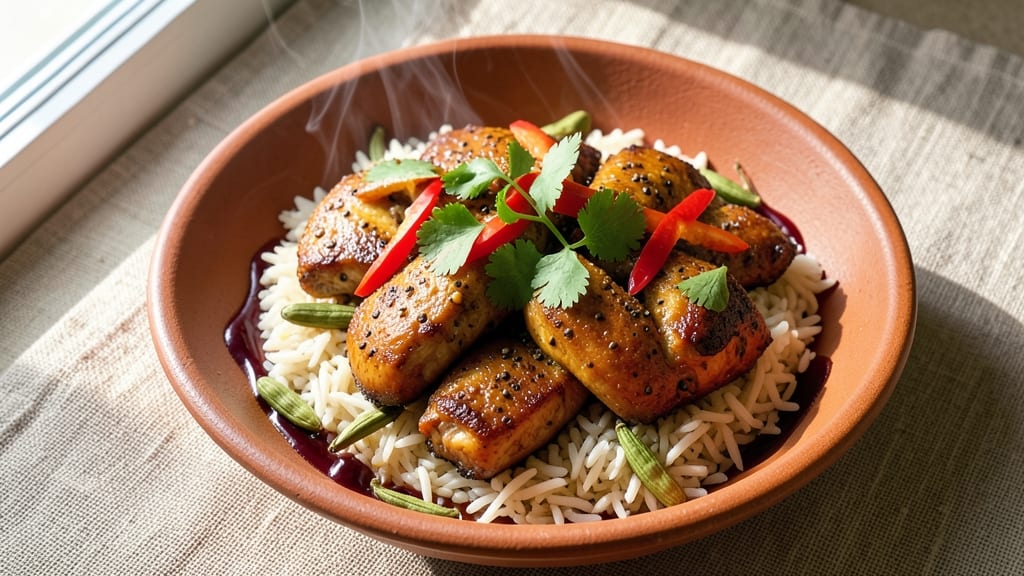
Aromatic chicken curry transforms simple ingredients into a symphony of warm spices that fill your kitchen with an irresistible fragrance. The secret lies in properly blooming whole spices—cumin, coriander, and cardamom—before adding fresh ginger and garlic, which unlocks their full potential. This isn't just a curry; it's a sensory experience that begins with the sizzle of spices in hot oil and ends with tender chicken bathed in a velvety, aromatic sauce.
What sets this recipe apart is the balance of traditional techniques with modern convenience. We start with a dry spice toast to deepen flavors, then build layers by simmering the chicken in a rich tomato base before adding coconut milk for creaminess.
The result is a curry that's both restaurant-quality and achievable at home, with each bite delivering complex warmth from the spices and gentle sweetness from the coconut.
By the time you serve this dish, your kitchen will smell like a bustling Indian restaurant, and every spoonful will offer that perfect harmony of fresh ginger, toasted cumin, and tender chicken.
The sauce clings to the meat and rice, creating a cohesive, flavorful bite that's impossible to resist. This is comfort food at its finest—warm, aromatic, and deeply satisfying.
The beauty of this recipe lies in its versatility. Serve it with basmati rice for a classic pairing, or over naan for extra texture. For those who prefer a lighter touch, reduce the coconut milk slightly to create a more traditional tomato-based curry.
Either way, you're guaranteed a dish that will impress even the most discerning curry lovers.
Ingredients for aromatic chicken curry
These aromatic ingredients create a symphony of warm spices that transform simple chicken into restaurant-quality curry.
| Ingredient | Amount | Notes |
|---|---|---|
| Boneless Chicken Thighs 🍗 | 1 ½ lb | Cut into 1-inch pieces |
| Extra-Virgin Olive Oil 🫒 | ¼ cup | For blooming spices |
| Whole Cumin Seeds 🌿 | 1 tbsp | Toasted for deeper flavor |
| Whole Coriander Seeds 🌿 | 1 tbsp | Toasted lightly |
| Green Cardamom Pods 🌿 | 6 whole | Lightly crushed |
| Ground Turmeric 🌶️ | 1 tsp | Freshly ground preferred |
| Fresh Ginger 🧅 | ½ cup | Finely grated, peeled |
| Garlic Cloves 🧄 | 6 cloves | Minced finely |
| Canned Crushed Tomatoes 🍅 | 14 ½ oz | San Marzano preferred |
| Coconut Milk 🥥 | 13 ½ oz | Full-fat for creaminess |
| Fresh Cilantro 🌿 | ¼ cup | Chopped, for garnish |
| Lemon Juice 🍋 | 1 tbsp | Freshly squeezed |
| Salt 🧂 | 1 ½ tsp | Diamond Crystal preferred |
| Black Pepper 🌶️ | ½ tsp | Freshly ground |
| Garam Masala 🌶️ | 1 tsp | For finishing |
The spices are the heart of this curry. Whole cumin and coriander seeds need toasting—hit them in a dry pan for 30 seconds until fragrant. Penzeys or the bulk bins at Whole Foods have the best quality. Fresh ginger and garlic make all the difference—don't use powdered. The crushed tomatoes? San Marzano is the gold standard, but any good quality canned tomatoes work. For coconut milk, full-fat gives the richest texture—no substitutions here.
No whole spices? Ground cumin and coriander at half the amount work in a pinch. Fresh ginger too strong? Substitute with 1/4 tsp ground ginger, but you'll lose that bright zing. The garam masala is non-negotiable—it's the finishing touch that ties everything together. Madras or Everest brand from Indian markets are my go-tos. Short on cilantro? Fresh parsley or basil works for garnish, though it changes the flavor profile slightly. The lemon juice balances the richness—don't skip it.
This curry tastes even better the next day as flavors meld. Keeps 4-5 days in the fridge, freezes beautifully for 3 months. I always double the batch—half for dinner, half for lunches. Store in airtight containers with a layer of plastic wrap pressed on top to prevent that skin from forming. Reheat gently on low heat with a splash of water or coconut milk to restore creaminess.
Why You'll Love This Recipe
- One-Pot Magic: I swear by this—just toss everything into one pot, and the spices (cumin, coriander, cardamom) toast themselves into fragrant perfection while you chop. No extra bowls, no mess, and the chicken cooks right in the flavor.
- Spice Symphony: That first whiff of toasted cumin and cardamom hitting olive oil? Pure magic. The thighs stay juicy while the spices bloom into a warm, earthy depth—like a hug in a bowl, but way tastier.
- Weeknight to Dinner Party: Same recipe, different vibes. Slap it over rice for a lazy Tuesday, or serve it with naan and a squeeze of lime for when your in-laws drop by. The curry’s rich enough to impress but simple enough to not stress over.
- Budget-Friendly Feast: Chicken thighs are forgiving and cheap, and a handful of whole spices goes a long way. Make a double batch—it reheats beautifully for lunches, and the leftovers taste even better the next day. (Yes, I’ve tested this.)
Step-by-step instructions for aromatic chicken curry
Here's how to build layers of warm spices and tender chicken for a curry that sings with every bite.
Bloom the Spices in Olive Oil
Heat the 0.25 cup extra-virgin olive oil in a heavy-bottomed pot over medium-low heat. Add the 1 tablespoon whole cumin seeds and 1 tablespoon whole coriander seeds—they'll sizzle gently and fill your kitchen with earthy aroma. Watch closely as they begin to pop and darken slightly, about 30 seconds after they hit the oil. Immediately add the 6 lightly crushed green cardamom pods and toast for another 20 seconds until fragrant.
Remove from heat and let the spices cool for 1 minute—this prevents burning when you add the ground spices. Return to medium heat and stir in the 1 teaspoon ground turmeric, 0.5 cup finely grated fresh ginger, and 6 minced garlic cloves. Cook for 30 seconds until the raw garlic scent disappears and you smell that sweet, toasty ginger aroma. This spice blooming is where all the magic begins.
Sear the Chicken and Build the Base
Push the spice mixture to one side of the pot and add the 1.5 lb boneless chicken thighs cut into 1-inch pieces. Let them sear undisturbed for 3-4 minutes until golden brown on one side. Stir gently to brown the other sides, then sprinkle with 1.5 teaspoons salt and 0.5 teaspoon black pepper. Add the 14.5 oz canned crushed tomatoes and stir to combine, letting the tomatoes simmer for 5 minutes until slightly thickened.
The chicken should release easily from the pot at this stage—if it sticks, add 2 tablespoons water to deglaze. This step creates the flavor foundation, so don't rush it. You'll know it's working when you smell that deep, savory tomato-chicken aroma developing.
Simmer in Coconut Milk Until Tender
Pour in the 13.5 oz full-fat coconut milk and stir well to incorporate. Bring to a gentle simmer, then reduce heat to low and cover partially. Let it cook for 25-30 minutes, stirring occasionally, until the chicken is fork-tender and pulls away from the bone. The sauce should thicken slightly but remain luscious—if it's too thin, uncover and simmer for another 5 minutes to reduce.
Here's the thing—don't peek too often. Every time you lift the lid, you lose heat and moisture. The curry should smell rich and complex, with notes of coconut and caramelized spices. Taste and adjust seasoning—you might need a pinch more salt or a squeeze of lemon juice to brighten the flavors.
Finish with Garam Masala and Fresh Cilantro
Remove the pot from heat and stir in 1 teaspoon garam masala. Let it steep for 5 minutes—this allows the warm spices to infuse the sauce. Just before serving, fold in the 0.25 cup chopped fresh cilantro and give it a final taste. The acidity of the cilantro cuts through the richness of the coconut milk beautifully.
Serve immediately with steamed basmati rice or warm naan. The curry should be aromatic, with tender chicken swimming in a velvety sauce that balances spice, sweetness, and acidity. Each bite should deliver layers of flavor—first the creamy coconut, then the warm spices, and finally the bright finish of lemon and cilantro.
Pro Tips For Making Aromatic Chicken Curry
- TOAST WHOLE SPICES: Crank the heat to medium-high and dry-toast cumin, coriander, and cardamom pods in olive oil for 30 seconds before adding chicken—just until they sizzle and release aroma. I used to skip this, and the curry always tasted flat; now it sings with depth right from the start.
- DON’T CROWD THE PAN: Lay chicken thighs in a single layer and let them sear undisturbed for 4-5 minutes per side—no tossing or flipping early. I learned this the hard way after ending up with steamed, not browned, meat. Patience here means flavor.
- CRUSH CORIANDER SEEDS: Lightly crush coriander seeds with the flat side of a knife (or a mortar) before toasting—this unlocks their citrusy oils without turning to dust. My grandmother swore by this, and she was right: the curry’s brightness jumps when you do.
- SALT THE CHICKEN FIRST: Generously season chicken thighs with salt before searing—at least 1 tsp per pound—and let them sit 10 minutes while you prep spices. This guarantees they’re juicy through, not just on the surface. (Yes, even if you’re impatient like me.)
Pro cooking tips for this dish
Spice Blooming Secrets
Never skip toasting your whole spices—this unlocks their full potential! Heat 0.25 cup olive oil over medium-low heat, then add 1 tbsp cumin and coriander seeds and toast for exactly 30 seconds until they darken slightly and release their aroma.
Remove from heat immediately to prevent burning, then return to heat for the ground spices. This step creates depth that ground spices alone can't match. 🌿
Chicken Searing Mastery
For perfectly browned chicken, work in batches if needed to avoid crowding the pot. Let each piece sear for 3-4 minutes undisturbed until golden—this creates a flavorful crust. If your chicken sticks, deglaze with 2 tbsp water immediately to salvage those fond flavors.
I use a 12-inch cast iron skillet for this step because it maintains even heat distribution.
Tomato Reduction Technique
The 5-minute tomato simmer is crucial for building flavor. Let the tomatoes break down slightly while the chicken cooks, creating a concentrated base. If your sauce looks too thin after adding coconut milk, uncover and simmer uncovered for 5 minutes to reduce it properly.
This step prevents a watery curry and intensifies all the flavors. 🔥
Coconut Milk Integration
When adding coconut milk, stir vigorously to create a smooth emulsion. The key is patience—simmer on low heat for 25-30 minutes with minimal stirring. Peeking too often releases moisture and weakens the sauce. The curry should smell rich and complex by the end, with visible oil separating slightly on top.
Garam Masala Timing
Add garam masala only at the very end and let it steep for 5 minutes off the heat. This allows the warm spices to infuse without burning. I use Madras brand garam masala because it has a perfect balance of cinnamon, cardamom, and cloves.
Stirring in fresh cilantro right before serving brightens the dish and adds freshness. 💫
Heat Control Tips
Use medium-low heat throughout most of the cooking process to prevent scorching. The only time you should use higher heat is during the initial spice toasting and chicken searing. A thermometer probe helps monitor internal chicken temperature—aim for 165°F in the thickest piece. This ensures perfect doneness without overcooking.
Nutrition facts
Frequently asked questions
Can I use chicken breast instead of thighs?
Yes, but with adjustments! Chicken breast cooks faster and can dry out. Use 1 lb boneless breast cut into 1-inch cubes and reduce simmering time to 15-20 minutes. Add 2 tablespoons coconut milk at the end to prevent drying. For best results, marinate the breast in 1 tbsp yogurt and 1 tsp lemon juice for 30 minutes before cooking.
What if I don't have fresh ginger?
Use ¼ tsp ground ginger as a substitute, but expect less brightness. For a closer match, combine ½ tsp ground ginger with ½ tsp lemon zest—the acidity helps mimic fresh ginger's zing. Never skip it entirely, as ginger is key to balancing the spices. The recipe's aromatic profile depends on that fresh, peppery kick!
How can I make this curry spicier?
Add ½ tsp cayenne pepper with the ground spices, or stir in 1 tsp red chili powder after adding tomatoes. For heat with depth, include 1 dried Kashmiri chili (seeds removed) during spice blooming. Always taste as you go—spice builds gradually, so start conservative. A squeeze of lemon juice at the end enhances perceived heat.
Can I make this ahead of time?
This curry tastes even better the next day as flavors meld. Store in an airtight container in the fridge for 4-5 days or freeze for 3 months. Reheat gently on low heat with 2 tbsp water or coconut milk to restore creaminess. The sauce may thicken further—stir in 1 tbsp water if needed.
What's the best way to serve this?
Pair with steamed basmati rice or warm naan for the full experience. Garnish with extra cilantro and a drizzle of yogurt for contrast. For a complete meal, add a simple cucumber raita or mango chutney on the side. The curry's richness works beautifully with cooling elements—think cooling mint chutney or even pickled onions.