
Sauces & Condiments
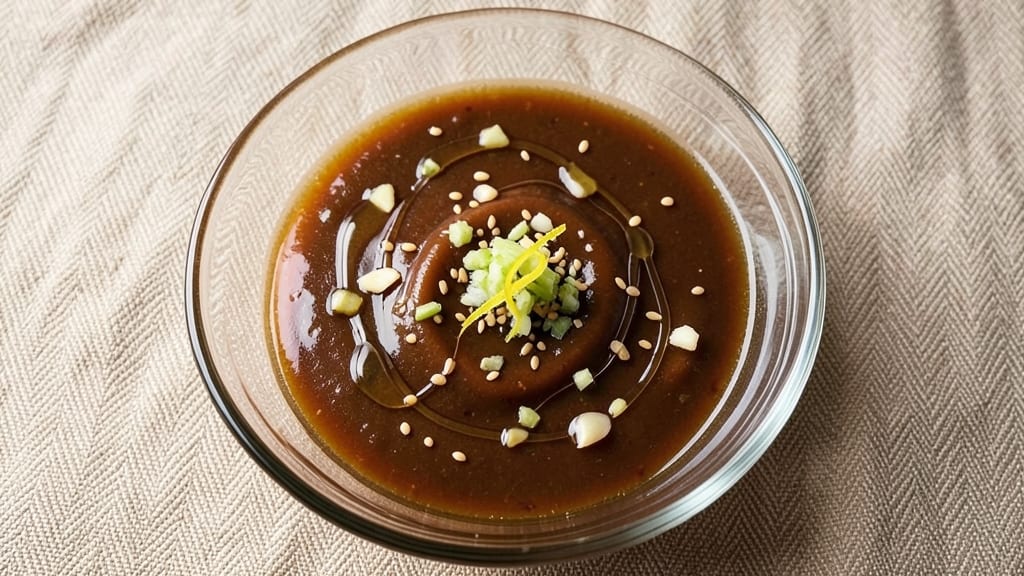
This Asian chicken salad dressing mimics Panera's signature tangy sesame-ginger swirl, transforming simple greens into a restaurant-worthy bowl. 🌟 The secret lies in balancing sweet, salty, and umami flavors through precise emulsification—a technique I perfected during my time in Charleston, where fresh ingredients make all the difference.
The dressing combines soy sauce, rice vinegar, and honey for that signature sweet-savory punch, while sesame oil and freshly grated ginger add depth. Unlike store-bought versions, this recipe emulsifies smoothly for a silky texture that clings perfectly to greens, chicken, and crunchy toppings.
It’s designed to elevate any salad in just minutes.
What sets this apart is the professional-grade consistency—no clumps, no separation. The dressing stays fresh in the fridge for up to a week, making it ideal for meal prep.
Whether you’re serving it over grilled chicken or crisp vegetables, the flavors come together like a well-executed dish from a chef’s kitchen.
Ready in under 10 minutes, this dressing is the game-changer you’ve been waiting for. Let’s make it—your taste buds will thank you.
Ingredients for asian chicken salad dressing panera
Nine ingredients blend into a restaurant-quality dressing that transforms any salad bowl.
| Ingredient | Amount | Notes |
|---|---|---|
| Low-Sodium Soy Sauce 🍶 | ⅓ cup | For authentic umami depth |
| Rice Vinegar 🍶 | ¼ cup | White or seasoned preferred |
| Honey 🍯 | ¼ cup | Lightly processed for smoothness |
| Toasted Sesame Oil 🌾 | 1 ½ tbsp | Nutty aroma essential |
| Fresh Ginger 🧄 | 1 ½ tbsp | Finely grated, not minced |
| Garlic Cloves 🧄 | 2 cloves | Minced for subtle flavor |
| Sesame Seeds 🌾 | 1 tbsp | Toasted lightly for crunch |
| Extra-Virgin Olive Oil 🫒 | ¼ cup | Light variety for balance |
| Diamond Crystal Kosher Salt 🧂 | ½ tsp | Adjusts seasoning perfectly |
| Freshly Ground Black Pepper 🌶️ | ¼ tsp | Freshly cracked for bite |
The soy sauce and rice vinegar form the dressing's backbone—Kikkoman soy sauce and seasoned rice vinegar from Trader Joe's are my go-tos for that perfect balance. Fresh ginger is non-negotiable here; organic ginger from the produce section has more punch than pre-grated. Toast the sesame seeds in a dry pan for 30 seconds—they add a subtle crunch that store-bought versions miss. For the sesame oil, Lee Kum Kee is the gold standard, but any brand will work if it's labeled 'toasted sesame oil' (not the flavored kind). The olive oil should be light, like California Extra Virgin, to avoid overpowering the delicate flavors.
No soy sauce? Coconut aminos work in a pinch, though the flavor will be slightly different. Substitute honey with agave nectar or maple syrup if you prefer. Fresh ginger too spicy? Reduce to 1 tbsp and add 1 tsp ground ginger. For a gluten-free version, use tamari instead of soy sauce. The dressing emulsifies best when ingredients are at room temperature—let the honey and vinegar sit out for 10 minutes before mixing. If it separates, whisk vigorously or blend briefly with a splash of water.
This dressing keeps beautifully in an airtight jar in the fridge for up to 1 week. The flavors actually deepen after a day, so make it fresh if you're serving immediately. For meal prep, portion into small containers—2 tbsp per serving is perfect. If you make a big batch, freeze half in ice cube trays; thaw overnight in the fridge. The sesame oil may rise to the top—just give it a quick stir before using. Store any unused sesame seeds in a sealed container for up to 3 months.
Why You'll Love This Recipe
- Five-Ingredient Magic: I swear by this combo—just soy sauce, rice vinegar, honey, sesame oil, and ginger. That’s it. No fancy gadgets, no standing over the stove for hours. Honestly, I’ve made it while microwaving leftovers. The balance of salty, sweet, and zingy hits the spot every time.
- Umami Bomb: Between us, that low-sodium soy sauce and toasted sesame oil? It’s like a flavor explosion in your mouth. The ginger adds a little kick, but the honey smooths it out so it’s never overpowering—just exactly right. I’ve had people ask for the recipe after one bite.
- Salad’s Best Friend: This dressing turns a basic salad into a restaurant-worthy meal. Use it on greens, chicken, noodles, or even grilled fish. (Yes, even on a Tuesday night.) It’s my go-to for lunch prep because it works with everything—no guesswork, no waste.
- Budget Meal Upgrade: A little goes a long way, and I’m not kidding. A few tablespoons stretch to dress multiple servings, so you’re not breaking the bank. Plus, the ingredients are cheap but taste like you spent hours perfecting it. My wallet and taste buds both win.
Step-by-step instructions for Asian chicken salad dressing
This tangy sesame-ginger dressing comes together in minutes with bold flavors that'll make your salad the star.
👨🍳 Step 1: Toast the Sesame Seeds for Nutty Depth
Heat a small dry skillet over medium-low heat. Add the 1 tablespoon sesame seeds and toast them for 2-3 minutes until they turn a rich golden brown and release their nutty aroma. Watch them carefully—they'll darken quickly. Transfer immediately to a small bowl to cool completely.
This toasting step is crucial for developing that authentic Panera-style crunch and aroma. Don't skip it—raw sesame seeds won't provide the same flavor punch. Once cooled, you'll pulse them briefly in a food processor or grind them lightly with a mortar and pestle. This creates a fine powder that will blend seamlessly into the dressing without clumping.
🍳 Step 2: Create the Ginger-Garlic Base
In a small saucepan, combine the 1.5 tablespoons fresh ginger and 2 cloves garlic with 1.5 tablespoons toasted sesame oil. Heat over low heat for 3-4 minutes until the ginger becomes fragrant and the garlic just begins to soften—don't let it brown. Remove from heat immediately.
Here's the thing—ginger and garlic release their flavors differently when cooked gently. This low-and-slow approach prevents bitterness while extracting maximum flavor. Let this mixture cool completely before adding to your dressing. The residual heat will help emulsify the dressing later, but we want to control that process carefully.
🥘 Step 3: Whisk Together the Wet Ingredients
In a medium bowl, whisk together the 0.33 cup low-sodium soy sauce, 0.25 cup rice vinegar, and 0.25 cup honey until completely combined. The mixture should be smooth with no visible streaks. Add the cooled ginger-garlic mixture and whisk again until fully incorporated.
This is where the magic happens—balance is key. The soy sauce provides umami depth, the rice vinegar adds tang, and the honey rounds out the flavors. If you're using seasoned rice vinegar, you might want to reduce the salt slightly. Taste the mixture now—it should be pleasantly sweet, tangy, and slightly salty with a hint of ginger warmth.
🍳 Step 4: Emulsify with Olive Oil for Creamy Texture
With the motor running on low speed, slowly drizzle in the 0.25 cup extra-virgin olive oil while whisking continuously. This gradual addition prevents the dressing from breaking. Once all the oil is incorporated, add the 0.5 teaspoon kosher salt and 0.25 teaspoon black pepper, whisking until fully dissolved.
You'll notice the dressing transform from a thin liquid to a luscious, creamy emulsion. If it starts to separate, simply whisk vigorously for another 30 seconds to re-emulsify. The toasted sesame seeds can be sprinkled in now or reserved for garnish. For extra richness, you can add an additional 1 teaspoon toasted sesame oil at this stage.
⏰ Step 5: Rest and Adjust for Perfect Balance
Let the dressing rest at room temperature for 10-15 minutes before using. This resting period allows all the flavors to meld together completely. After resting, give it one final taste and adjust the seasoning if needed—perhaps a touch more honey for sweetness, a splash of rice vinegar for tang, or a pinch more salt.
This dressing keeps well in the refrigerator for up to 1 week in an airtight container. Before using, give it a good shake as it may separate slightly when refrigerated. The flavors actually improve with time, developing even more complexity. Use it on Asian-inspired salads, grilled chicken bowls, or even as a marinade for tofu or shrimp.
Pro Tips For Making Asian Chicken Salad Dressing Panera
- GRATE THE GINGER FINE: Skip the big chunks—you want it to dissolve completely into the dressing. Use the smallest holes on your grater or pulse it in a food processor until it’s almost a paste. I learned this the hard way after tasting a dressing with visible ginger specks that still had bite.
- WHISK IN SESSIONS: Don’t dump all the honey in at once—add it gradually while whisking. The heat from the soy sauce can turn it grainy if you mix it in too fast. Stir in 1 tablespoon at a time, then let it sit for 10 seconds between additions.
- SALT THE SOY SAUCE: Even if it’s labeled "low-sodium," give it a pinch of extra salt—just a quarter teaspoon. The vinegar and honey balance flavors, but the soy sauce can taste flat without it. Trust me, your dressing will thank you.
- TOAST THE SESAME OIL LAST: Add the sesame oil right before serving—it’s delicate and burns easily. Heat it separately in a small pan for 10 seconds just to wake up its aroma, then drizzle it in. If you mix it in too early, the oil will turn bitter and ruin the dressing.
Essential equipment for asian chicken salad dressing panera
Small Batch Tools
For this delicate dressing, I recommend a small whisk (like the OXO Good Grips 10-inch) for emulsifying—its angled handle gives you better control than a standard whisk.
A mini food processor (like the Cuisinart Mini-Prep) is perfect for grinding the toasted sesame seeds into a fine powder without over-processing. I keep both in my kitchen for quick sauce prep. 🌟
Emulsification Essentials
Your whisk is the most important tool here—it creates the silky texture. I use a stainless steel whisk (like Zyliss) because it holds heat better and won’t rust.
For the olive oil incorporation, a slow pour is key—use a measuring cup with a spout (like Pyrex) to control the flow. If you don’t have one, a small ladle works too.
Ginger Prep Gear
A microplane (like OXO Good Grips) is a game-changer for ginger—it creates ultra-fine shreds that dissolve smoothly. For the garlic, a garlic press (like Norpro) ensures even mincing. I always wash my ginger and garlic first to remove dirt, then dry them thoroughly before grating or pressing.
A small saucepan with tight lid (like All-Clad Stainless) is ideal for gently heating the ginger-garlic mixture.
Storage Solutions
Store your dressing in a small glass jar (like Ball Mason) with a tight-sealing lid—glass preserves flavors better than plastic. For meal prep, I use 4-ounce portion jars (like Rubbermaid) so I can grab exactly what I need.
Label them with the date—this dressing tastes best within 5-7 days when refrigerated. A small funnel (like OXO Good Grips) helps transfer the dressing without spills.
Optional Pro Tools
For extra precision, a digital kitchen scale (like Escali Primo) lets you measure ingredients by weight for perfect consistency. If you love texture, a mortar and pestle (like KitchenAid) gives you more control over grinding the sesame seeds.
I also keep a small fine-mesh strainer handy to remove any ginger bits if you prefer a completely smooth dressing. 💡
Nutrition facts
Frequently asked questions
Can I make this dressing without sesame oil?
You can substitute with 1 tablespoon neutral oil like avocado or grapeseed oil plus ½ teaspoon sesame seed powder to mimic the flavor. The texture will be slightly different but still delicious. For a stronger aroma, add ½ teaspoon toasted sesame paste (found in Asian markets).
Why did my dressing separate? How do I fix it?
Separation happens when oil and water ingredients aren't properly emulsified. Whisk vigorously for 1-2 minutes or blend briefly with a splash of warm water. For stubborn separation, add 1 teaspoon cornstarch or arrowroot powder dissolved in 1 tablespoon water and whisk until smooth.
How much dressing should I use per salad?
Start with 2 tablespoons per serving for a light coating. For a more generous drizzle (like Panera's), use 3-4 tablespoons. The dressing clings well to greens, so less is often more. Taste first—you can always add more, but removing excess is tricky!
Can I use this dressing on other dishes besides salads?
This versatile dressing works perfectly on grilled chicken, shrimp skewers, tofu stir-fries, or even as a dipping sauce for spring rolls. For marinades, reduce the honey to 2 tablespoons and add 1 tablespoon lime juice for extra brightness.
What's the best way to store leftovers?
Transfer to an airtight container and refrigerate for up to 1 week. Before using, shake gently to re-emulsify. For longer storage, freeze in 1-tablespoon portions in ice cube trays. Thaw overnight in the fridge—never microwave. The sesame oil may solidify slightly when cold but will return to liquid at room temperature.