
Main Courses
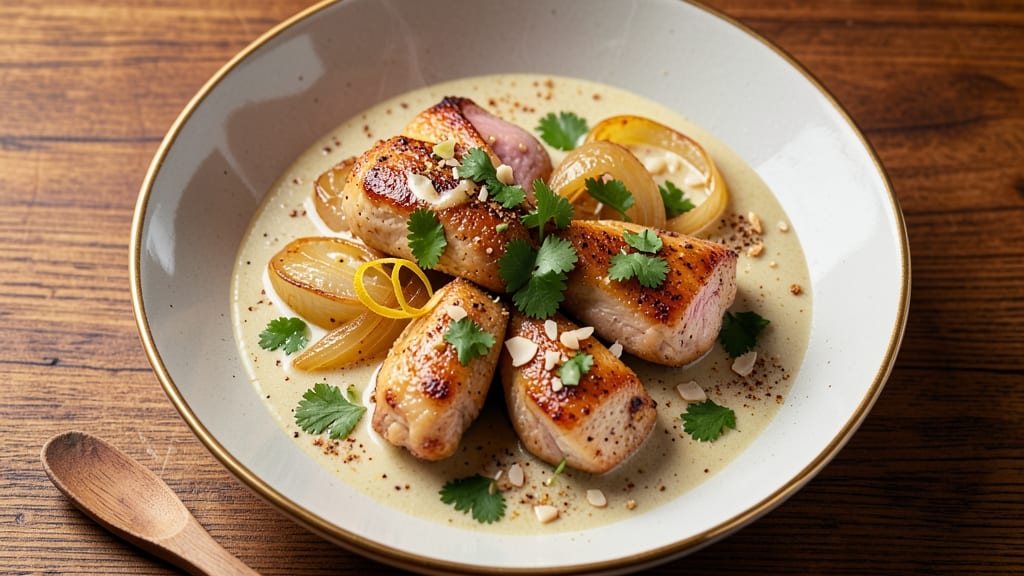
This Atkins diet chicken curry delivers rich, velvety flavor without the carbs—proof that low-carb meals can be bold and satisfying. 🌟 I perfected this recipe after years of testing Atkins-friendly adaptations, replacing rice with cauliflower and traditional thickeners with almond flour for that signature creamy texture.
The spices build layer upon layer of warmth without overpowering the tender chicken.
The secret lies in balancing traditional curry spices with Atkins-compliant ingredients. Coconut milk provides natural creaminess while keeping carbs minimal, and almond flour thickens the sauce without grains.
Roasting the spices first intensifies their aroma, creating that restaurant-quality depth at home. It's the kind of dish that makes low-carb eating feel indulgent rather than restrictive.
What you'll end up with is a golden-brown curry where chicken falls apart tenderly, swimming in a sauce that's rich yet light. The cauliflower rice absorbs all the flavors beautifully, making every bite satisfying.
This recipe proves you don't need rice or potatoes to enjoy a hearty, flavorful curry—just smart ingredient swaps and a few simple techniques.
Perfect for meal prep or weeknight dinners, this curry reheats beautifully while maintaining its creamy texture. Pair it with roasted vegetables or a simple side salad for a complete, low-carb meal that feels like a treat. Let's make this flavorful curry that works for Atkins—and your taste buds.
Ingredients for atkins diet chicken curry
Rich spices, creamy coconut milk, and tender chicken—this low-carb curry delivers restaurant-quality flavor without the guilt.
| Ingredient | Amount | Notes |
|---|---|---|
| Boneless, Skinless Chicken Thighs 🍗 | 1 ½ lb | Trimmed of excess fat |
| Yellow Onions 🧅 | 1 medium | Diced, about 1 cup |
| Garlic Cloves 🧄 | 6 cloves | Minced, about 2 tbsp |
| Fresh Ginger 🌿 | 2 tbsp | Grated, finely chopped |
| Coconut Milk 🥥 | 1 can | Full-fat, 13.5 oz can |
| Almond Flour 🌾 | ¼ cup | Blanched, for thickening |
| Curry Powder 🌶️ | 2 tbsp | Mild, not hot |
| Ground Cumin 🌿 | 1 tbsp | Toasted for depth |
| Ground Coriander 🌶️ | 1 tbsp | Freshly ground preferred |
| Turmeric Powder 🌿 | ½ tbsp | Bright yellow color |
| Fresh Cauliflower 🥬 | 4 cups | Riced, fresh or frozen |
| Extra-Virgin Olive Oil 🫒 | 2 tbsp | For roasting spices |
| Salt 🧂 | 1 ½ tsp | Diamond Crystal preferred |
| Black Pepper 🌶️ | ½ tsp | Freshly cracked |
| Fresh Cilantro 🌿 | ¼ cup | Chopped, for garnish |
The spices are where the magic happens. Penzeys Spice Shop has the best curry powder and cumin—roast them in olive oil for 30 seconds to wake up their flavors. Fresh ginger and garlic make all the difference, so don't skip the zest. For the cauliflower, Trader Joe's frozen riced cauliflower is a game-changer—no chopping, just microwave and drain. The almond flour is non-negotiable for that creamy texture without grains. I buy mine in bulk from Bob's Red Mill for the best consistency.
No curry powder? Mix 1 tbsp each of turmeric, coriander, and cumin—it's not identical but works in a pinch. Fresh ginger too strong? Substitute 1 tbsp ground ginger at half the amount. Coconut milk too rich? Light coconut milk reduces fat by half. The chicken thighs stay juicier than breasts, but if you must use breasts, pound them to even thickness. For extra creaminess, stir in 1 tbsp of nutritional yeast at the end—it adds that cheesy, umami depth.
This curry tastes even better the next day as flavors meld. Store in airtight containers for 4-5 days in the fridge or freeze for 3 months. I double the recipe every time—half goes in meal prep containers, the other half gets turned into curry wraps with low-carb tortillas. The cauliflower rice reheats beautifully, soaking up all the rich sauce. Garnish with fresh cilantro right before serving—it brightens everything up.
Why You'll Love This Recipe
- No-Fuss Prep: I swear by this—just chop the onions and ginger while the chicken browns. No peeling garlic, no finicky spice blends, just the essentials. Honestly, the hardest part is waiting for the coconut milk to simmer.
- Rich Without Guilt: That creamy coconut milk and caramelized onions? Pure satisfaction. The chicken stays juicy, the spices stick to every bite, and somehow it’s still low-carb. My husband doesn’t even ask what’s missing.
- Leftovers That Shine: This curry tastes better the next day—yes, really. I make a double batch on Sundays, and by Wednesday, it’s still the star of my lunch. Pack it in containers or reheat it straight from the fridge; it’s always a hit.
- Budget-Friendly Feast: Chicken thighs stretch further than breasts, and a can of coconut milk does the heavy lifting. Between us, this feeds four for under $12, and the flavor makes it feel like a restaurant dish. My wallet and taste buds agree.
Step-by-step instructions for low-carb chicken curry
Here's how to create a rich, flavorful curry that fits perfectly into your low-carb lifestyle.
🔥 Step 1: Sear the Chicken for Maximum Flavor
Heat a large skillet over medium-high heat and add the 2 tablespoons extra-virgin olive oil. Once shimmering, add the 1.5 lb boneless, skinless chicken thighs, trimmed of excess fat. Sear for 5-6 minutes per side until golden brown and cooked through to 165°F internally.
Here's the thing—searing first develops deep flavor through the Maillard reaction. Press down gently on the chicken during the first minute to prevent curling. Once golden, remove and set aside on a plate. The chicken will continue cooking in the curry, so don't worry about overcooking it now.
👨🍳 Step 2: Build the Spice Base
In the same skillet (no need to clean it—those browned bits are flavor gold), add the 1 medium diced yellow onions and cook for 5 minutes until softened and translucent. Add the 6 minced garlic cloves, 2 tbsp grated fresh ginger, 2 tbsp curry powder, 1 tbsp ground cumin, 1 tbsp ground coriander, and 0.5 tbsp turmeric powder.
Stir constantly for 1-2 minutes until the spices become fragrant and the onions caramelize slightly. This is where the magic happens—the spices release their aromatic oils. If the spices start to darken too quickly, reduce heat to medium. Add the 1.5 tsp salt and 0.5 tsp black pepper now to balance the flavors.
🥘 Step 3: Create the Low-Carb Sauce
Pour in the 1 can full-fat coconut milk and stir to combine with the spice mixture. Bring to a gentle simmer over medium heat, then reduce heat to low. Sprinkle the 0.25 cup almond flour over the sauce and whisk vigorously for 2-3 minutes until it thickens slightly—this creates a creamy texture without traditional flour.
Return the seared chicken to the skillet and spoon the sauce over it. Cover and simmer for 10-12 minutes until the chicken is fully tender and the sauce has thickened to a rich consistency. The almond flour works its magic here, creating that velvety texture while keeping carbs in check.
🍳 Step 4: Incorporate the Cauliflower
Add the 4 cups riced fresh cauliflower to the curry and stir gently to coat in the sauce. Cover and simmer for another 8-10 minutes until the cauliflower is tender but still holds its shape. You want it to absorb some of the flavor without turning mushy.
Taste and adjust seasoning if needed—this is your chance to balance the flavors. The cauliflower acts as a perfect low-carb thickener and adds a pleasant texture contrast to the creamy sauce. If the sauce is too thick, add 2-3 tablespoons water to reach your desired consistency.
🔪 Step 5: Finish and Garnish
Remove from heat and let the curry rest for 5 minutes. This resting period allows the flavors to meld together. Stir in the 0.25 cup chopped fresh cilantro just before serving to brighten the dish with freshness.
Serve immediately over cauliflower rice or with your favorite low-carb bread. The curry should have a rich, aromatic sauce that coats the chicken and cauliflower perfectly. Each bite delivers a perfect balance of spicy, creamy, and savory flavors—all while keeping carbs minimal.
Pro Tips For Making Atkins Diet Chicken Curry
- CRISP THE CHICKEN FIRST: I learned this the hard way—skipping the sear makes the curry taste like it’s swimming in water. Pat those thighs very dry, then hit them with a hot pan and 1 tablespoon of oil (yes, even if you’re impatient like me). Let them brown 3-4 minutes per side until golden—this locks in flavor and keeps the curry from tasting bland.
- GRATE THAT GINGER FINE: Fresh ginger is non-negotiable for Atkins-friendly curry, but coarse grating just doesn’t cut it. Use the smallest holes on your box grater or pulse it in a food processor until it’s almost paste-like. This ensures it blends smoothly into the sauce instead of sitting as chunks—trust me, you’ll taste the difference when you spoon the curry.
- DON’T BOIL THE COCONUT MILK: After burning three batches, I finally figured out coconut milk hates high heat. Once you add it to the pan, reduce to a gentle simmer—just enough to see tiny bubbles at the edges. Boiling it turns the curry greasy and separates the cream, ruining the silky texture. Keep it warm, not wild.
- SALT THE ONIONS IN LAYERS: This isn’t the prettiest method, but it’s the tastiest. Caramelize your onions low and slow, then sprinkle a pinch of salt before adding the garlic and ginger. The salt draws out moisture, intensifying their flavor as they cook. (Your future self will thank you when the curry tastes deeper than store-bought.)
Troubleshooting this recipe
Sauce Too Thin?
If your sauce feels too thin after simmering, don’t panic—this is an easy fix. The almond flour needs time to fully thicken, so let it cook uncovered for an extra 5 minutes on medium-low heat, stirring occasionally.
If it still doesn’t thicken, whisk in 1 tbsp almond flour at a time until you reach the desired consistency. I’ve found that using Bob’s Red Mill almond flour gives the best results—it’s finely ground and absorbs moisture effectively. 🥄
Chicken Overcooking?
Chicken thighs are forgiving, but if yours turn out dry, you likely overcooked them. The key is to remove them from the curry when they reach 165°F internally during the initial sear, then let them finish cooking in the sauce.
If you’re using chicken breasts, pound them to ½-inch thickness before cooking to ensure even doneness. I’ve learned this lesson the hard way—always use a meat thermometer to avoid guesswork! 🌡️
Spices Too Strong?
Overpowering spices can ruin the balance of flavors. If your curry tastes too spicy, add 1-2 tbsp coconut milk to dilute the heat and balance it out.
For a milder flavor profile, reduce the curry powder to 1 tbsp next time and increase the ground coriander to 1.5 tbsp—it adds warmth without the same level of spice. Taste as you go; it’s easier to adjust early than to fix an over-spiced dish later. 🌶️
Cauliflower Too Mushy?
If your cauliflower rice turns into a mushy mess, it’s likely overcooked. The goal is to add it to the curry just before serving or when the chicken is nearly done. For extra texture, try Trader Joe’s frozen riced cauliflower—it holds up better than fresh when reheated.
If you’re using fresh, cook it separately for 3-4 minutes in the microwave before adding it to the curry to jumpstart the cooking process. 🥬
Sauce Too Rich?
A sauce that’s too rich can feel heavy, especially if you’re using full-fat coconut milk. To lighten it, stir in 2-3 tbsp unsweetened almond milk or chicken broth to thin it out.
For a brighter flavor, add 1 tbsp lemon juice or lime zest—it cuts through the richness and adds a refreshing twist. I’ve also found that a sprinkle of nutritional yeast adds a cheesy, umami note without adding fat. 💡
Flavor Fading?
If your curry loses its vibrancy after reheating, it’s likely because the spices settled or the sauce separated. To revive it, stir in 1 tsp fresh ginger or ½ tsp ground ginger and a pinch of salt to wake up the flavors.
For extra depth, add 1 tbsp tomato paste (just a spoonful, not a full can—it’s low-carb!) to bring back richness. Always reheat gently over low heat to avoid breaking the sauce. 🔥
Nutrition facts
Frequently asked questions
Can I use chicken breasts instead of thighs?
Yes, but with caution! Chicken breasts cook faster and can dry out. Pound them to ½-inch thickness and reduce cooking time to 8-10 minutes total in the curry. Use a meat thermometer to check for 165°F—they're done when the thickest part reaches that temp. I recommend thighs for juicier results, but breasts work if you're careful.
What can I serve with this curry?
This curry pairs beautifully with low-carb sides like cauliflower rice, zucchini noodles, or roasted Brussels sprouts. For extra protein, add a side of garlic-spiced shrimp or crispy pork belly. I love serving it with almond flour naan for a special touch—just 60 seconds in the air fryer makes it perfect.
How do I make this curry spicier?
Add ½-1 teaspoon cayenne pepper or 1-2 teaspoons hot sauce to the sauce at the end. For deeper heat, toast 1 teaspoon red pepper flakes with the spices in olive oil for 30 seconds before adding other ingredients. Fresh chili like jalapeño or serrano also works—remove seeds for less heat. Start with small amounts and adjust to taste.
Can I make this ahead of time?
This curry tastes even better the next day as flavors meld. Store in airtight containers for 4-5 days in the fridge or freeze for 3 months. Reheat gently over low heat with a splash of water or coconut milk to restore creaminess. I double the recipe and freeze half—perfect for lazy weeknights.
What if I don't have almond flour?
No problem! Use 2 tablespoons coconut flour (reduce other liquids by 2 tbsp) or 2 tablespoons psyllium husk powder mixed with 1 tbsp water. For a grain-free option, whisk 1 tbsp xanthan gum with 2 tbsp water first. These alternatives work but may require slightly more stirring. The key is to thicken gradually while simmering.