
Main Courses
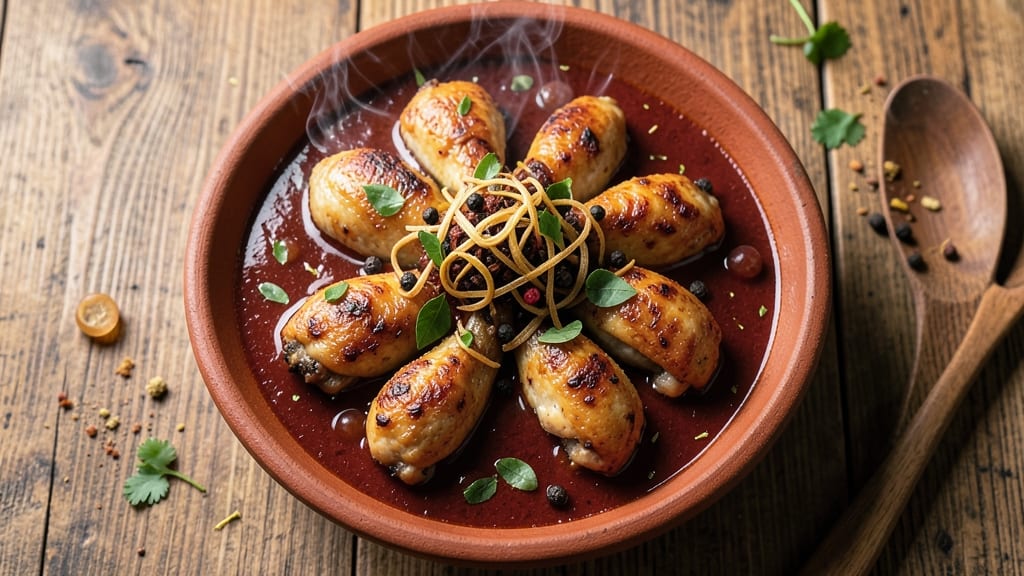
The authentic Chettinad chicken curry brings the bold flavors of South India's fiery coastal cuisine to your kitchen—where coconut milk meets tamarind's tang and black pepper's heat in perfect harmony. My grandmother's handwritten notes guided this recipe, where every spice plays its part in creating that signature depth.
The secret lies in slow-cooking the chicken until it falls apart, infused with kokum's tang and curry leaves' aroma.
What makes this curry truly special is the tadka—a tempering of mustard seeds, dried red chilies, and asafoetida that releases an intoxicating aroma when bloomed in hot oil.
We layer flavors deliberately: first the spices, then the tamarind and kokum for acidity, and finally the coconut milk to round out the heat. This isn't just a curry; it's a symphony of tastes that builds with every simmer.
By the time you serve this dish over steamed basmati rice or with warm appalam, you'll taste the authenticity that comes from traditional techniques. The chicken stays tender yet flavorful, the sauce balances heat with sweetness, and every bite carries the complexity of a restaurant-quality meal.
This is cooking that respects tradition while making it accessible for home kitchens.
The beauty of Chettinad cuisine is its adaptability—you can adjust the heat to your preference while keeping the essence intact. Whether you're serving this for a special occasion or a weeknight dinner, the process is straightforward once you understand the key steps.
Let's bring this vibrant curry to life in your kitchen today.
Ingredients for authentic chettinad chicken curry
These bold spices and tender chicken create the fiery, aromatic heart of Chettinad cuisine.
| Ingredient | Amount | Notes |
|---|---|---|
| Chicken Thighs, Bone-In 🍗 | 1 ½ lb | Cut into 2-inch pieces |
| Coconut Milk 🥥 | 1 can | Full-fat, 13.5 oz can |
| Tamarind Paste 🍈 | 2 tbsp | Adjust for tartness preference |
| Kokum 🍇 | 2 pieces | Soaked in 1 cup warm water |
| Black Peppercorns 🌶️ | 1 tbsp | Crushed lightly |
| Curry Leaves 🌿 | ½ cup | Dried or fresh |
| Mustard Seeds 🌻 | 1 tbsp | For tadka |
| Dried Red Chilies 🔥 | 4 pieces | Adjust for heat |
| Asafoetida 🧂 | ¼ tsp | Essential for aroma |
| Ginger, Fresh 🧄 | 2 tbsp | Grated finely |
| Garlic Cloves 🧄 | 6 cloves | Minced finely |
| Onion, Whole 🧅 | 1 whole | Finely chopped |
| Tomato Paste 🍅 | 2 tbsp | Squeeze tube preferred |
| Salt 🧂 | 1 ½ tsp | Adjust to taste |
| Olive Oil 🫒 | ½ cup | For tadka |
The chicken makes or breaks this curry. Bone-in thighs stay juicier than breasts—look for good marbling at Indian grocery stores or the meat section. If you can't find kokum, substitute lemon juice but you'll lose that signature tang. Mustard seeds and asafoetida are non-negotiable for that authentic aroma. Penzeys Spices has great curry leaves if your local store doesn't carry them. The tamarind paste should be smooth—lumpy means it needs more soaking time.
No fresh curry leaves? Dried leaves at half the amount work in a pinch. Short on ginger? Ginger powder at one-third the amount gets you close. The coconut milk must be full-fat—light versions won't give that rich texture. For extra heat, add 1 tsp cayenne with the black pepper. The tomato paste can be jarred—Muir Glen is my go-to for consistent quality. If you're feeling adventurous, try making your own tadka oil by blooming all your spices together before adding to the curry.
Chicken stays best 2 days in the fridge—portion into containers for easy reheating. The curry itself keeps 4-5 days refrigerated or 3 months frozen. For leftovers, add a splash of water when reheating to prevent drying. The flavors actually improve overnight as everything melds. Freeze in single portions if you're making this for a crowd—just thaw in the fridge before reheating.
Why You'll Love This Recipe
- One-Pot Magic: I swear by this recipe when I’m too tired to wash extra bowls—just brown the chicken, toss in the tamarind and kokum, then let it simmer with coconut milk. The bone-in thighs stay juicy while the spices meld into something ridiculously flavorful with zero fuss.
- Tangy-Spicy Balance: That tamarind paste and kokum? They’re the secret weapons—sour enough to wake up your taste buds but balanced by the creamy coconut milk and peppery heat. Honestly, the first time I made this, I kept going back for seconds just to taste that perfect harmony again.
- Weeknight & Potluck Star: Between us, this curry is my go-to for both lazy nights and big gatherings. Serve it with rice for a simple dinner or double the batch for a crowd—it reheats beautifully and always gets rave reviews, even from the pickiest eaters.
- Budget-Friendly Luxury: Bone-in chicken thighs stretch further than breast, and the spices (especially kokum) add depth without breaking the bank. I’ll be real: this tastes like a fancy restaurant dish, but the grocery bill stays low—leftovers last days, and I never tire of it.
Step-by-step instructions for authentic Chettinad chicken curry
Here's how to build this bold, layered curry with deep tamarind-kokum tang and smoky coconut richness.
Prepare the Tadka Base
Heat the 0.5 cup olive oil in a heavy-bottomed pot over medium heat. Add the 1 tbsp mustard seeds and let them splutter for 30 seconds until they pop. This is your signal to add the 4 pieces dried red chilies and 0.5 cup curry leaves—they'll sizzle and darken slightly.
Next comes the 0.25 tsp asafoetida, which releases its pungent aroma instantly. Stir in the 1 whole finely chopped onion and cook for 4-5 minutes until it softens and turns golden. Add the 2 tbsp finely grated ginger and 6 cloves minced garlic, cooking for another 2 minutes until fragrant. This aromatic base forms the flavor foundation.
Build the Tangy Tamarind-Kokum Base
Pour in the 2 tbsp tamarind paste and stir vigorously to dissolve completely. Add the 2 pieces kokum (squeezed of their juice) and 2 tbsp tomato paste, cooking for 3-4 minutes until the mixture darkens and thickens slightly. This step develops the signature tartness that balances the richness.
Now add the 1.5 lb bone-in chicken thighs cut into 2-inch pieces, coating them evenly in the sauce. Sprinkle with 1 tsp salt and 1 tbsp crushed black peppercorns, then stir gently. The chicken should be well-coated but not crowded—this ensures even cooking and maximum flavor absorption.
Simmer the Chicken in Coconut Milk
Pour in the 1 can coconut milk and bring to a gentle simmer. Cover and cook on low heat for 20-25 minutes, stirring occasionally. You're looking for the chicken to become tender but not fall apart—it should release easily from the bone when tested with a fork.
Here's the thing—don't rush this step. The coconut milk needs time to infuse with the spices and chicken juices. If the sauce reduces too much, add 2-3 tablespoons of water to maintain the right consistency. The curry should coat the back of a spoon but still be saucy enough to spoon over rice.
Finish with Perfect Texture
Once the chicken is tender, increase heat to medium-high and simmer uncovered for 5-7 minutes to thicken the sauce slightly. The curry should have a glossy sheen and coat the chicken beautifully. Taste and adjust seasoning—you might need a pinch more salt or a splash of tamarind paste for brightness.
For the final touch, garnish with extra curry leaves and serve immediately with steamed basmati rice. The authentic Chettinad flavor comes from letting all those spices—tamarind, kokum, asafoetida—work together in harmony. Each bite should deliver layers of smoky, spicy, and tangy complexity that defines this South Indian classic.
Pro Tips For Making Authentic Chettinad Chicken Curry
- Bloom the Kokum First: Toss dried kokum in hot water for 10 minutes before adding it to the curry—this softens the seeds and extracts their tangy depth without bitterness. I used to toss it in raw and ended up with a mouthful of chewy bits every time.
- Toast the Peppercorns: Lightly dry-toast whole black peppercorns in a pan for 30 seconds until fragrant before grinding—this brings out their warmth and cuts through the coconut milk’s richness. Skipping this step means your curry will taste flat, even if all other spices are perfect.
- Simmer Tamarind Slowly: Reduce tamarind paste with a splash of water into a smooth, thick syrup before adding it to the curry—this prevents clumps and ensures the sourness distributes evenly. I learned this the hard way when a glob of sticky paste settled at the bottom of my pot.
- Use Bone-In, Skin-On Thighs: The skin crisps beautifully during the initial sear, adding texture, while the bones infuse the coconut milk with deeper flavor. Skip the skin, and you’re missing the best part—crunchy, golden edges that soak up the spicy gravy like a dream.
Pro cooking tips for this recipe
Tadka Timing Matters
The tadka (tempering) is where the magic happens, and timing is everything. Mustard seeds need 30 seconds of spluttering before adding chilies—this releases their oils and prevents burning. I learned this the hard way when I rushed and ended up with bitter mustard.
Use a heavy-bottomed pot like a Lodge Dutch oven to distribute heat evenly and avoid hot spots that can scorch your spices. 🔥
Spice Layering Order
Adding spices in the right order is non-negotiable for authentic flavor. Start with mustard seeds, then chilies and curry leaves, followed by asafoetida. I always add ginger and garlic last because they burn quickly at high heat.
The key is to bloom each spice fully before introducing the next—this builds complex flavors layer by layer. Think of it like building a flavor pyramid.
Kokum's Secret Tang
The kokum is what gives Chettinad curries their signature tartness, but it needs proper preparation. Soak the pieces in warm water for 10 minutes before squeezing out the juice—this extracts maximum tang without bitterness.
If you're short on time, a 1 tbsp lemon juice works in a pinch, though it won't replicate kokum's depth. I've found that 2 pieces is the perfect balance between tang and sweetness for this recipe.
Low-and-Slow Simmering
Rushing the 20-25 minute simmer is a rookie mistake. The coconut milk needs time to infuse with the spices and chicken juices—this is where the sauce develops its rich, velvety texture. I use a thermometer to monitor the temperature at 190-200°F during this phase.
If the sauce reduces too much, add 2-3 tbsp water to maintain the right consistency. Patience here makes all the difference. ✨
Black Pepper Power
Don't crush the black peppercorns too finely—they should be slightly coarse to release their aroma gradually. I use a pepper grinder set to medium coarseness. Adding them with the chicken ensures they infuse throughout the cooking process.
For extra heat, I sometimes add ½ tsp cayenne along with the black pepper. The pepper's warmth balances the tamarind's acidity beautifully.
Final Texture Check
The curry should have a glossy sheen and coat the back of a spoon when finished. If it's too thick, add 1-2 tbsp water and simmer for 2-3 minutes more. I always taste at this stage—sometimes the tamarind needs another splash for brightness or the salt needs adjustment.
The perfect curry should be saucy enough to spoon over rice but not watery. This final adjustment is what separates home-cooked meals from restaurant-quality dishes. 💫
Nutrition facts
Frequently asked questions
Can I substitute bone-in chicken thighs with boneless?
Yes, but expect slightly faster cooking. Use 1 lb boneless thighs instead of 1.5 lb bone-in and reduce simmering time to 15-20 minutes. The sauce will be more concentrated, so add 2 tbsp water if needed. Bone-in thighs stay juicier and absorb more flavor from the coconut milk.
How do I adjust the heat level for picky eaters?
Reduce dried red chilies to 2 pieces and omit cayenne. For extra mildness, remove seeds from fresh chilies before adding. The black pepper already provides warmth without heat—this keeps the smoky depth while making it approachable. Always taste before serving!
What if I can't find kokum at my store?
Use 1 tbsp lemon juice or 1 tbsp lime juice as a substitute, but reduce to 1 tbsp tamarind paste to balance acidity. For deeper flavor, try ½ tsp amchur (dry mango powder) instead. The kokum's unique tang is hard to replicate, but these work in a pinch.
Can I make this curry in an Instant Pot?
Sauté the tadka as directed, then add all ingredients except coconut milk. Seal and cook on high pressure for 8 minutes. Quick-release, add coconut milk, and cook 5 minutes more on sauté mode. The pressure method keeps chicken tender while infusing flavors faster. Adjust salt at the end!
Why does my curry taste bitter?
Most likely the mustard seeds burned or tamarind overcooked. For next time, lower heat when adding mustard seeds and stir constantly. If it happens, balance with 1 tsp sugar or extra coconut milk. Also check your coconut milk—expired cans can develop bitterness. Fresh curry leaves should never be bitter!