
Main Courses
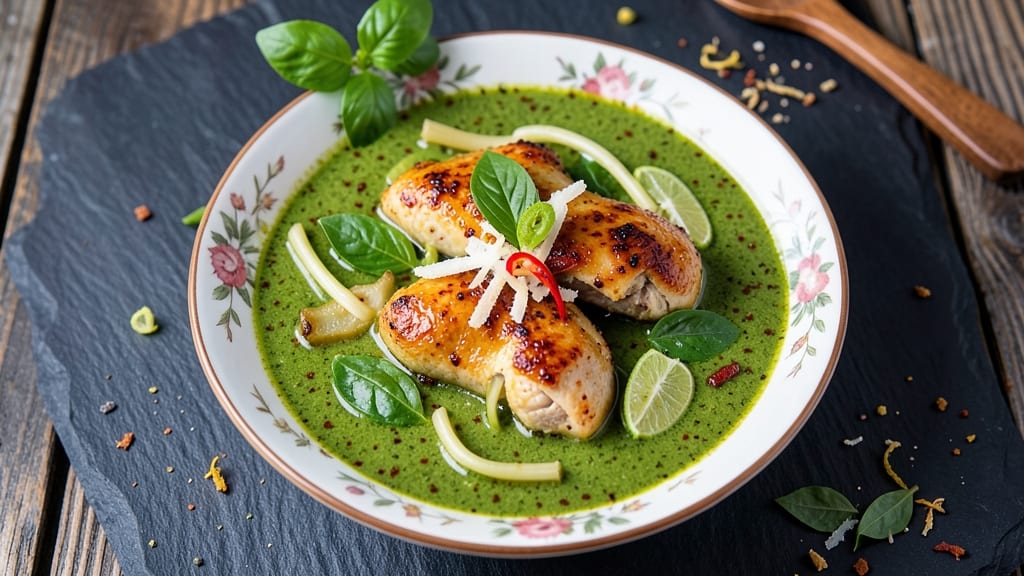
This authentic Thai green chicken curry recipe brings the vibrant flavors of Bangkok to your kitchen—where fragrant galangal, kaffir lime leaves, and lemongrass create a complex, aromatic broth that clings to tender chicken like a second skin. I first tasted this dish at a street-side stall in Chiang Mai, and the memory of that first bite—bright, spicy, and deeply satisfying—has stayed with me ever since. The key lies in the curry paste, where toasted spices and fresh herbs build layers of flavor that transform simple ingredients into something extraordinary.
What sets this recipe apart is its balance of traditional techniques with home kitchen accessibility.
We'll make the curry paste from scratch (don't worry, it's simpler than it sounds) using authentic ingredients like pandan leaves and Thai eggplant, while modern adaptations let you use an Instant Pot or air fryer for quicker results.
The chicken cooks low and slow in coconut milk until it's fall-apart tender, absorbing all those vibrant flavors while the sauce reduces to a perfect consistency—neither too thin nor too thick.
By the time you're done, you'll have a pot of emerald-green curry that's rich with galangal's citrusy bite, kaffir lime's floral aroma, and just enough chili heat to make your taste buds dance.
The chicken emerges perfectly tender, the sauce clings beautifully, and every spoonful delivers that perfect balance of sweet, sour, spicy, and umami. This is the kind of dish that turns an ordinary weeknight into a little taste of Thailand.
Serve it with fragrant jasmine rice and a simple cucumber salad to cut through the richness, or let the curry stand in for the main event.
The best part? The flavors only get better as it sits, making it perfect for leftovers. Let's get cooking—your taste buds are in for a treat.
Ingredients for authentic thai green chicken curry
These vibrant ingredients transform simple chicken into an authentic taste of Thailand's bustling streets.
| Ingredient | Amount | Notes |
|---|---|---|
| Boneless Chicken Thighs 🍗 | 1 ½ lb | Skin-on for best flavor |
| Fresh Lemongrass 🌿 | 3 whole | Bruised stems, tough parts removed |
| Galangal 🧅 | 1 piece | Substitute ginger if unavailable |
| Kaffir Lime Leaves 🍋 | 4 whole | Torn into strips, not stems |
| Thai Green Curry Paste 🌶️ | ¼ cup | Store-bought or homemade |
| Coconut Milk 🥥 | 1 can (13.5 oz) | Full-fat for creaminess |
| Thai Eggplant 🍆 | 1 small | Substitute regular eggplant |
| Pandan Leaves 🌿 | 2 whole | Tied in bundle for aroma |
| Bird's Eye Chilies 🔥 | 3 whole | Adjust for heat preference |
| Fish Sauce 🍶 | 2 tbsp | Red Boat preferred |
| Palm Sugar 🍯 | 2 tbsp | Substitute brown sugar |
| Vegetable Oil 🫒 | 2 tbsp | For toasting spices |
| Jasmine Rice 🍚 | 1 ½ cups | For serving, uncooked |
| Salt 🧂 | 1 tsp | Kosher or sea salt |
| Lime Juice 🍋 | 2 tbsp | Freshly squeezed |
The galangal and kaffir lime leaves are absolute game-changers—look for them in the produce section of Asian markets or order online. Thai Eggplant is worth hunting down at H Mart or 99 Ranch for that authentic texture, but regular eggplant works in a pinch. If you can't find galangal, ginger with a splash of lime juice mimics its citrusy bite. Lemongrass should have a bright green center—avoid any that feel woody or dried out. The Red Boat fish sauce is non-negotiable for that authentic umami punch, but Three Crabs is a solid backup.
No Thai green curry paste? Make your own with garlic, shallots, coriander root, and Thai chilies—it's easier than you think. Short on coconut milk? Light coconut milk works but add a splash of heavy cream for richness. The bird's eye chilies pack serious heat—remove seeds if you want less spice. Palm sugar can be swapped for brown sugar, but it adds that subtle caramel depth. For the eggplant, salt it and let it sweat for 10 minutes to remove bitterness—trust me on this. And if you're feeling fancy, toast your spices in oil first to wake up their flavors.
This curry tastes even better the next day—make extra portions for leftovers. Store in an airtight container for 4-5 days in the fridge, or freeze for 3 months. The lime juice and coconut milk will separate when refrigerated—just stir before reheating. For serving, jasmine rice cooked in coconut milk takes this dish to the next level. And if you've got extra pandan leaves, tie a couple in with the rice for that signature floral aroma.
Why You'll Love This Recipe
- One-Pot Magic: I swear by this—just toss everything into a single pot and let it simmer. No fancy techniques, no separate pans, and honestly, the galangal and lemongrass do all the heavy lifting while you sip your first glass of wine of the night.
- Herb Bomb Flavor: That green curry paste? It’s a flavor explosion—bright, spicy, and just sweet enough. The kaffir lime leaves add this citrusy depth that makes it taste like you spent hours in a Bangkok kitchen (but you didn’t).
- Leftovers That Beg: This curry actually improves the next day. The chicken gets tender, the sauce thickens, and suddenly you’ve got a weeknight lunch sorted. I’ve reheated mine three times and still crave it fresh.
- Budget-Friendly Feast: Chicken thighs are cheap, the paste is a one-time investment, and a stalk of lemongrass lasts forever. For under $15, you feed four people a dish that’ll have them asking for seconds—and that’s a win in my book.
Step-by-step instructions for authentic Thai green chicken curry
Here's how to build this fragrant, balanced curry with layers of lemongrass and chili heat.
Prepare the Aromatic Base
Heat the 2 tablespoons vegetable oil in a heavy pot over medium heat. Add the 3 whole fresh lemongrass (bruised stems removed), 1 piece galangal (peeled and sliced into ½-inch pieces), 4 whole kaffir lime leaves (torn into strips), and 2 whole pandan leaves (tied in a bundle). Cook for 3-4 minutes until the lemongrass and galangal soften and release their oils—you'll smell that bright, citrusy aroma.
Here's the thing—don't rush this step. The galangal should sizzle gently, not burn. If it darkens too quickly, reduce heat slightly. This is where the authentic Thai flavor develops, so take your time. After 3 minutes, add the 3 whole bird's eye chilies (seeds removed if you prefer less heat) and cook for another 30 seconds until fragrant.
Build the Curry Foundation
Stir in the ¼ cup Thai green curry paste and cook for 2-3 minutes until it darkens slightly and releases its deep, earthy aroma. This paste contains all the complex flavors—ginger, lemongrass, galangal, and kaffir lime—that make this curry special. Don't skip this step; it's the soul of the dish.
Add the 1.5 lb boneless chicken thighs (skin-on if using) and cook for 4-5 minutes, turning occasionally, until lightly browned on all sides. You'll know it's ready when the chicken releases easily from the pan. If it sticks, add a splash of water to deglaze and scrape up those flavorful browned bits from the bottom.
Simmer with Coconut Milk
Pour in the 1 can (13.5 oz) coconut milk and stir gently to combine. Bring to a gentle simmer over medium-low heat, then add 2 tablespoons fish sauce and 2 tablespoons palm sugar. Let it simmer uncovered for 15-20 minutes, stirring occasionally, until the chicken is cooked through and the sauce has thickened slightly. You'll see the coconut milk separate slightly—this is normal and adds texture.
Here's where the magic happens: the coconut milk should coat the back of a spoon but still be silky, not thick like soup. If it's too thin, simmer a few more minutes. If it's too thick, add 2-3 tablespoons water to loosen it. The chicken should be fork-tender, with no pink remaining in the thickest part.
Finish with Vegetables and Brightness
Cut the 1 small Thai eggplant into ½-inch chunks and add to the pot. Simmer for 5-7 minutes until tender but still holding its shape. The eggplant should absorb the rich coconut curry but remain slightly crisp. Stir in the 2 tablespoons lime juice and cook for another 1 minute to brighten the flavors.
Taste and adjust seasoning—you might need a pinch more salt or sugar to balance the fish sauce and lime. The curry should be fragrant, slightly sweet, and have a lingering heat from the chilies. If you prefer more heat, add a pinch of red pepper flakes or a splash more fish sauce.
Serve with Jasmine Rice
Cook the 1.5 cups jasmine rice separately according to package instructions until tender and fluffy. Divide the rice among serving bowls and ladle the green chicken curry over the top. Garnish with additional kaffir lime leaves if desired, and serve immediately with steamed greens or a simple cucumber salad.
This curry tastes even better the next day as the flavors meld, but the eggplant will be slightly softer. If making ahead, cool quickly and refrigerate in an airtight container. Reheat gently on the stove with a splash of water to restore the creamy texture. Each bite should deliver that perfect balance of creamy coconut, aromatic herbs, and bright citrus heat.
Pro Tips For Making Authentic Thai Green Chicken Curry
- Bloom the Paste First: Stir the green curry paste into the oil and let it sit for 30 seconds before scraping—this breaks down the spices properly and prevents a bitter aftertaste. I used to rush this, and the curry always tasted raw and sharp afterward.
- Pound Galangal Roughly: Skip the fine chop—just smash the galangal with the flat side of your knife 3-4 times to release its oils. This keeps the texture right and avoids the mushy, overworked galangal that ruins the dish.
- Don’t Crowd the Pot: Cook the chicken in batches if needed—overloading the pan steams the thighs instead of searing, and you’ll end up with gray, soggy meat. A single layer in hot oil makes all the difference.
- Save the Lime Leaves: Tear the kaffir lime leaves in half, then lightly bruise them with your fingers before adding—this releases their aroma without turning the curry into a leafy mess. (Yes, even if you’re impatient like me.)
Wine and beer pairings for this recipe
Thai White Wine Pairings
For this vibrant green curry, reach for a Thai-inspired white wine like Riesling from Germany or Thailand's own Ruby Cabernet. The slight sweetness and acidity of a dry Riesling (try Dr. Loosen Blue Slate) mirrors the curry's balance of spicy and sweet.
The wine's crisp finish cuts through the coconut richness while complementing the lemongrass and galangal notes. 🍷
Crisp Sauvignon Blanc
A New Zealand Sauvignon Blanc (like Kim Crawford) brings bright citrus and herbal notes that echo the kaffir lime and bird's eye chilies. Its zesty acidity refreshes your palate between bites of creamy curry.
For a Thai twist, look for Sauvignon Blanc from Thailand's Khao Yai region—it's lighter and more floral, perfect for this dish.
Light Red Options
If you prefer red, a Pinot Noir (such as Meiomi) works beautifully. Its delicate fruitiness and subtle earthiness won't overpower the curry's complex flavors. For a Thai-inspired red, try Cabernet Sauvignon from Thailand's Mae Hong Son province—it's lighter-bodied and pairs surprisingly well with the coconut and chili.
Non-Alcoholic Pairings
For a refreshing non-alcoholic option, serve Thai iced tea (like Thai Iced Tea from Chaokoh)—its sweet, creamy, and slightly spiced profile complements the curry's heat. Alternatively, a sparkling lime soda (mix Sprite with fresh lime juice) adds a fizzy contrast to the rich curry.
Both options keep the meal vibrant and balanced. 💧
Beer Pairings
A Thai lager like Singha or Leo is a classic choice—its crisp, clean finish cleanses your palate between bites. For a craft option, try a Belgian witbier (such as Hoegaarden)—the coriander and citrus notes enhance the lemongrass and lime in the curry.
Avoid heavy IPAs, as they can overpower the delicate flavors.
Serving Temperature
Serve white wines and beers chilled (around 45-50°F) to highlight their crispness against the curry's warmth. Red wines should be slightly cooler than room temperature (55-60°F) to balance the dish's spice.
For Thai-inspired drinks, serve iced tea over ice and beer in frosted glasses to keep the flavors refreshing. 🍹
Nutrition facts
Frequently asked questions
Can I substitute regular ginger for galangal?
Yes, but you'll lose some of that unique citrusy depth. Use 1 tablespoon freshly grated ginger plus 1 teaspoon lime juice per piece of galangal called for. The lime juice helps mimic galangal's signature tang. For best results, toast the ginger in oil first to deepen its flavor.
How do I make this curry less spicy?
Remove the seeds from the bird's eye chilies before cooking, and reduce the quantity to 1-2 chilies instead of 3. For extra mildness, add ½ cup coconut milk at the end to dilute the heat. If already made, stir in 1 tablespoon sweetened condensed milk to balance the spice.
What's the best way to reheat leftovers?
Reheat gently on the stove over low heat with 2-3 tablespoons water or coconut milk to restore creaminess. Avoid microwaving as it can make the eggplant mushy. For best texture, reheat just until warmed through (3-5 minutes) and serve immediately.
Can I make this curry in an Instant Pot?
Sauté the aromatics and chicken in the Instant Pot on sauté function for 5 minutes. Add coconut milk, fish sauce, and sugar, then cook on high pressure for 10 minutes. Quick release, then add eggplant and lime juice. The pressure cooker keeps the chicken tender while concentrating the flavors.
Why does my curry taste too salty?
Fish sauce is the most likely culprit. Start with 1 tablespoon and taste before adding the full 2 tablespoons. If already oversalted, dilute with ½ cup coconut milk or add 1 tablespoon sugar to balance. The curry's natural sweetness from palm sugar helps counteract saltiness.