
Main Courses
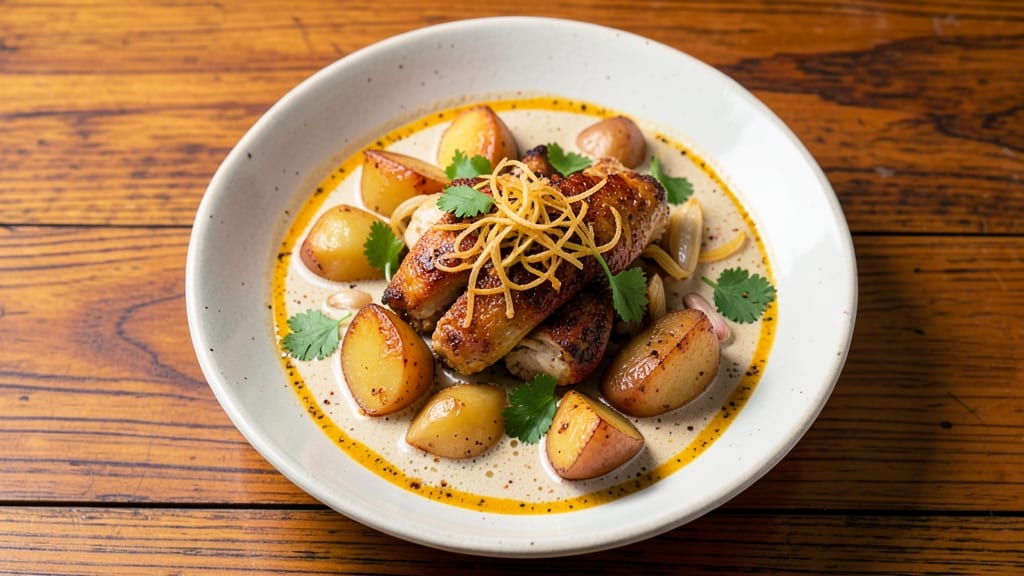
This authentic Thai Massaman chicken curry recipe brings the rich, aromatic flavors of Northern Thailand straight to your kitchen. 🌟 The secret lies in balancing sweet, spicy, and tangy notes through slow simmering, creating a velvety sauce that clings to tender chicken and perfectly cooked potatoes.
What makes this recipe special is the traditional Massaman paste, which forms the heart of the dish. We'll build layers of flavor by toasting whole spices, then blending them into a fragrant paste that develops depth as it simmers.
The addition of peanuts at the end adds a satisfying crunch that contrasts beautifully with the creamy sauce.
By the time you're done, you'll have a restaurant-quality curry with tender chicken, caramelized potatoes, and a sauce that's rich yet perfectly balanced. The aroma alone will transport you to a bustling Bangkok street market, but the taste proves you didn't need to travel.
Serve with jasmine rice to soak up every last drop of that fragrant sauce. This recipe delivers authentic Thai flavors without requiring exotic ingredients—just thoughtful preparation and patience. Let's get cooking!
Ingredients for authentic thai massaman chicken curry
These 15 ingredients create restaurant-quality Thai Massaman curry with tender chicken and caramelized potatoes.
| Ingredient | Amount | Notes |
|---|---|---|
| Boneless Chicken Thighs 🍗 | 1 ½ lb | Skin-on for flavor, cut into bite-sized pieces |
| Yellow Onions 🧅 | 1 whole | Medium size, thinly sliced |
| Garlic Cloves 🧄 | 6 cloves | Fresh, peeled and roughly chopped |
| Russet Potatoes 🥔 | 2 medium | Peeled and cut into 1-inch cubes |
| Coconut Milk 🥥 | 1 can (13.5 oz) | Full-fat for creaminess |
| Massaman Curry Paste 🌶️ | 3 tbsp | Store-bought or homemade |
| Peanuts 🥜 | ½ cup | Roasted, unsalted, roughly chopped |
| Cinnamon Sticks 🌿 | 2 whole | For toasting and infusing |
| Star Anise 🌟 | 2 whole | Lightly crushed |
| Cardamom Pods 🌿 | 4 whole | Lightly crushed |
| Lemongrass 🌿 | 1 stalk | Bruised and cut into 2-inch pieces |
| Coconut Sugar 🍯 | 2 tbsp | Or substitute brown sugar |
| Fish Sauce 🍶 | 1 tbsp | Traditional umami base |
| Vegetable Oil 🫒 | 2 tbsp | For initial cooking |
| Kosher Salt 🧂 | 1 ½ tsp | Adjust to taste |
The Massaman curry paste is non-negotiable for authentic flavor. Mae Ploy or Maesri are my go-tos from the Asian market, but any quality brand works. If you're feeling ambitious, toast the whole spices (cinnamon, star anise, cardamom) in a dry pan for 2 minutes first—this deepens their flavor. For the chicken, thighs stay juicier than breasts, but use whatever you've got. The potatoes should be cut evenly so they cook through without falling apart. Russets are ideal, but Yukon Golds work too.
No Massaman paste? Mix 1 tbsp each of curry powder, coriander, cumin, and turmeric as a substitute—it won't be identical, but you'll still get curry vibes. Short on lemongrass? Substitute 1 tbsp lime zest plus 1 tsp lime juice. The fish sauce is crucial—it's what makes the sauce sing. Red Boat is my favorite, but any reputable brand works. For the peanuts, roast them yourself for 5 minutes in a dry pan to bring out their flavor, or use store-bought if you're in a hurry. The coconut milk should be full-fat for that creamy texture—none of that light stuff.
This curry tastes even better the next day as flavors meld. Store leftovers in an airtight container in the fridge for up to 5 days, or freeze for 3 months. I like to portion it into containers with rice so I can grab it for quick lunches. The sauce thickens as it cools, so add a splash of water or coconut milk when reheating. Serve with extra peanuts on top for that satisfying crunch—trust me on the full-fat coconut milk—it makes all the difference.
Why You'll Love This Recipe
- One-Pot Magic: I swear by this recipe—no extra bowls, no mess. The chicken, potatoes, and onions all simmer together in the same pot while the spices meld into that rich, velvety sauce. Honestly, I’ve made it while scrolling through my phone; the hardest part is waiting for the garlic to soften just right.
- Sweet-Spicy Balance: That perfect harmony of coconut milk’s creaminess with the deep, smoky Massaman paste? Chef’s kiss. The potatoes soak up all the flavor, and the chicken stays juicy—no dry bites here. I’ll be real: my husband reaches for the second helping before I even finish serving.
- Weeknight & Weekend Star: Throw it together on a Tuesday for a no-fuss dinner, or double the batch for a Sunday potluck. The leftovers? Even better the next day—just reheat and serve with rice. Between us, I’ve served this at book club, game nights, and even a last-minute date night. It’s the crowd-pleaser I always forget to bring.
- Budget-Friendly Luxury: Chicken thighs and potatoes stretch this dish far without breaking the bank. A can of coconut milk and a jar of Massaman paste turn simple ingredients into something that tastes like a restaurant special. I’ve made it for $10 and fed four people—plus, it’s one of those recipes where the flavor grows stronger the longer it sits. Win.
Step-by-step instructions for authentic Thai Massaman chicken curry
Here's how to build this rich, aromatic curry with layers of spice and sweetness.
🔥 Step 1: Toast the Spices and Sear the Chicken
Heat the 2 tablespoons vegetable oil in a heavy pot over medium heat. Add the 2 whole cinnamon sticks, 2 whole star anise, and 4 whole cardamom pods. Toast for 1 minute until fragrant—you'll smell that warm, earthy aroma that's the soul of Massaman curry.
Push the spices to one side and add the 1.5 lb boneless chicken thighs cut into bite-sized pieces. Cook for 4-5 minutes until the chicken develops a light golden crust. This initial sear locks in juices and builds deep flavor. Don't crowd the pan—work in batches if needed. Once the chicken is browned, remove it and set aside temporarily.
🍳 Step 2: Build the Curry Base with Aromatics
In the same pot, add the 1 whole yellow onions (thinly sliced) and 6 cloves garlic cloves (roughly chopped). Cook for 5-6 minutes until the onions soften and turn translucent. You want them to caramelize slightly at the edges—that's where the sweetness comes from.
Stir in the 3 tablespoons Massaman curry paste and cook for 1 minute, stirring constantly. The paste will darken and become aromatic. Here's the thing—don't let it burn. If it starts to stick, add 1-2 tablespoons water to loosen it. This paste is the flavor backbone of your curry, so treat it gently.
🥘 Step 3: Simmer with Coconut Milk and Potatoes
Pour in the 1 can (13.5 oz) coconut milk and scrape up any browned bits from the bottom of the pot. Add the 2 medium russet potatoes (peeled and cut into 1-inch cubes), 2 tablespoons coconut sugar, 1 tablespoon fish sauce, and 1.5 teaspoons kosher salt. Bring to a gentle simmer over medium-low heat—this is where patience pays off.
Return the chicken to the pot and add the 1 stalk lemongrass (bruised and cut into 2-inch pieces). Partially cover and simmer for 25-30 minutes until the potatoes are fork-tender and the chicken is cooked through. The sauce should thicken slightly as it reduces. If it gets too thick, add 2-3 tablespoons water to maintain a creamy consistency.
🔪 Step 4: Finish with Peanuts and Fresh Herbs
Once everything is tender, stir in the 0.5 cup peanuts (roasted and roughly chopped) and simmer for another 2-3 minutes until they're lightly toasted and warm. The peanuts should be just warm enough to be fragrant but not burning hot.
Taste and adjust seasoning—you might need a bit more fish sauce for umami or coconut sugar to balance the flavors. For authentic Thai presentation, garnish with fresh cilantro or Thai basil if you have it. Serve immediately with steamed jasmine rice to soak up that rich, aromatic sauce.
Pro Tips For Making Authentic Thai Massaman Chicken Curry
- Bloom Your Spices: Toast whole spices (cardamom, cinnamon sticks, cloves) in a dry pot over medium heat for 30 seconds until fragrant—don’t let them burn. I learned this the hard way: skipping this step makes the curry taste like it’s missing its soul, no matter how much paste you add.
- Cut Potatoes Small: Dice russet potatoes into 1-inch cubes—they’ll soften faster and absorb the coconut milk evenly. I used to leave them too big, and they’d turn to mush or stay stubbornly undercooked. Even heat is everything here.
- Simmer, Don’t Boil: After adding coconut milk, keep the heat at a gentle simmer (tiny bubbles, not rolling) for 20-25 minutes. Boiling will split the milk, leaving a greasy, curdled mess. Sounds obvious, but I’ve ruined three batches by rushing.
- Use Two Cans of Milk: Split the coconut milk—add half first to build the sauce, then stir in the rest at the end. The first layer caramelizes the spices better, and the second keeps the curry lusciously thick. I was skeptical until I tried it—now it’s non-negotiable.
Common mistakes when making this dish
Overcooking the Chicken
One of my biggest early mistakes was letting the chicken overcook in the sauce.
Chicken thighs are forgiving, but if you simmer them too long after they're already tender, they'll turn dry and rubbery. 🌶️ The key is timing—once the chicken reaches 165°F internal temperature, remove it from the pot and set it aside while you finish cooking the potatoes.
You can always return it to the sauce for warmth at the end, but never let it sit in the simmering liquid beyond that point.
Skipping the Spice Toasting
I used to rush through the spice toasting step, thinking it wasn't essential. Big mistake! Those whole spices—cinnamon, star anise, and cardamom—need to be toasted for 1 minute to release their essential oils. This step builds the aromatic foundation of the curry.
If you skip it, your dish will lack that warm, earthy depth that makes Massaman curry so special. Trust me, that 1-minute toast makes all the difference.
Using Low-Quality Coconut Milk
The quality of your coconut milk directly impacts the final texture and flavor. I learned this the hard way when I used light coconut milk for a quick version. The result was a watery, unappetizing sauce.
Always use full-fat coconut milk—it creates that luxurious, velvety texture that's essential for Massaman curry. Brands like Aroy-D or Thai Kitchen are my go-tos from the Asian market, but any good-quality full-fat brand will work.
Ignoring the Potato Cook Time
Potatoes are the unsung hero of Massaman curry, but they're often undercooked or overcooked. The secret is cutting them into 1-inch cubes and letting them simmer gently for 25-30 minutes until they're fork-tender. If you rush this step, you'll end up with hard, unappetizing chunks.
On the flip side, if you let them cook too long, they'll turn mushy. The goal is that perfect fork-tender texture—soft enough to eat but still holding its shape.
Not Balancing the Flavors
Many home cooks forget that Massaman curry needs a careful balance of sweet, spicy, and tangy flavors. I've seen dishes that were either too sweet from coconut sugar or too salty from fish sauce. Taste as you go!
Start with the recipe measurements, then adjust: add more fish sauce for umami, coconut sugar for sweetness, or a splash of lime juice for tang. The sauce should be rich but not overwhelming—think of it as a harmonious symphony of flavors.
Adding Peanuts Too Early
Peanuts are the finishing touch, but they need to be added at the right moment. If you stir them in too early, they'll soak up all the sauce and become bland.
The proper time is during the final 2-3 minutes of cooking, when they just need to warm through and develop that satisfying crunch. I like to roast them lightly in a dry pan first for extra flavor—about 5 minutes over medium heat—but even store-bought roasted peanuts work in a pinch.
Nutrition facts
Frequently asked questions
Can I substitute chicken with another protein?
This curry works beautifully with pork shoulder (cut into chunks) or beef chuck for a richer flavor. For seafood lovers, try firm white fish like cod or halibut—reduce simmering time to 10-12 minutes to avoid overcooking. Just remember: proteins like shrimp or tofu will need shorter cooking times.
Why does my Massaman curry taste too sweet?
Massaman curry balances sweet, spicy, and tangy flavors—too much sugar can overpower the dish. Start by reducing the coconut sugar to 1 tbsp and add ½ tsp chili flakes or 1 tsp fish sauce to bring back umami. For tang, squeeze in ½ lime at the end. Taste as you go!
How do I make this curry less spicy?
Massaman curry is traditionally mild, but if you prefer less heat, skip the chili flakes entirely and reduce the Massaman paste to 2 tbsp. For extra mildness, add 1 tbsp coconut milk at the end to dilute the spices slightly. If using store-bought paste, check the label—some brands include extra chili.
Can I make this in an Instant Pot?
Yes! Sauté the spices and chicken first, then add all ingredients except peanuts. Cook on high pressure for 15 minutes, then quick-release. Finish with peanuts and adjust seasoning. The Instant Pot version cooks faster but may need 1 extra tbsp coconut milk to maintain creaminess.
What sides pair best with this curry?
Jasmine rice is traditional, but you can also serve with steamed basmati rice, naan bread, or even roasted flatbread. For a lighter option, add a simple cucumber salad with lime dressing. The creamy sauce pairs beautifully with crunchy elements like pickled vegetables or extra peanuts.