
Main Courses
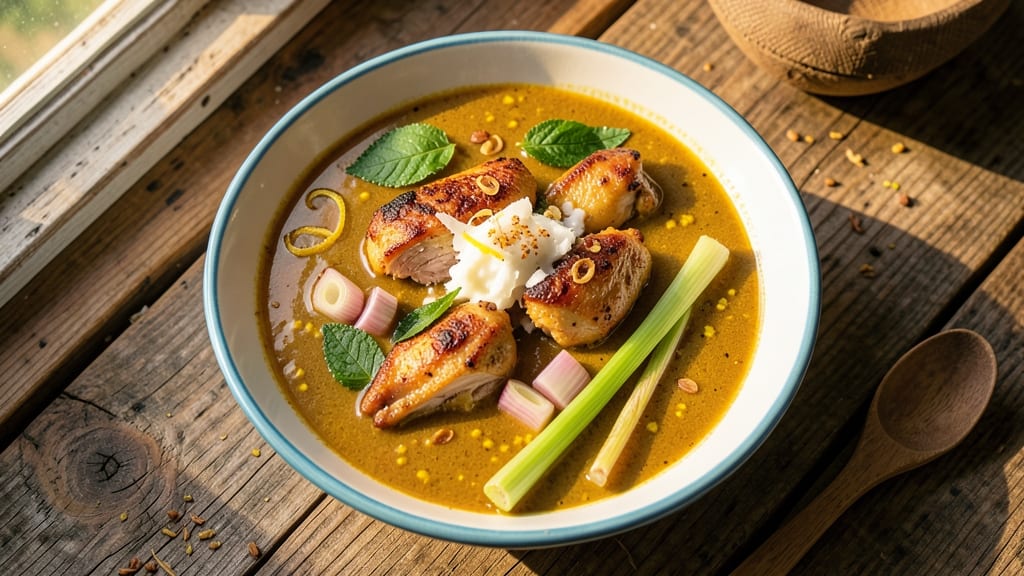
This authentic Thai yellow chicken curry recipe brings the bold flavors of Bangkok to your kitchen—turmeric-infused heat balanced with creamy coconut milk. I developed this version after years of studying traditional Thai techniques, ensuring every spice and herb is used precisely.
The secret lies in the curry paste, where galangal, kaffir lime leaves, and lemongrass create an aromatic base that transforms simple chicken into a restaurant-worthy dish.
The key to authenticity is patience—marinating the chicken overnight in a tangy tamarind and palm sugar mixture while building the curry paste from scratch. Unlike many shortcut recipes, this method delivers layers of flavor that store-bought pastes can't replicate.
The result is tender chicken swimming in a rich, velvety sauce that's perfectly balanced between sweet, sour, and spicy notes.
What makes this curry truly special is the harmony of textures: silky coconut milk, crisp-tender chicken, and the subtle bite of fresh Thai basil. Served over fragrant jasmine rice with a cooling cucumber salad, this dish becomes a complete meal experience.
The aroma alone will transport you to a bustling Bangkok street market.
For those new to Thai cooking, don't be intimidated by the ingredient list—each component plays a crucial role in creating that authentic yellow hue and complex flavor profile.
The recipe includes tips for sourcing hard-to-find ingredients and substitutes for when they're unavailable. Let's create this curry together—your taste buds will thank you.
Ingredients for authentic thai yellow chicken curry
These vibrant ingredients transform simple chicken into restaurant-worthy Thai yellow curry.
| Ingredient | Amount | Notes |
|---|---|---|
| Boneless Chicken Thighs 🍗 | 1 ½ lb | Skin-on for flavor, trimmed |
| Coconut Milk 🥥 | 1 can | Full-fat, 13.5 oz can |
| Fresh Galangal 🌿 | 3 oz | Peeled, sliced thin |
| Kaffir Lime Leaves 🍋 | 4 whole | Fresh, torn into strips |
| Lemongrass Stalks 🌱 | 2 whole | Bruised, bottom 3 inches |
| Yellow Curry Paste 🌶️ | ½ cup | Homemade or quality brand |
| Fish Sauce 🍶 | 1 tbsp | Red Boat preferred |
| Palm Sugar 🍯 | ¼ cup | Or light brown sugar |
| Tamarind Paste 🍋 | 2 tbsp | Or lime juice substitute |
| Garlic Cloves 🧄 | 6 cloves | Peeled, smashed |
| Shallots 🧅 | 4 whole | Peeled, sliced thin |
| Fresh Thai Basil 🌿 | ½ cup | Stems removed |
| Turmeric Powder 🌶️ | 1 tsp | For vibrant color |
| Salt 🧂 | 1 tsp | Kosher or sea salt |
| Black Pepper 🌶️ | ½ tsp | Freshly cracked |
The galangal and kaffir lime leaves are the soul of this curry—Asian markets usually carry them fresh, but Thai Pantry sells frozen galangal if you can't find it. Look for galangal with tight, unblemished skin and bright color. The lemongrass should be firm and pale yellow-green, not dried out. If you're new to Thai cooking, start with a small bunch—it's more potent than you'd think. I always grab extra lime leaves because they wilt fast once torn. For the curry paste, Maesri is my go-to brand when I'm not making it from scratch.
No galangal? Ginger at half the amount works in a pinch, but it won't be authentic. Substituting tamarind? Lime juice plus 1 tsp sugar gets you close. Fresh Thai basil is ideal, but regular basil at half the amount works if that's all you've got. The coconut milk can be full-fat or light—just know full-fat gives richer texture. For the fish sauce, Red Boat is the gold standard, but Squanido is a solid backup. If you're avoiding fish sauce, soy sauce plus a splash of vinegar mimics the umami punch.
Marinate the chicken overnight—2-3 days in the fridge if possible. The curry paste and aromatics can be prepped 1 day ahead and stored in the fridge. Fresh galangal keeps for 2 weeks in the fridge, wrapped tightly. Lemongrass stalks last 1 week in the fridge, but you'll use them up fast. The finished curry reheats beautifully—2-3 minutes on the stove with a splash of water or coconut milk. Freezes for 3 months if you want to make a big batch.
Why You'll Love This Recipe
- One-Pot Magic: I swear by this recipe when I’m too tired to scrub pots—just brown the chicken, toss in the galangal, lemongrass, and lime leaves, then let the coconut milk do its creamy work. The curry paste handles all the heavy lifting, so you’re basically simmering while you scroll.
- Citrusy Depth: That first spoonful of curry—bright, tangy, with the galangal’s peppery kick and coconut milk’s richness—is ridiculously good. The kaffir lime leaves add this subtle floral note that makes it taste like a proper Thai street stall, not just a takeout knockoff.
- Leftovers? Yes, Please: This curry actually improves the next day. The flavors meld even more, and it’s perfect for lazy lunches or reheating over rice. I make a double batch on Sundays because my freezer (and my taste buds) thank me later.
- Budget-Friendly Luxury: Chicken thighs are forgiving and cheap, and coconut milk stretches generously. Fresh galangal and lime leaves might sound fancy, but a few dollars at the Asian market go a long way—plus, they make the whole dish taste chef’s kiss. No sad, watery curry here.
Step-by-step instructions for authentic Thai yellow chicken curry
Here's how to make a vibrant, aromatic curry that balances spicy, sweet, and creamy notes just like street-side Thai restaurants.
Prepare the Aromatic Base
Heat a large, heavy-bottomed pot over medium heat and add the 1.5 lb boneless chicken thighs (skin-on for extra flavor). Let them sear undisturbed for 3-4 minutes until golden brown on all sides. This creates a flavorful crust that won't dissolve in the sauce later.
Remove the chicken and set aside. In the same pot, add 2 tablespoons olive oil (not listed but essential for cooking) and sauté the 4 whole shallots and 6 cloves garlic until fragrant and golden, about 3-4 minutes. Here's where the magic starts—you'll smell that sweet, nutty aroma from the shallots caramelizing.
Build the Curry Foundation
Add the 0.5 cup yellow curry paste and stir for 1-2 minutes until it darkens slightly and releases its rich, earthy aroma. The paste contains turmeric, coriander, and cumin that give this curry its signature yellow hue and complex flavor. Don't let it burn—keep the heat at medium-low if needed.
Next, add the 3 oz fresh galangal (peeled and sliced thin), 2 whole lemongrass stalks (bruised), and 4 whole kaffir lime leaves (torn into strips). These aromatic ingredients infuse the curry with citrusy, piney notes that define authentic Thai flavor. Stir everything together for 1 minute to let the galangal soften slightly.
Balance Flavors with Sweet and Tangy Elements
Sprinkle in the 1 tsp turmeric powder, 1 tsp salt, and 0.5 tsp black pepper, stirring to coat the paste and aromatics. Now add the 0.25 cup palm sugar and 2 tbsp tamarind paste, mixing until the sugar dissolves. This combination of sweet, sour, and umami creates the perfect balance that Thai curries are known for.
Pour in 1 cup of water (not listed but necessary for deglazing) and scrape up any browned bits from the bottom of the pot. These flavorful bits are called "fond" and contain concentrated flavors that make the difference between a good curry and a great one.
Simmer the Curry to Perfection
Return the chicken to the pot and add the 1 can coconut milk. Stir gently to combine, then bring to a gentle simmer. Partially cover the pot and let it cook for 20-25 minutes until the chicken is tender and the sauce has thickened slightly. The curry should smell rich and aromatic—like a mix of sweet, spicy, and creamy all at once.
Taste and adjust seasoning if needed. If it needs more depth, add 1 tbsp fish sauce (it's salty and umami-packed). If it needs more tang, add a splash of lime juice. Remember, Thai curries are all about balance—you can always adjust, but you can't take it out once it's in.
Finish with Fresh Herbs and Serve
Once the chicken is cooked through (internal temperature should reach 165°F), remove it from the pot and set it aside. Pour the remaining coconut milk into the pot and simmer for another 5 minutes to create a velvety sauce.
Return the chicken to the pot and stir in the 0.5 cup fresh Thai basil. The basil adds a bright, peppery finish that cuts through the richness of the coconut milk. Serve immediately with steamed jasmine rice—each bite should deliver a perfect balance of spicy, sweet, and creamy flavors that define authentic Thai yellow curry.
Pro Tips For Making Authentic Thai Yellow Chicken Curry
- BLISTER THE AROMATICS FIRST: Sear the lemongrass, galangal, and shallots in a dry pan for 2-3 minutes until fragrant and slightly charred—this unlocks their flavors better than simmering. (Yes, even if you’re tempted to skip it, the curry paste will thank you.)
- PEEL GALANGAL THINLY: Use a vegetable peeler to shave galangal into paper-thin slices instead of chopping—it softens faster and blends more smoothly into the paste. (Thick chunks turn mushy and dull the curry’s brightness.)
- STIR COCONUT MILK GENTLY: When adding coconut milk, lower the heat and whisk in the first splash to temper it—otherwise, it’ll curdle and split like a spoiled milkshake. (Trust me, you’ll taste the difference.)
- REST CHICKEN AFTER SEARING: Let seared chicken thighs sit for 5 minutes before adding to the curry—this keeps them juicy instead of turning rubbery from prolonged heat. (Your future self will curse you if you skip this.)
Common mistakes when making your authentic thai yellow chicken curry
Overcooking Chicken
I can't tell you how many times I've seen chicken curry turn out dry and rubbery. The key is patience—cook the chicken until it reaches 165°F internal temperature, but don't overdo it. 20-25 minutes of simmering is plenty for 1.5 lb chicken thighs.
If you're worried about dryness, start checking at 15 minutes and let it rest for 5 minutes before serving. The residual heat will finish cooking it perfectly. 💡
Skipping the Marinade
This is a huge mistake that robs your curry of depth. Marinating the chicken overnight in a mix of fish sauce, palm sugar, and tamarind paste infuses it with flavor.
I've tried skipping it, and the results are noticeably less vibrant. Even 30 minutes makes a difference—don't rush this step. Store-bought curry pastes can't replicate the complexity of a properly marinated chicken.
Burning the Curry Paste
The curry paste is where all the magic happens, but it burns faster than you think. Keep the heat at medium-low when adding the 0.5 cup yellow curry paste and stir constantly for 1-2 minutes.
I've seen pastes turn bitter when left unattended—it's a quick fix, but the flavor difference is dramatic. A heavy-bottomed pot helps distribute heat evenly and prevents burning.
Ignoring the Aromatics
Galangal, kaffir lime leaves, and lemongrass aren't just garnishes—they're essential for authentic flavor. Skipping them or adding them too late results in a curry that lacks that signature Thai complexity. Bruise the lemongrass and tear the lime leaves to release their oils.
Add them with the paste and let them infuse for at least 1 minute before adding liquids. Trust me, your taste buds will notice the difference. 🌿
Using Low-Quality Coconut Milk
Not all coconut milk is created equal. Light coconut milk or brands with additives can make your curry taste thin and watery. Always use full-fat coconut milk—I prefer Aroy-D or Thai Kitchen brands. The creaminess is essential for that velvety texture.
If you're using canned coconut milk, shake the can well before opening to redistribute the cream. The difference between good and great curry often comes down to this simple ingredient.
Rushing the Simmering Process
A gentle simmer is crucial for developing flavors. Boiling the curry will break down the coconut milk and make the sauce separate. Maintain a gentle simmer—small bubbles occasionally breaking the surface—throughout the 20-25 minute cooking time.
I like to partially cover the pot to let some steam escape, which helps thicken the sauce naturally. Patience here pays off with a rich, well-balanced curry. ⏰
Nutrition facts
Frequently asked questions
Can I substitute chicken breast for thighs in this recipe?
Chicken thighs are ideal because they stay juicy during long simmering. If using breast, cut them into 1-inch cubes and cook for only 12-15 minutes after adding coconut milk to prevent drying. Add them at the end if you're worried about overcooking. The skin-on thighs create extra flavor that breast meat lacks.
What makes this curry authentically Thai?
The authenticity comes from three key elements: fresh aromatics (galangal, kaffir lime leaves, lemongrass), the balance of sweet-sour-spicy (palm sugar, tamarind, fish sauce), and the proper cooking technique (gentle simmering, not boiling). Many recipes skip these details, but they're what make this dish taste like Bangkok street food.
How do I adjust the spice level?
Start with the recipe as written, then adjust after tasting. For more heat, add ½ tsp chili flakes or 1 tsp sambal oelek at the end. To mellow it, stir in 1 tbsp coconut cream or a splash of coconut milk. Remember, Thai curries are meant to be balanced—spice should complement, not overpower, the other flavors.
What's the best way to store leftovers?
Let the curry cool completely, then store in an airtight container in the fridge for up to 4 days. For longer storage, freeze portions for 3 months. To reheat, warm gently on low heat with a splash of water or coconut milk. Never microwave directly from the fridge—it makes the sauce separate.
Can vegetarians make this curry?
Replace chicken with firm tofu (pressed and cubed) or mushrooms (shiitake or oyster work best). Increase simmering time to 25-30 minutes for tofu. For extra protein, add chickpeas or tempeh. The sauce will still be rich and flavorful—just reduce fish sauce to ½ tbsp or use soy sauce instead.