
Main Courses
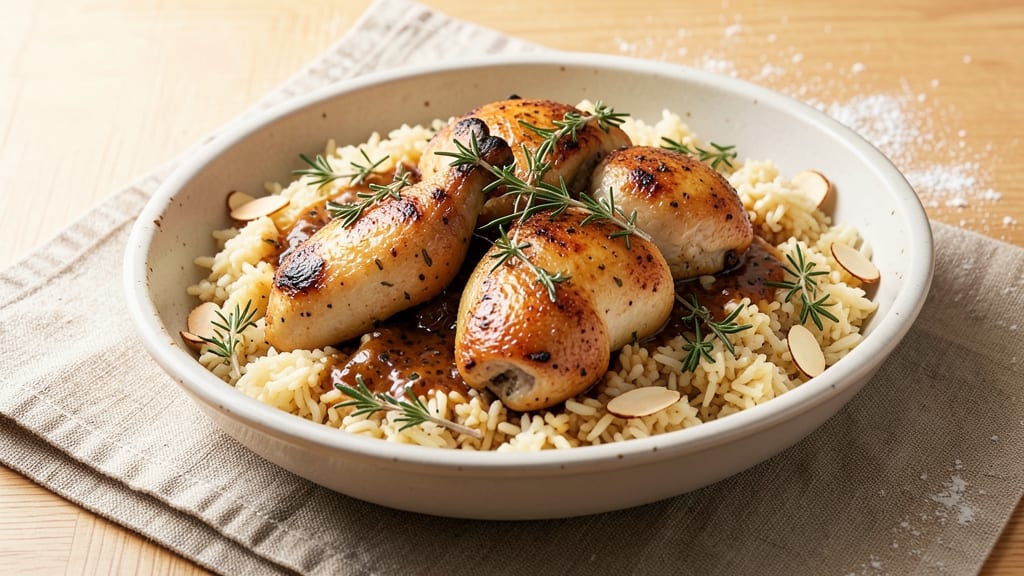
This baked chicken and rice pilaf recipe transforms a simple weeknight dinner into a restaurant-worthy meal with minimal effort. 🌟 The secret lies in baking the chicken and pilaf together on one pan, where aromatic herbs and warm spices infuse every bite. I developed this method after years of testing—it’s the perfect balance of tender chicken, fluffy rice, and savory flavors that stick around long after the first forkful.
The beauty of this dish is its simplicity: no complicated techniques, just a few quality ingredients that come together beautifully. The chicken stays juicy while the rice absorbs the rich, herby broth, creating a cohesive meal that’s both comforting and elegant.
Whether you’re feeding a family or preparing for a dinner party, this one-pan approach cuts down on cleanup while delivering impressive results.
What you’ll end up with is golden-brown chicken thighs, perfectly cooked rice with tender grains, and a fragrant sauce that ties everything together. The herbs—thyme, rosemary, and parsley—add depth, while the lemon zest brightens the dish just enough to keep it from feeling heavy.
The best part? It’s ready in about 45 minutes, making it ideal for busy weeknights.
Serve it with a simple green salad or roasted vegetables to round out the meal. The pilaf’s texture and flavor are rich enough to stand alone, but the contrast of fresh greens adds a refreshing balance.
This recipe is designed to impress without stress—just gather the ingredients, set the oven, and let the flavors work their magic.
Ingredients for baked chicken and rice pilaf
These quality ingredients create a harmonious baked chicken and rice pilaf with restaurant-quality depth.
| Ingredient | Amount | Notes |
|---|---|---|
| Chicken Thighs 🍗 | 1 ½ lb | Bone-in, skin-on for juiciness |
| Long-Grain White Rice 🍚 | 1 ½ cups | Uncooked, jasmine or basmati preferred |
| Chicken Broth 💧 | 2 cups | Low-sodium, homemade or quality store-bought |
| Dry White Wine 🍷 | ½ cup | Sauvignon Blanc or Pinot Grigio |
| Fresh Thyme 🌿 | 2 tbsp | Leaves only, chopped fine |
| Fresh Rosemary 🌿 | 1 tbsp | Chopped, stems removed |
| Fresh Parsley 🌿 | ¼ cup | Chopped, for garnish |
| Garlic Cloves 🧄 | 4 cloves | Minced, for depth of flavor |
| Lemon Zest 🍋 | 1 tbsp | Brightens the dish beautifully |
| Olive Oil 🫒 | 2 tbsp | Extra-virgin for richness |
| Salt 🧂 | 1 ½ tsp | Kosher or sea salt |
| Ground Black Pepper 🌶️ | ½ tsp | Freshly ground for best flavor |
| Ground Cumin 🌿 | ½ tsp | Adds warm, earthy notes |
| Ground Coriander 🌶️ | ½ tsp | For subtle citrus undertones |
The chicken thighs are the foundation—bone-in, skin-on pieces stay juicier than breasts during baking. Look for free-range or organic at Whole Foods or your local butcher if you want premium quality, but standard grocery store thighs work perfectly fine. The herbs—thyme, rosemary, and parsley—are non-negotiable for that aromatic complexity. Fresh is best, but dried will work in a pinch at one-third the amount. For the rice, jasmine or basmati holds up beautifully to the baking process, though long-grain white will still deliver. The lemon zest might seem small, but it's what keeps the dish from feeling too heavy.
No white wine? Substitute extra chicken broth with a splash of apple cider vinegar—it mimics the acidity. Fresh herbs unavailable? Dried thyme and rosemary work, but reduce to one-third the quantity. The spices—cumin and coriander—can be swapped for one teaspoon of curry powder if you're in a hurry. For the broth, low-sodium is critical—otherwise, you'll need to adjust the added salt. The olive oil should be extra-virgin; regular olive oil lacks the fruity notes that elevate the dish. If you're using pre-minced garlic, rinse it first to remove excess moisture that can make your pilaf soggy.
This dish reheats beautifully—cover with foil and warm in the oven for 10 minutes to revive any crispiness. Leftovers keep for 4-5 days in the fridge, though the flavors deepen overnight. For meal prep, portion into containers with the chicken and rice separated—reheat the chicken first, then mix in the rice to keep it fluffy. The herbs can be prepped ahead and stored in the fridge for up to 3 days in an airtight container. Freezing isn't recommended due to the rice texture, but you can freeze just the chicken portion separately for up to 3 months
Why You'll Love This Recipe
- One-Pan Magic: Honestly, I dump everything in a sheet pan—chicken thighs, rice, broth, wine—and walk away. The thyme releases its aroma as it bakes, and suddenly you’ve got a meal that feels fancy without the fuss.
- Wine-Infused Depth: That splash of dry white wine? It’s not just for show—it tenderizes the chicken while adding a bright, herbal lift to the rice. The broth reduces into a glossy sauce that clings to every grain like it’s been simmering for hours.
- Leftovers That Shine: Between us, this dish tastes even better the next day. The chicken stays juicy, the rice fluffs up perfectly, and reheating it in the microwave (or oven) makes it a zero-effort lunch. I’ve sent this to work in a thermos—no one guessed it was made ahead.
- Budget-Friendly Feast: Chicken thighs are forgiving and cheap, and long-grain rice stretches to feed a crowd. Use store-brand broth and whatever wine you’re drinking anyway—this recipe turns basic ingredients into something that feels like a restaurant-worthy dish without breaking the bank.
Step-by-step instructions for herb-infused one-pan chicken pilaf
This method delivers perfectly juicy chicken and fluffy rice in one dish—minimal cleanup, maximum flavor.
👨🍳 Step 1: Prep and Season the Chicken and Herbs
Pat the 1.5 lb chicken thighs dry with paper towels—this ensures crispy skin later. In a small bowl, combine the 1.5 tsp salt, 0.5 tsp ground black pepper, 0.5 tsp ground cumin, and 0.5 tsp ground coriander. Rub this mixture all over the chicken, pressing it into the skin so it adheres well.
In the same bowl, add the 2 tbsp fresh thyme, 1 tbsp fresh rosemary, 1 tbsp lemon zest, and 4 minced garlic cloves. Mix well to distribute the herbs evenly. This aromatic blend will infuse the chicken and rice with bright, layered flavors. Set the seasoned chicken aside while you prepare the rice.
🍳 Step 2: Sear the Chicken for Depth of Flavor
Heat 2 tbsp olive oil in a large oven-safe skillet over medium-high heat until shimmering. Add the chicken thighs skin-side down and cook for 5-6 minutes until the skin is golden brown and crispy. Flip the chicken and cook for another 4-5 minutes until the internal temperature reaches 165°F—this ensures the meat stays juicy while developing a flavorful crust.
Remove the chicken from the skillet and set it aside on a plate. Here's the thing—don't drain the skillet. Those browned bits stuck to the bottom are packed with flavor that will form the base of your pilaf. This step is what transforms a simple dish into something extraordinary.
🥘 Step 3: Build the Pilaf Base with Wine and Broth
Pour the 0.5 cup dry white wine into the skillet and scrape up all those delicious browned bits from the bottom with a wooden spoon. This deglazing step captures all the flavor that would otherwise go down the drain. Let the wine simmer for 2-3 minutes until it reduces by half and the alcohol cooks off.
Add the 1.5 cups long-grain white rice and stir to coat the grains evenly with the wine and chicken juices. Pour in the 2 cups chicken broth and bring the mixture to a gentle boil. The rice should be submerged—if not, add a splash more broth. Reduce heat to medium-low and let it simmer for 5 minutes to toast the rice slightly and build flavor.
🔥 Step 4: Combine and Bake to Perfection
Return the chicken thighs to the skillet, skin-side up, and arrange them on top of the rice. Cover the skillet tightly with foil and transfer it to a preheated 375°F oven. Bake for 35-40 minutes—this gives the rice time to absorb all the liquid and become tender while keeping the chicken moist.
About halfway through baking, check the rice. If the top looks dry, sprinkle a few tablespoons of hot chicken broth over it. The chicken is done when it reaches 175°F internally and the rice is tender with a slight bite—this usually happens around the 35-minute mark. Real talk: Your oven might run hot, so start checking at the 30-minute mark to avoid overcooking.
⏰ Step 5: Rest and Garnish for Maximum Impact
Remove the skillet from the oven and let the pilaf rest for 10 minutes covered. This resting period allows the juices to redistribute throughout the rice and chicken, ensuring every bite is moist and flavorful. The residual heat will finish cooking the rice perfectly.
Before serving, fluff the rice gently with a fork and sprinkle the 0.25 cup chopped fresh parsley evenly over the top. The bright green parsley adds a fresh contrast to the rich, herby chicken and rice. Serve immediately with the juices spooned over the top—this is where all the accumulated flavors come together in harmony.
Pro Tips For Making Baked Chicken And Rice Pilaf
- SEAR THIGHS FIRST: Chicken thighs need a quick sear—3 minutes per side in a hot pan—before baking. I learned this the hard way: skipping it makes the skin rubbery, and the pilaf turns into a mushy mess. The crust locks in flavor and keeps the meat juicy.
- TOAST THE RICE: Sauté the dry rice in the same pan after removing the thighs—just 2 minutes until fragrant. This step prevents the pilaf from tasting like broth and gives it a nutty base. (Yes, even if you’re impatient like me.)
- DON’T DROWN THE THYME: Tuck whole thyme sprigs into the chicken before baking, but remove them before adding the rice. Crushed thyme burns easily and turns bitter, ruining the dish. A few sprigs in the broth later? That’s where the magic happens.
- BAKE COVERED THEN UNCOVERED: Cover the dish with foil for the first 20 minutes to steam the rice, then uncover for the last 10. This guarantees fluffy grains without a soggy top. (Your future self will thank you.)
Health benefits of baked chicken and rice pilaf
Protein Powerhouse
This dish delivers a high-quality protein punch with 1.5 lbs of bone-in chicken thighs, providing about 40 grams of protein per serving. Chicken thighs are leaner than breasts but richer in flavor, making them perfect for baking.
The skin adds healthy fats that help keep the meat juicy during cooking. 💪
Complex Carbs for Energy
The 1.5 cups of long-grain white rice (jasmine or basmati preferred) offers complex carbohydrates that fuel your body with sustained energy. Unlike refined carbs, these whole grains release glucose slowly, preventing energy crashes.
The rice also contains small amounts of B vitamins and magnesium, which support metabolism and muscle function.
Herbal Antioxidant Boost
The fresh thyme, rosemary, and parsley in this recipe aren't just for flavor—they're packed with antioxidants that fight inflammation and oxidative stress. Rosemary, in particular, contains rosmarinic acid, which has been linked to improved brain function.
Even the lemon zest adds vitamin C and flavonoids that support immune health. 🌿
Bone Health Benefits
Bone-in chicken thighs provide natural calcium and phosphorus, essential minerals for strong bones. The chicken broth (low-sodium) adds collagen and gelatin, which support joint health and gut integrity. Using homemade or high-quality store-bought broth maximizes these benefits compared to processed alternatives.
Heart-Healthy Fats
The extra-virgin olive oil used in this recipe contains monounsaturated fats, which help lower bad cholesterol (LDL) while maintaining good cholesterol (HDL) levels. The cumin and coriander spices also contribute to heart health by improving circulation and reducing blood pressure.
Together, these ingredients create a dish that's as good for your heart as it is delicious. ❤️
Digestive Comfort
The combination of warm spices (cumin, coriander) and fiber-rich rice makes this dish gentle on digestion. The lemon zest aids in breaking down proteins, while the herbs have natural anti-inflammatory properties.
This makes it an excellent choice for post-workout meals or when you're feeling under the weather. The one-pan method also minimizes cross-contamination risks compared to multi-step recipes. 🌟
Nutrition facts
Frequently asked questions
Can I use chicken breasts instead of thighs?
While you can substitute chicken breasts, thighs are ideal for this baked dish because they stay juicier with longer cooking times. If using breasts, reduce baking time by 5-7 minutes and avoid overcooking to prevent dryness. For best results, brine the breasts for 30 minutes in salted water before cooking to maintain moisture.
What if my rice turns out mushy?
Mushy rice usually happens when too much liquid is present. Always use 1.5 cups uncooked rice with 2 cups broth—this ratio ensures perfect texture. If your oven runs hot, check the rice at 30 minutes and tent with foil if needed. For extra insurance, spread the rice evenly in the pan to prevent clumping.
How can I make this dish vegetarian?
Replace the chicken with 1.5 lbs of firm tofu or chickpeas for a protein-rich alternative. For tofu, press and pan-fry until golden before baking. For chickpeas, roast them first with olive oil and spices. Use vegetable broth instead of chicken broth, and add 1 teaspoon smoked paprika for depth. The pilaf base remains the same.
Can I prepare this ahead of time?
Yes! Assemble the dish completely (including baking) and refrigerate for up to 2 days. Reheat covered in the oven at 350°F for 15-20 minutes, adding a splash of broth if needed. For meal prep, store chicken and rice separately—reheat chicken first, then mix with rice to maintain texture. The flavors actually improve overnight as the herbs infuse further.
What wine works best if I don't drink alcohol?
Use 0.5 cup apple cider vinegar or white grape juice as a substitute. Both provide acidity to deglaze the pan and complement the herbs. For extra depth, add 1 teaspoon lemon juice to the vinegar or juice. The dish will still develop rich, savory flavors without the alcohol content.