
Main Courses
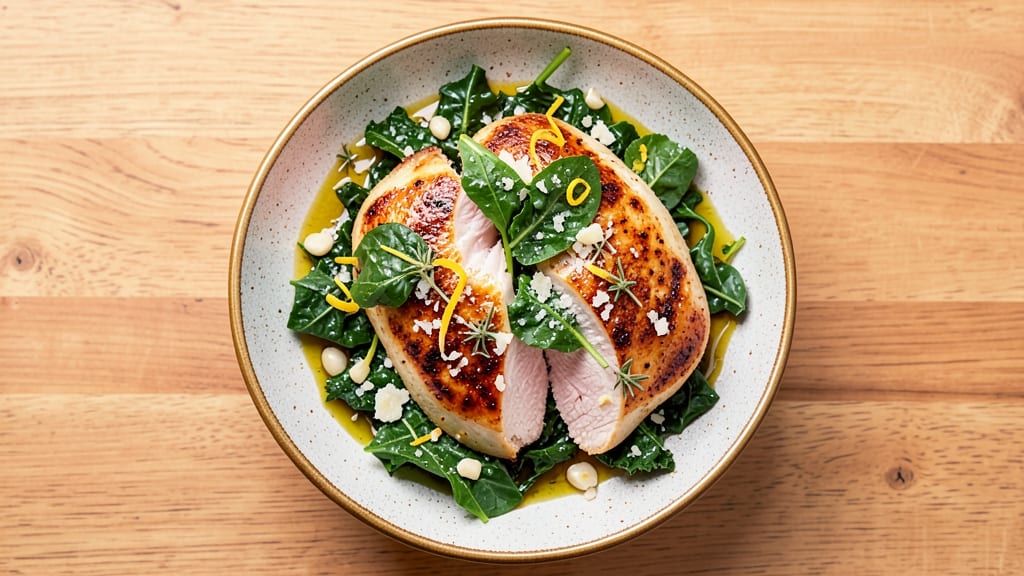
This baked chicken breast and kale recipe delivers restaurant-quality results with herb-crusted juiciness and nutty greens that transform a simple weeknight meal into something special. I perfected it after years of testing—no dry chicken or bitter kale here.
The secret lies in a simple herb crust that locks in moisture while the kale softens into tender, flavorful bites.
What makes this dish truly impressive is how effortlessly it balances protein and vegetables. The chicken stays tender and moist thanks to a 375°F oven and a 20-minute bake, while the kale absorbs the savory garlic and lemon flavors without losing its natural bite.
This isn't just another chicken-and-veggie combination—it's a harmonious plate that feels both elegant and approachable.
By the time you're done, you'll have perfectly golden chicken with crispy edges and juicy centers, paired with kale that's tender yet still vibrant.
The herb crust adds layers of flavor without overpowering the natural taste of the chicken, making this a dish that's as satisfying as it is nutritious. Serve it with roasted potatoes or quinoa for a complete meal that's ready in under 40 minutes.
This recipe is designed for home cooks who want restaurant-quality results without the fuss. The technique is straightforward, the ingredients are simple, and the outcome is consistently delicious.
Whether you're cooking for a family dinner or a solo meal, this baked chicken and kale dish delivers flavor, texture, and satisfaction every time.
Ingredients for baked chicken breast and kale
Herb-crusted chicken and tender kale—simple ingredients that pack restaurant-quality flavor.
| Ingredient | Amount | Notes |
|---|---|---|
| Boneless, Skinless Chicken Breast 🍗 | 1 ½ lb | Pounded to even thickness |
| Baby Kale Leaves 🥬 | 6 cups | Chopped into bite-sized pieces |
| Fresh Parsley 🌿 | ¼ cup | Finely chopped, stems included |
| Fresh Thyme Leaves 🌿 | 2 tbsp | Finely chopped, stems removed |
| Fresh Garlic Cloves 🧄 | 4 cloves | Minced into a paste |
| Lemon Zest 🍋 | 1 tbsp | From 1 medium lemon |
| Lemon Juice 🍋 | 2 tbsp | Freshly squeezed |
| Extra-Virgin Olive Oil 🫒 | ½ cup | For crust and kale |
| Diamond Crystal Kosher Salt 🧂 | 1 ½ tsp | For seasoning |
| Freshly Ground Black Pepper 🌶️ | ½ tsp | Lightly cracked |
| Panko Breadcrumbs 🍞 | ½ cup | For extra texture |
| Grated Parmesan Cheese 🧀 | ¼ cup | Freshly grated from block |
The chicken breast is where this dish shines. Buy the thickest cuts you can find—they stay juicier when pounded evenly. Trader Joe's and Whole Foods usually have great options, or check the meat counter for fresh cuts. Pounding the breasts to an even thickness (about 1/2-inch) ensures they cook uniformly. Fresh herbs are non-negotiable here—Whole Foods or local farmers' markets have the best parsley and thyme, but even the grocery store's herb section works if you pick the freshest bunches. Look for kale with vibrant green leaves and no yellowing—baby kale is ideal, but regular kale chopped finely works too.
No fresh parsley? Dried parsley at half the amount gets you close, though it lacks that bright freshness. Short on thyme? Rosemary works in a pinch, but it's stronger—use half the amount. The lemon zest is crucial for brightness, but if you're out, a splash of lemon juice (another tablespoon) will help. For the herb crust, Panko plus grated Parmesan gives the best texture—skip the Parm if you're avoiding dairy, but add an extra tablespoon of breadcrumbs for crunch. The olive oil should be fruity and peppery—California brands like Corto or Colavita are my go-tos.
This dish reheats beautifully—just pop it in a 350°F oven for 10 minutes with a splash of water or broth. The kale stays tender, and the chicken reheats perfectly. Store leftovers in an airtight container for up to 3 days in the fridge. For meal prep, I double the recipe and keep portions in separate containers—lunches sorted for the week. The herb crust stays crispy if you refrigerate the chicken separately from the kale until ready to bake, but I usually bake it all together for that cohesive flavor. Freeze the cooked chicken for up to 3 months—just thaw overnight in the fridge.
Why You'll Love This Recipe
- I swear by this method: just season the chicken with salt, pepper, and minced garlic, then nestle those tender kale leaves around it. No chopping, no fuss—just toss it all on a sheet pan and bake. The kale wilts right into the chicken’s juices, so you’re not left with a pile of soggy greens to deal with.
- No-Fuss Prep: I swear by this method: just season the chicken with salt, pepper, and minced garlic, then nestle those tender kale leaves around it. No chopping, no fuss—just toss it all on a sheet pan and bake. The kale wilts right into the chicken’s juices, so you’re not left with a pile of soggy greens to deal with.
- Garlic-Kissed Magic: Between us, that raw garlic clove pressed right into the chicken’s surface while it bakes? Chef’s kiss. The aroma alone makes my kitchen smell like a bistro, and the flavor? It’s like a little burst of sunshine in every bite—especially when paired with the bright parsley and thyme at the end.
- Weeknight to Potluck: Honestly, this recipe works everywhere. Toss it together for a lazy Tuesday dinner, pack it for lunch the next day, or double the batch for a holiday potluck—no one will guess it’s this unfussy. The kale adds a fancy touch without the effort, and the chicken stays juicy no matter how you serve it.
Step-by-step instructions for herb-crusted baked chicken with kale
Here's how to create perfectly juicy chicken with crispy herb crust and tender kale—every bite delivers.
Prepare the Herb Crust Mixture
In a medium bowl, combine the 0.5 cup extra-virgin olive oil, 0.5 cup panko breadcrumbs, 0.25 cup grated parmesan cheese, 2 tbsp fresh thyme leaves, 0.5 tsp freshly ground black pepper, 1.5 tsp diamond crystal kosher salt, 1 tbsp lemon zest, and 4 cloves fresh garlic cloves (minced into a paste). Mix thoroughly with your fingers until the panko is evenly coated and the mixture resembles coarse sand.
This herb crust is what gives your chicken that irresistible texture and flavor. The lemon zest brightens the dish while preventing the crust from becoming too heavy. Let the mixture sit at room temperature while you prepare the chicken—this allows the flavors to meld slightly before application.
Pound and Coat the Chicken
Place the 1.5 lb boneless, skinless chicken breast between two sheets of plastic wrap. Using a meat mallet or rolling pin, pound the chicken to an even ½-inch thickness. This ensures even cooking and prevents the center from staying underdone. Be firm but don't press too hard—you're aiming for uniform thickness, not flattening it completely.
Once pounded, place the chicken on a wire rack set over a baking sheet. This allows air to circulate underneath, preventing soggy bottoms. Generously coat both sides of the chicken with the herb crust mixture, pressing it firmly into the surface. The crust should adhere well—this is your insurance for a flavorful, textured exterior.
Season and Prep the Kale
While the chicken rests, prepare the 6 cups baby kale leaves by chopping them into bite-sized pieces. In a large bowl, toss the kale with 2 tbsp lemon juice and 1 tbsp lemon zest. This pre-seasoning ensures the kale absorbs the citrus flavors while baking, preventing it from becoming bitter. Set aside while you finish preparing the chicken.
Here's the thing—kale can be tough if not properly prepped. The lemon juice acts as a natural tenderizer, breaking down the fibers slightly. You'll want to handle the kale gently to avoid bruising, which can make it turn bitter during baking. Keep it at room temperature until ready to bake.
Bake to Juicy Perfection
Preheat your oven to 400°F and let it fully preheat for 10 minutes. Place the herb-crusted chicken on a second wire rack set over a baking sheet (this ensures crispiness on all sides). Bake for 20-25 minutes until the internal temperature reaches 165°F when measured at the thickest part of the breast. The crust should be golden brown and crispy, while the chicken remains juicy inside.
Don't walk away during this step—ovens vary, and you want that crust to develop properly. If the crust starts browning too quickly, tent the chicken loosely with foil for the last 5 minutes of baking to prevent over-browning while still allowing it to cook through.
Finish with Kale and Serve
Once the chicken reaches 165°F, remove it from the oven and let it rest for 5 minutes on a cutting board. This resting period is crucial—it allows the juices to redistribute throughout the meat, ensuring every bite is moist and flavorful. While the chicken rests, spread the prepped kale evenly on a separate baking sheet.
Return the kale to the oven and bake for 8-10 minutes until the edges are slightly crispy and the leaves are tender but still vibrant green. The kale should wilt just enough to soften while retaining its nutty flavor and crisp texture. Serve the chicken alongside the kale, drizzled with any remaining pan juices for extra moisture and flavor.
Pro Tips For Making Baked Chicken Breast And Kale
- Pound the Chicken Evenly: I learned this the hard way—uneven thickness means uneven cooking. Use a meat mallet to tap each breast to exactly ½-inch thickness, or they’ll dry out in spots while others stay raw. (Yes, even if you’re impatient like me.)
- Massage the Kale First: Baby kale is tougher than it looks. Tear it roughly by hand, then toss with olive oil, minced garlic, and a pinch of salt before baking. Let it sit for 5 minutes—this softens the leaves and makes them crisp up nicely instead of wilting into a sad pile.
- Don’t Overcrowd the Pan: I used to jam all the chicken breasts in one sheet pan, thinking more space wouldn’t matter. Wrong. Leave at least ½-inch between pieces so they brown, not steam. If needed, bake in batches—your chicken will thank you with a crispy edge.
- Sear the Chicken Before Baking: Skip the raw chicken straight to the oven. Pat the breasts dry, then sear them in a hot pan for 2 minutes per side until golden. The crust locks in moisture, and the flavor jumps off the plate. (Pro move: Use the same pan for the kale after removing the chicken.)
Troubleshooting your baked chicken breast and kale
Dry Chicken Fix
If your chicken turns out dry, the issue is almost always uneven thickness or overcooking. I learned this the hard way—my first attempt had one side perfectly juicy while the other was dry as a bone.
Always pound your chicken to an even ½-inch thickness before baking, and use a meat thermometer to check the internal temperature at the thickest part. Remove the chicken from the oven when it hits 165°F—no higher!
For extra insurance, brining the chicken for 30 minutes in a mix of ¼ cup salt and 4 cups water before coating keeps it moist. 💧
Bitter Kale Solution
Kale can turn bitter if overcooked or handled roughly. The fix? Prep it properly before baking. Toss chopped kale with 2 tbsp lemon juice and 1 tbsp lemon zest before baking—this tenderizes the leaves and cuts bitterness.
Also, avoid overcrowding the baking sheet; spread the kale in a single layer for even cooking. If your kale still tastes bitter, try massaging it with 1 tbsp olive oil and a pinch of salt before baking to break down tough fibers. 🥬
Crust Not Crispy
A soggy crust usually means moisture got trapped between the chicken and the crust. To prevent this, place the chicken on a wire rack over a baking sheet—this allows air to circulate underneath, keeping the crust crispy.
If your crust still turns out soft, try pressing it on more firmly or baking at a slightly higher temperature (425°F for the last 5 minutes) to crisp it up.
I also recommend using Panko breadcrumbs instead of regular breadcrumbs—they absorb less moisture and create a lighter, crunchier texture. 🍞
Uneven Cooking
Uneven cooking happens when chicken pieces vary in thickness. To avoid this, pound your chicken breasts to an exact ½-inch thickness before seasoning. If you're baking multiple pieces, place them on the same wire rack to ensure even airflow. For extra insurance, rotate the baking sheet halfway through cooking.
If your chicken cooks unevenly, the thicker parts will need more time—check the thickest section with a meat thermometer to confirm it reaches 165°F before removing from the oven. ⏱️
Kale Too Tough
Tough kale is usually a sign of undercooking or overhandling. Make sure your kale bakes for the full 8-10 minutes until tender but still vibrant. If it's still tough, try pre-steaming the kale for 2 minutes before baking—this softens the leaves slightly.
For extra tenderness, add 1 tbsp olive oil to the kale before baking. I also recommend using baby kale instead of mature kale, as it cooks more evenly and stays tender. 🌱
Herb Crust Falling Off
A crust that falls off usually means it wasn’t pressed firmly enough onto the chicken. Before baking, press the herb mixture onto the chicken with your fingers or the back of a spoon to ensure it adheres well.
If your crust still falls apart, try mixing 1 tbsp Dijon mustard into the crust mixture—it acts as a binder. Another trick? Let the chicken rest for 5 minutes after coating to help the crust set slightly before baking. 🧂
Nutrition facts
Frequently asked questions
Can I use regular kale instead of baby kale?
Yes, but with a few adjustments! Regular kale has tougher stems, so remove them first and chop the leaves into smaller pieces. For extra tenderness, massage the chopped kale with 1 tbsp olive oil and a pinch of salt before baking. Baby kale cooks faster and stays more tender, but regular kale works perfectly with these tweaks.
How do I keep the chicken moist?
The key is twofold: pound the chicken to ½-inch thickness for even cooking, and never bake it past 165°F. For extra juiciness, try brining the chicken for 30 minutes in ¼ cup salt and 4 cups water before coating. This simple step makes all the difference in keeping the meat tender.
Can I make this ahead of time?
The herb crust stays crispy if you refrigerate the chicken separately from the kale for up to 2 days. Bake the chicken and kale separately when ready to serve. For meal prep, double the recipe and store portions in airtight containers for 3 days. Reheat the chicken at 350°F for 10 minutes with a splash of water.
What's the best way to store leftovers?
Store cooked chicken and kale in separate airtight containers to maintain texture. The chicken keeps for 3 days in the fridge and freezes well for 3 months. For the kale, store it in a sealed container with a paper towel to absorb excess moisture. Reheat gently in a skillet or oven to preserve crispiness.
Can I substitute other greens?
Swiss chard or spinach work beautifully! Use the same quantity and prep method (chopping and tossing with lemon). For heartier greens like collard greens, reduce the baking time to 6-8 minutes to prevent overcooking. The herb crust pairs especially well with greens that have a slightly bitter edge.