
Main Courses
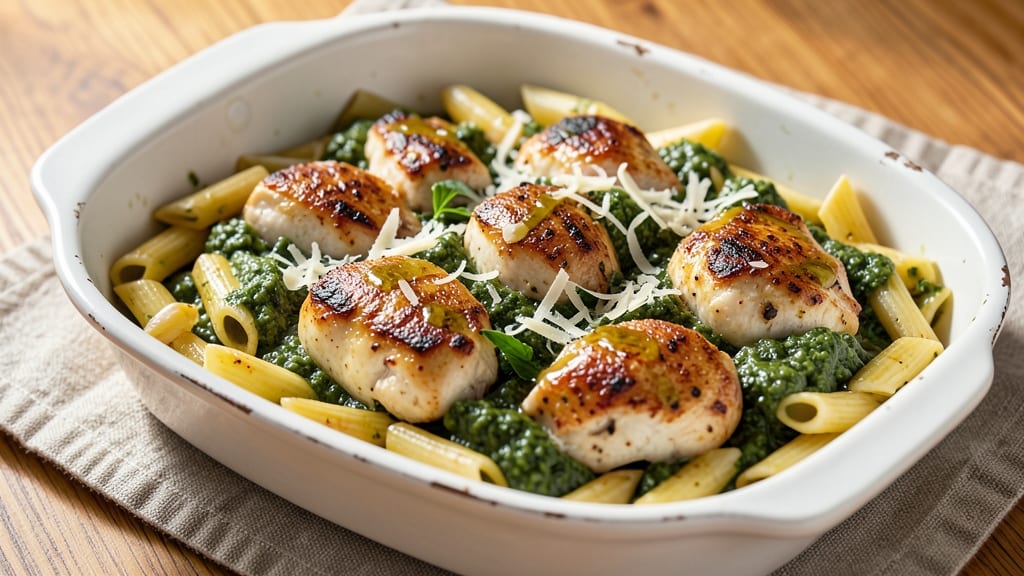
This baked chicken pesto pasta recipe delivers a restaurant-quality meal in just 35 minutes—no takeout needed. The secret lies in baking chicken and pasta together on one sheet pan, where the chicken bastes in its own juices while absorbing the vibrant flavors of homemade pesto. I developed this method after years of testing one-pan meals, and it never fails to impress with its herb-packed, savory-sweet balance.
The beauty of this dish is its simplicity: minimal prep, one pan, and a technique that ensures tender chicken and perfectly cooked pasta every time. The pesto—fresh basil, garlic, and parmesan—infuses the chicken with bright, herby notes while the pasta absorbs its rich, creamy depth.
No complicated steps, just a foolproof method that transforms pantry staples into a meal worthy of a weeknight or dinner party.
By the time you pull this dish from the oven, you’ll have golden-brown chicken with crispy edges, al dente pasta coated in a velvety pesto sauce, and a dish that’s ready to serve in minutes.
The aromas alone—garlicky, herby, and slightly smoky—will have everyone at the table asking for seconds. It’s the kind of meal that feels indulgent but comes together effortlessly.
Perfect for busy weeknights or when you want to impress without spending hours in the kitchen, this recipe scales easily for families or small gatherings. The leftovers reheat beautifully, making it a go-to for meal prep. Let’s get started—your taste buds will thank you.
Ingredients for baked chicken pesto pasta
Pantry staples meet fresh herbs for a one-pan wonder that’s restaurant-worthy without the fuss.
| Ingredient | Amount | Notes |
|---|---|---|
| Boneless, Skinless Chicken Thighs 🍗 | 1 ½ lb | Cut into bite-sized pieces |
| Penne Pasta 🍝 | 12 oz | Uncooked, medium or large size |
| Fresh Basil Leaves 🌿 | 2 cups | Packed, stems removed |
| Garlic Cloves 🧄 | 4 cloves | Peeled, roughly chopped |
| Parmesan Cheese 🧀 | ¾ cup | Freshly grated from block |
| Extra-Virgin Olive Oil 🫒 | ½ cup | For cooking and pesto |
| Lemon Juice 🍋 | 2 tbsp | Freshly squeezed |
| Dried Oregano 🌿 | 1 tsp | For extra herb depth |
| Salt 🧂 | 1 ½ tsp | Kosher or sea salt |
| Black Pepper 🌶️ | ½ tsp | Freshly ground preferred |
| Pine Nuts 🥜 | ¼ cup | Toasted, optional for crunch |
| Cherry Tomatoes 🍅 | 1 cup | Halved, for freshness |
| Red Pepper Flakes 🌶️ | ¼ tsp | Optional for heat |
The chicken thighs are key here—they stay juicy while the pasta cooks right alongside. Look for bone-in, skin-on thighs if you want extra flavor, but boneless works fine too. Fresh basil is a must (the good stuff, not the pre-shredded kind)—Trader Joe’s or your local farmers market have the best. Penne pasta is ideal for this recipe because it holds up to baking without getting mushy. If you’re short on time, pre-cook the pasta for 2 minutes less than package instructions before baking, but I find baking it fresh works best for that al dente bite. The cherry tomatoes add a bright, fresh contrast—skip them if you’re in a rush, but they’re worth the extra minute.
No fresh basil? Dried oregano at half the amount gets you close, though it won’t be as vibrant. Pine nuts giving you sticker shock? Walnuts or pecans work just as well—just toast them first for that nutty punch. Short on garlic? Garlic powder at one-third the amount is fine, but fresh is always better. The pesto sauce can be made ahead and stored in the fridge for up to 3 days—just stir it back up before using. And if you’re feeling adventurous, swap the penne for farfalle or fusilli—any short pasta shape works great for this one-pan method.
This dish reheats beautifully—honestly tastes even better the next day once everything melds together. Store leftovers in an airtight container for up to 4 days in the fridge, or freeze for 3 months. I always double the recipe when I make it—one for dinner, one for lunches the next week. The pesto sauce can be separated and stored in a small jar, perfect for drizzling on salads or sandwiches later. And if you’ve got extra chicken, toss it in a wrap with some leftover pasta for a quick lunch the next day.
Why You'll Love This Recipe
- Here’s what sold me: this makes insane leftovers. Pack the next day’s lunch with cold pasta, crispy chicken, and pesto clinging to every strand—it’s the ultimate no-effort meal. My kids actually ask for it, and my husband brings it to work. (That’s when I know I’ve hit the jackpot.)
- One-Pan Magic: I swear by this—just toss everything on a sheet pan, bake it, and walk away. No boiling pasta on the stove while you wait for chicken to cook. The penne gets perfectly al dente right alongside the golden-brown thighs, and honestly? That’s half the battle won.
- Garlic-Basil Bomb: Between us, the pesto here isn’t just good—it’s ridiculously good. Fresh basil and garlic roasted into the chicken thighs, then folded into the pasta with that sharp Parmesan? It’s the kind of flavor that makes you pause mid-bite, like, “Wait, is this actually dinner?” (Yes, even on a Tuesday night.)
- Lunchbox Hero: Here’s what sold me: this makes insane leftovers. Pack the next day’s lunch with cold pasta, crispy chicken, and pesto clinging to every strand—it’s the ultimate no-effort meal. My kids actually ask for it, and my husband brings it to work. (That’s when I know I’ve hit the jackpot.)
Step-by-step instructions for baked chicken pesto pasta
Here's how to make this one-pan wonder with minimal cleanup and maximum flavor.
Prep the Chicken and Pasta for the Oven
Preheat your oven to 425°F—this high heat will give you crispy chicken and perfectly al dente pasta. In a large oven-safe skillet (I use a 12-inch cast iron), heat 2 tablespoons of the extra-virgin olive oil over medium-high heat. Add the 1.5 lb boneless, skinless chicken thighs (cut into bite-sized pieces) and cook for 3-4 minutes until the edges are lightly browned.
Transfer the chicken to a plate and set aside. In the same skillet, add the 12 oz penne pasta (no need to pre-cook—it'll bake right in the pan) and toss to coat with any remaining oil and browned bits. Pour in 2 cups water (just enough to cover the pasta) and sprinkle with 1 teaspoon of the salt. Return the chicken to the skillet and nestle it among the pasta.
Build the Pesto Sauce and Assemble
While the pasta and chicken bake, make the pesto. In a food processor, combine the 2 cups fresh basil leaves, 4 cloves peeled garlic, 0.25 cup toasted pine nuts, 0.25 teaspoon red pepper flakes, 1 teaspoon dried oregano, and 0.5 teaspoon black pepper. Pulse until finely chopped, then drizzle in the remaining 0.33 cup extra-virgin olive oil (you've already used 2 tablespoons) and 2 tablespoons lemon juice while processing. Add 0.5 cup grated parmesan cheese and pulse until smooth.
Once the pesto is ready, spoon half of it over the chicken and pasta in the skillet. Toss gently to distribute evenly. Top with the 1 cup halved cherry tomatoes and sprinkle with the remaining 0.5 teaspoon salt. The tomatoes will burst slightly during baking, adding freshness to the dish.
Bake Until Golden and Bubbly
Cover the skillet with a tight-fitting lid or foil and bake for 15 minutes. Remove the lid and bake uncovered for another 10-12 minutes until the pasta is tender (it should have absorbed most of the liquid) and the chicken is cooked through (165°F internal temperature). The edges should be golden brown, and the sauce should look bubbly and slightly thickened.
If the sauce looks too thick, add 2-3 tablespoons water to loosen it. The pasta should be al dente with a slight bite—if it's still too firm, cover and bake for 2-3 more minutes. The one-pan method ensures everything cooks together, with the chicken basting in the pesto-infused pasta water.
Finish with Fresh Herbs and Serve
Remove the skillet from the oven and let it rest for 2-3 minutes. Stir in the remaining pesto and toss everything together. Taste and adjust seasoning—you might need a pinch more salt or a squeeze of lemon juice to balance the flavors. The dish should be vibrant, herby, and slightly tangy from the lemon.
Serve immediately, garnished with extra fresh basil leaves and a sprinkle of parmesan cheese. The pasta should be coated in a glossy pesto sauce, the chicken tender and juicy, and the tomatoes slightly caramelized. This one-pan meal is perfect for busy weeknights—just toss everything in, bake, and enjoy a restaurant-quality dinner in under 35 minutes.
Pro Tips For Making Baked Chicken Pesto Pasta
- Sear Chicken First: Toss the raw chicken thighs in olive oil, salt, and pepper, then hit them hard in a screaming-hot pan for 3-4 minutes per side before baking. I used to skip this step—my pesto pasta ended up bland and rubbery. That quick sear locks in flavor and keeps the chicken juicy while it bakes.
- Pulse Basil Gently: When blending your pesto, pulse the basil leaves in batches with the garlic and Parmesan first, then add the oil in a slow stream. Too many leaves at once turn it into soup. My grandmother swore by this, and she was right: the texture stays bright and chunky, not mushy.
- Don’t Overbake Pasta: Pull the penne pasta from the boiling water just before it’s al dente—it’ll finish cooking in the oven’s residual heat. I learned this the hard way after serving gummy pasta to guests. Toss it with a little pasta water first to help the pesto cling.
- Use Room-Temp Pesto: Let your homemade pesto sit at room temperature for 10 minutes before mixing it into the pasta. Cold pesto makes the dish taste dull and clumpy. Sounds weird, but it works—your future self will notice the difference in richness.
Pro cooking tips for this dish
One-Pan Efficiency
This recipe thrives on the one-pan method, eliminating cleanup while ensuring perfect cooking. The key is using a 12-inch cast iron skillet—it distributes heat evenly and creates crispy edges on both the chicken and pasta.
I always preheat my oven to 425°F for that high-heat sear that transforms the dish from good to restaurant-quality. The pasta cooks in its own water while the chicken bastes in the pesto-infused liquid, creating a harmonious balance of textures and flavors. 🔥
Pesto Perfection
Fresh basil is non-negotiable for authentic pesto flavor—I use 2 cups packed leaves from Trader Joe’s or my local farmers market. Toast the pine nuts (or sub walnuts) for 2-3 minutes in a dry pan until fragrant—they add a nutty depth that store-bought pesto can’t match.
For extra brightness, add 2 tablespoons lemon juice at the end of processing. The pesto should be thick but pourable; if it’s too stiff, add 1-2 teaspoons water while blending. 🌿
Chicken Doneness
Always check the internal temperature of your chicken pieces with a meat thermometer—165°F is the magic number for safe, juicy results. I cut my 1.5 lb boneless thighs into 1-inch bite-sized pieces for even cooking.
If your chicken finishes before the pasta, tent it loosely with foil to keep it warm while the pasta absorbs the remaining liquid. Pro tip: Sprinkle the pasta with 1 teaspoon salt before baking to enhance its flavor as it cooks. ⏰
Sauce Balance
The pesto sauce should coat the pasta like a glossy, velvety blanket. If it looks too thick after baking, loosen it with 2-3 tablespoons water—the pasta’s starch will naturally thicken the sauce as it cools.
Taste before serving and adjust with lemon juice (for tang) or extra parmesan (for richness). I always finish with a sprinkle of fresh basil and grated parmesan to brighten the dish and add texture. 💫
Pasta Texture
For al dente pasta, bake it uncovered for the final 10-12 minutes—this allows excess moisture to evaporate, preventing a mushy texture. If your penne still has a slight bite after baking, it’s perfect. Overcooking pasta in the oven is easy, so err on the side of slightly underdone.
The residual heat will finish cooking it while resting. I’ve found that medium or large penne works best—shorter shapes like farfalle can overcook too quickly. 🍝
Tomato Trick
Halving cherry tomatoes before baking lets their juices mingle with the pesto, adding a bright, fresh contrast to the rich flavors. They’ll burst slightly during baking, releasing their sweetness. For extra depth, toss them in the pan with the chicken and pasta before adding the pesto.
If you’re short on time, skip them—the dish will still be delicious, but the tomatoes elevate it to another level. 🍅
Nutrition facts
Frequently asked questions
Can I use chicken breasts instead of thighs?
Yes, but with caution! Chicken breasts cook faster and can dry out when baked. Cut them into 1-inch pieces and bake for just 8-10 minutes uncovered to prevent overcooking. For extra juiciness, marinate them in 1 tablespoon olive oil and 1 teaspoon lemon juice before baking.
How do I make this dish ahead of time?
Prep the pesto sauce up to 3 days ahead and store it in an airtight container in the fridge. For the full dish, assemble everything (except baking) the night before and refrigerate uncovered. Bake straight from the fridge at 425°F for 20-25 minutes, adding 2 tablespoons water if needed. The flavors meld beautifully overnight!
What if I don't have fresh basil?
Use 1 tablespoon dried basil (or 1 teaspoon basil extract) plus 1 teaspoon dried oregano for depth. For a different flavor profile, try 1 cup spinach or cilantro—both work well in pesto. Just reduce the lemon juice to 1 tablespoon to balance flavors.
Why is my pasta mushy after baking?
Overcooking happens when pasta absorbs too much liquid. Always bake uncovered for the final 10-12 minutes to evaporate excess moisture. For extra insurance, use 1 cup water instead of 2 cups when baking. If needed, finish with 1 tablespoon reserved pasta water to loosen the sauce.
Can I make this gluten-free?
Swap regular pasta for gluten-free penne (like Barilla or Jovial). Use 1/4 cup gluten-free flour or 1 tablespoon cornstarch mixed with 1/4 cup water to thicken the pesto if needed. Check that all ingredients (like pine nuts) are certified gluten-free. The texture will be slightly different but still delicious!