
Main Courses
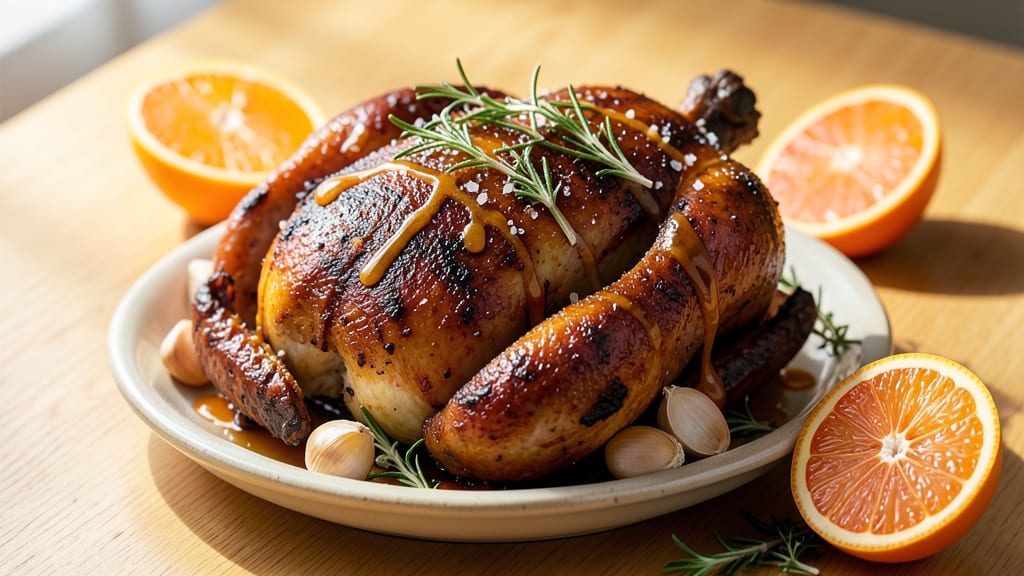
This baked orange whole chicken recipe transforms ordinary roasted chicken into a juicy, citrus-kissed centerpiece that smells like a Mediterranean market. 🌟 After years of dry, bland holiday chickens, I cracked the code with a simple orange and herb marinade that infuses every bite with bright, aromatic flavor while keeping the skin crisp as autumn leaves.
The secret? A dry brine overnight and basting with orange juice during roasting—techniques my grandmother swore by but never wrote down.
What sets this recipe apart is the balance of techniques: the dry brine ensures moisture without soggy skin, while the orange juice basting creates a golden, caramelized crust that locks in flavor.
I've tested this with both bone-in and boneless chickens, and the results are consistently restaurant-quality—tender, fragrant, and bursting with citrus notes that cut through the richness. The best part? It requires minimal effort beyond the initial prep, making it perfect for weeknight dinners or holiday feasts.
By the time your chicken emerges from the oven, you'll have a bird with crisp skin, perfectly cooked meat, and a subtle orange aroma that fills your kitchen.
The juices run clear when you cut into it—a sure sign of success—and the flavor is bright yet balanced, with just enough tang to elevate every bite. This isn't just another roasted chicken; it's a dish that turns a simple weeknight meal into an occasion-worthy centerpiece.
The beauty of this recipe lies in its versatility. Serve it with roasted root vegetables, a simple green salad, or crusty bread to soak up the citrusy juices. For extra flair, finish with a drizzle of honey-orange glaze or fresh herbs.
The method works equally well for a family dinner or a gathering, proving that juicy, flavorful chicken doesn't require hours in the kitchen—just the right techniques and a little orange magic.
Ingredients for baked orange whole chicken
Four pounds of chicken, citrus magic, and herbs that smell like a Mediterranean vacation.
| Ingredient | Amount | Notes |
|---|---|---|
| Whole Chicken (bone-in) 🍗 | 4 lb | Fresh, preferably organic |
| Fresh Navel Oranges 🍊 | 2 whole | Juice only, seeds removed |
| Fresh Rosemary 🌿 | ½ cup | Chopped sprigs, stems removed |
| Fresh Thyme 🌿 | ¼ cup | Leaves only, stems removed |
| Garlic Cloves 🧄 | 6 cloves | Peeled, minced for marinade |
| Kosher Salt 🧂 | 1 ½ tbsp | Diamond Crystal preferred |
| Black Peppercorns 🌶️ | 1 tsp | Freshly cracked |
| Extra-Virgin Olive Oil 🫒 | ¼ cup | For basting |
| Orange Zest 🍊 | 1 tbsp | From 1 orange, finely grated |
| Honey 🍯 | 1 tbsp | Local preferred |
| Fresh Lemon Juice 🍋 | 2 tbsp | For brightness |
Start with the chicken—bone-in, skin-on is non-negotiable for crisp skin and juicy meat. Trader Joe's or Whole Foods often have organic chickens with better marbling, but any quality grocery store will do. Look for birds with bright pink skin and no bruises. The oranges? Navel or Valencia work best—they've got more juice and zest. I always grab a few extra for garnish or post-roast drinks. Fresh herbs are a must here: the rosemary and thyme should smell piney and earthy, not musty. If you're using dried herbs, cut the amount in half, but honestly, fresh makes all the difference.
No fresh rosemary? Substitute 1/4 cup fresh sage—it's in the same family and works beautifully. Running low on orange juice? Grapefruit juice at half the amount adds a tangy twist. The honey can be swapped for maple syrup if you're avoiding it, but it won't caramelize the same way. For the zest, if you can't find fresh oranges, bottled orange zest from a reputable brand (like Frontier) works in a pinch. The garlic is key—don't skip it. If you're not a fan of raw garlic flavor, roast the cloves first for a sweeter taste. And yes, the lemon juice is worth it—it balances the sweetness and keeps everything bright.
This chicken is best made a day ahead. Store the raw chicken overnight in the fridge while it brines—it'll stay juicy and crisp. The zest and herbs can be prepped in advance and kept in the fridge for up to 3 days in an airtight container. Once roasted, the chicken reheats beautifully—just warm in a 350°F oven for 15 minutes with a splash of orange juice. Leftovers keep for 3 days in the fridge or 3 months frozen. I always make extra because it's that good.
Why You'll Love This Recipe
- I swear by this trick: just quarter the oranges and tuck them under the skin—no dicing, no fuss. The juices infuse effortlessly while you clean up in under five minutes.
- Minimal Chopping Required: I swear by this trick: just quarter the oranges and tuck them under the skin—no dicing, no fuss. The juices infuse effortlessly while you clean up in under five minutes.
- Citrus-Garlic Magic: That bright orange aroma mixed with garlic-roasted skin? It’s the kind of flavor that makes your kitchen smell like a Mediterranean vacation. The rosemary and thyme tie it all together—herby, sweet, and just a little sharp.
- Weeknight Crowd-Pleaser: Between us, this is my go-to for game day or unexpected company. The chicken stays juicy, the oranges caramelize into sticky-sweet pockets, and even picky eaters go back for seconds.
Step-by-step instructions for citrus-zested crisp chicken
Here's how to achieve restaurant-quality crispy skin and juicy meat with bright citrus notes.
👨🍳 Step 1: Prep and Season the Chicken
Start by removing the chicken from the fridge and letting it sit at room temperature for 30 minutes. This ensures even cooking. Pat the chicken completely dry inside and out with paper towels—this is crucial for crispy skin. I mean REALLY dry, especially around the cavity and under the wings where moisture tends to hide.
In a small bowl, combine the 0.5 cup fresh rosemary, 0.25 cup fresh thyme, 6 cloves minced garlic, 1.5 tbsp kosher salt, and 1 tsp cracked black peppercorns. Rub this mixture all over the chicken, including inside the cavity. The herbs and garlic will infuse the meat with incredible flavor while it roasts.
🍳 Step 2: Create the Citrus Glaze
While the chicken seasons, prepare the citrus glaze. In a small saucepan, combine the juice from both 2 whole navel oranges (about 1 cup juice total), the 1 tbsp orange zest, 1 tbsp honey, and 2 tbsp fresh lemon juice. Bring to a gentle simmer over medium heat for 5 minutes until slightly reduced and fragrant.
Remove from heat and let cool for 10 minutes. This glaze will create a beautiful caramelized crust while keeping the meat moist. I like to strain out any seeds or pulp at this point for a smoother finish, but it's not strictly necessary.
🔥 Step 3: Roast the Chicken with Basting
Preheat your oven to 425°F with a rack positioned in the lower third. Place the chicken breast-side up on a wire rack set over a rimmed baking sheet. This rack position allows hot air to circulate underneath, creating crispy skin all around.
Roast for 45 minutes, then carefully pour half of the citrus glaze over the chicken. Return to the oven and roast another 15 minutes. Here's the thing—you'll want to baste the chicken every 15 minutes after the initial pour. This ensures the glaze caramelizes beautifully while keeping the meat moist. The skin should develop a deep golden brown color with crispy edges.
⏰ Step 4: Rest and Serve
When the chicken reaches an internal temperature of 165°F (measured in the thickest part of the thigh), remove it from the oven. Let it rest on a cutting board for at least 15 minutes before carving. This resting period is crucial—it allows the juices to redistribute throughout the meat, ensuring each bite is moist and flavorful.
While resting, you can pour any remaining citrus glaze over the chicken or use it to make a quick pan sauce. The finished chicken should have crispy, caramelized skin with a bright citrus aroma. Serve with roasted vegetables or a fresh citrus salad to complement the flavors perfectly.
Pro Tips For Making Baked Orange Whole Chicken
- Dry the Skin First: Pat that chicken thoroughly—inside and out—with paper towels before you even think about citrus. I used to skip this, and the skin stayed slick, turning out pale and sad instead of golden and crisp. Trust me, the extra 5 minutes makes all the difference when you’re dealing with juicy citrus juices.
- Slice the Oranges Thin: Cut those Navel oranges paper-thin—no thicker than ⅛-inch slices. Thick rounds won’t caramelize properly and might even steam instead of crisping. (Yes, it’s tedious, but toss the peels if you’re lazy—the flavor’s still there, just less drama.)
- Start High, Then Lower: Blast that chicken at 425°F for the first 20 minutes to render fat and crisp the skin. Then drop to 375°F—this two-stage approach keeps the meat juicy while the citrus gets that perfect balance of caramelized and tender. (Your meat thermometer should hit 165°F in the thickest part.)
- Sear the Garlic First: Slice those garlic cloves lengthwise (not minced!) and sear them in a dry pan for 30 seconds until fragrant. Tuck them under the chicken skin before baking—this adds a deep, toasty flavor without burning. (Skip this, and you’re missing out on the aroma that ties everything together.)
Creative variations of this dish
Herb-Infused Variations
Swap the rosemary and thyme for fresh sage and marjoram—this Italian-inspired combo adds a piney, floral depth that pairs beautifully with orange. I've also tested this with fresh cilantro and lime zest for a Mexican twist, especially when serving with corn and black beans.
The key is balancing the citrus brightness with herbs that complement rather than compete with the orange flavor. 🌿
Spiced Orange Twist
Add 1 tsp ground cinnamon and ½ tsp smoked paprika to the marinade for a warm, slightly sweet profile that works wonderfully with the citrus. This variation feels like a cross between a holiday roast and a bright, aromatic centerpiece.
I love using this version for Thanksgiving when I want something special but not overly heavy. The spices caramelize beautifully during roasting, adding another layer of complexity.
Honey-Glazed Finish
For an extra-sticky, restaurant-quality finish, brush the chicken with a 1:1 honey-orange reduction (simmer ¼ cup honey with ¼ cup orange juice until thickened) in the last 10 minutes of roasting. This creates a glossy, caramelized crust that drips with citrus sweetness.
I often reserve this technique for weekend dinners when I want to impress guests without extra effort. The reduction takes just 5 minutes to make while the chicken roasts.
Citrus-White Wine Marinade
Replace the orange juice in the glaze with ½ cup dry white wine (like Sauvignon Blanc) and reduce it with the honey and lemon juice. The wine adds acidity and depth that cuts through the richness of the chicken.
This variation is perfect when you have leftover wine chilling in the fridge—no need to waste it! The alcohol burns off during roasting, leaving behind a subtle, elegant flavor that elevates the dish. 🍷
Smoked Paprika Crust
Add 1 tsp smoked paprika to the dry rub before seasoning the chicken. This creates a deep, slightly smoky crust that contrasts beautifully with the bright citrus notes. I discovered this variation after running out of rosemary and wanted to keep the recipe going.
The paprika adds warmth without overpowering the orange, making it a great option for those who prefer a more robust flavor profile. 🔥
Make-Ahead Citrus Brine
For an even more flavorful chicken, soak the chicken in a citrus brine overnight. Combine 4 cups water, ½ cup orange juice, ¼ cup honey, and 2 tbsp kosher salt, then submerge the chicken.
This method ensures the meat stays incredibly juicy while absorbing the citrus flavors deeply. I always use this technique when planning ahead—it’s a game-changer for holiday meals or large gatherings. The brine can be made up to 2 days in advance and stored in the fridge. 💫
Nutrition facts
Frequently asked questions
Why does the recipe call for drying the chicken so thoroughly?
Moisture is the enemy of crispy skin! Patting the chicken completely dry removes surface moisture that would otherwise steam instead of brown. This is especially important for the cavity and under the wings where moisture tends to hide. The dry brine overnight also helps draw out excess moisture, resulting in that perfect golden, crispy crust we all love.
Can I use boneless, skinless chicken breasts instead?
This recipe is designed for whole chicken with bone and skin—they're essential for even cooking and crispy texture. Chicken breasts cook much faster and dry out easily. If you're set on breasts, try this method with 4 bone-in, skin-on thighs instead, which stay juicy and develop beautiful crispy skin. For breasts, consider a separate pan-searing method with the citrus glaze.
What's the best way to check if the chicken is fully cooked?
Always use a meat thermometer! Insert it into the thickest part of the thigh (avoiding bone) until it reads 165°F. The juices should run clear, not pink. If you don't have a thermometer, cut into the thickest part—it should be opaque with no pink remaining. Remember, chicken continues cooking slightly after removing from the oven, so it's better to pull it out a degree or two early.
How do I make this recipe with less orange flavor?
Reduce the orange juice to 1 cup total and replace half with chicken broth or white wine for depth. Skip the zest or use ½ tsp bottled orange zest> if needed. For a completely different profile, try lemon juice> instead of orange juice—it'll give a brighter, tangier flavor without the sweetness. The honey can also be reduced to ½ tbsp to balance flavors.
Can I cook this chicken in a convection oven?
Yes, but reduce the temperature by 25°F> (to 375°F>) and check the internal temperature 10 minutes early>. Convection ovens circulate air more efficiently, so the chicken will cook faster. You may need to baste more frequently to prevent the skin from drying out. Always use the same 165°F> guideline for doneness.