
Main Courses
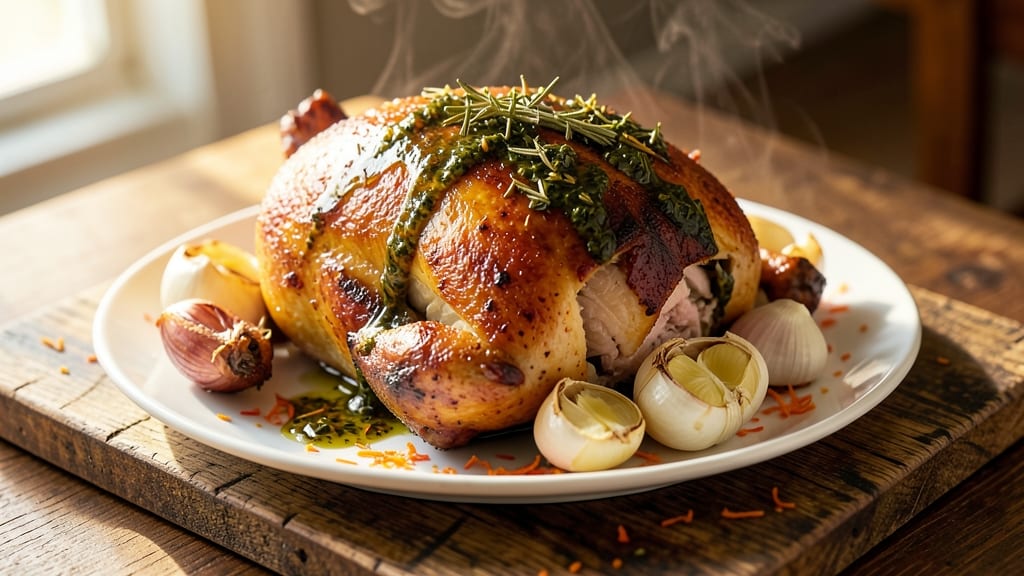
This Barbuto roast chicken recipe delivers the golden, crispy skin and juicy perfection of traditional Sicilian cooking—without requiring a special pan.
The secret lies in the low-and-slow roasting technique, where the chicken cooks in its own juices with aromatic vegetables, creating a flavorful broth that keeps the meat impossibly tender. I’ve adapted the classic Barbuto method for modern kitchens, ensuring every bite is crisp on the outside and succulent within.
The process begins with a simple brine to enhance moisture, followed by a generous herb crust that locks in flavor as the chicken roasts.
Unlike high-heat methods that dry out the meat, this technique relies on gentle heat and a covered pan to trap steam, resulting in crispy skin without compromising juiciness. The aromatics—garlic, onions, and citrus—infuse the chicken with layers of depth, making it taste like it’s been simmering for hours.
By the time you carve into this roast, you’ll uncover meat that falls apart with ease, bathed in its own rich, herby sauce. The skin will be golden and crackling, while the interior remains tender enough to melt in your mouth.
This is the kind of chicken that elevates any meal—whether served with roasted potatoes, a fresh salad, or crusty bread to soak up every last drop of flavor.
Perfect for special occasions or a Sunday dinner, this recipe balances authenticity with approachability. The method is foolproof, and the results are restaurant-quality—proving that traditional techniques can still shine in today’s home kitchens. Let’s get started on creating your showstopping roast chicken.
Ingredients for barbuto roast chicken
Four pounds of golden chicken, aromatic herbs, and a touch of citrus—this is your Sicilian-inspired roast masterpiece.
| Ingredient | Amount | Notes |
|---|---|---|
| Whole Chicken (4-5 lbs) 🍗 | 4 ½ lb | Fresh, preferably organic, skin-on for crispiness |
| Coarse Kosher Salt 🧂 | ½ cup | Diamond Crystal preferred for even distribution |
| Fresh Rosemary 🌿 | ¼ cup | Chopped, stems removed, fresh preferred |
| Fresh Thyme 🌿 | ¼ cup | Leaves only, stems discarded |
| Garlic Cloves 🧄 | 8 cloves | Peeled, lightly crushed for aroma |
| Lemon Zest 🍋 | 1 tbsp | From 1 organic lemon, finely grated |
| Black Peppercorns 🌶️ | 1 tbsp | Coarsely cracked, not powdered |
| Extra-Virgin Olive Oil 🫒 | ¼ cup | High-quality, fruity variety |
| Yellow Onion 🧅 | 1 whole | Quartered, skin on for color |
| Carrots 🥕 | 4 whole | Large, peeled, cut into thick chunks |
| Celery Stalks 🥬 | 3 whole | Trimmed, cut into 2-inch pieces |
| Fresh Parsley 🌿 | ⅛ cup | Chopped, for garnish and flavor |
| Unsalted Butter 🧈 | ½ cup | Cold, cubed, for basting |
| Fresh Sage Leaves 🌿 | ⅛ cup | Whole leaves, for herb crust |
The chicken is the centerpiece, so prioritize quality. Look for a 4-5 lb bird with good marbling and vibrant skin—Whole Foods Market or local butchers often carry the best. The herbs should be fresh, with rosemary and thyme bundles that smell intensely aromatic. If using organic, the lemon zest will have more vibrant flavor. For the olive oil, California extra-virgin brands like Corto or Lucini elevate the dish with their fruity notes. Prep the aromatics ahead: quarter the onion, peel the carrots, and trim the celery—this saves time later when the pan gets crowded.
No fresh herbs? Dried thyme and rosemary at half the amount work in a pinch, though fresh delivers superior depth. Substitute the butter with olive oil or ghee for basting if needed. The garlic can be roasted whole for a milder flavor if preferred. For the citrus, orange zest adds a lovely contrast to lemon. If your chicken is skinless, the crispiness will suffer—opt for skin-on whenever possible. The kosher salt should be coarse; table salt won't distribute evenly. For a vegetarian twist, replace the chicken with a portobello mushroom crown (4 large mushrooms) using the same herb crust method.
Prep the chicken and aromatics same-day for peak flavor. Store fresh herbs in damp paper towels in sealed containers for up to 5 days. The butter should remain cold until ready to use—keep it in the freezer until basting time. The roasted chicken reheats beautifully; cover with foil and warm in a 350°F oven for 20 minutes. For leftovers, the meat stays tender for 3 days in the fridge, while the aromatics can be refrigerated for 1 week. Freeze the herb crust separately if you plan to make it ahead—it keeps its flavor for 3 months** in an airtight container.
Why You'll Love This Recipe
- Five-Ingredient Magic: I swear by this combo—just salt, herbs, and garlic under the skin. No fancy marinades, no complicated prep. The rosemary and thyme cling to the meat while roasting, so every bite tastes like you spent hours in the kitchen.
- Crispy Without Fuss: That coarse kosher salt isn’t just for flavor—it’s the secret to golden, shatteringly crisp skin. I don’t even bother basting. Just let the oven do its thing while I fold laundry. (Yes, even on a Tuesday night.)
- Leftovers That Beg for More: Shred the rest for sandwiches, toss chunks into salads, or reheat slices in a pan for quick breakfasts. My kids actually ask for the leftover chicken—no joke. It’s that good, even after sitting in the fridge.
- Weeknight Hero: I’ve made this for dinner parties, lazy Sundays, and the nights I’m too tired to think. One pan, minimal cleanup, and it still impresses guests. Honestly, it’s my go-to when I don’t want to overcomplicate things.
Step-by-step instructions for barbuto roast chicken
Master this technique and you'll achieve the perfect balance of crispy golden skin and juicy, tender meat every time.
Prepare the Herb Crust and Dry-Brine the Chicken
In a food processor, combine the 0.25 cup fresh rosemary, 0.25 cup fresh thyme, 8 cloves garlic, 1 tbsp lemon zest, 1 tbsp coarsely cracked black peppercorns, and 0.25 cup extra-virgin olive oil. Pulse until you achieve a coarse paste with visible herb flecks—this texture will cling beautifully to the chicken skin. Transfer this mixture to a bowl and set aside.
Pat the 4.5 lb whole chicken thoroughly dry with paper towels, both inside and out. This drying step is critical for crispy skin. In a large bowl, mix the 0.5 cup coarse kosher salt with the herb paste until evenly distributed. Rub this mixture all over the chicken, including inside the cavity. Place the chicken on a wire rack set over a baking sheet and refrigerate uncovered for 12-24 hours. This dry-brine process ensures maximum flavor penetration and skin crispiness. The salt will draw out moisture, allowing the skin to develop that perfect golden crust.
Prepare the Vegetable Soffritto and Roasting Pan
While the chicken brines, prepare the vegetable soffritto by quartering the 1 whole yellow onion, peeling and cutting the 4 whole carrots into thick chunks, and trimming the 3 whole celery stalks into 2-inch pieces. These vegetables will form the aromatic base for your roasting pan, infusing the chicken with deep flavor as it cooks.
Arrange the soffritto vegetables in a single layer on the baking sheet beneath the wire rack where the chicken will rest. This setup creates a steam chamber that keeps the chicken moist while allowing the vegetables to caramelize and contribute to the pan sauce. Preheat your oven to 425°F while you prepare the final herb crust.
Create the Herb Crust and Begin Roasting
Remove the chicken from the refrigerator and let it sit at room temperature for 30 minutes before roasting. In a small bowl, combine the 0.125 cup fresh sage leaves with the 0.5 cup unsalted butter, mashing them together until you have a thick, herby butter paste. Spread this mixture evenly over the chicken skin, pressing it firmly into the surface. This butter crust will render beautifully during roasting, creating that signature crispy exterior.
Place the chicken on the prepared baking sheet with the vegetables. Roast at 425°F for 45 minutes, then reduce the oven temperature to 375°F. Continue roasting for an additional 45-60 minutes, or until the internal temperature reaches 165°F when measured in the thickest part of the thigh. The skin should be deep golden brown and crispy, with the juices running clear when pierced with a meat thermometer. The vegetables should be tender and caramelized, forming a flavorful base for your pan sauce.
Rest and Serve with Pan Sauce
Transfer the chicken to a cutting board and tent loosely with aluminum foil. Let it rest for 15-20 minutes before carving. This resting period is crucial—it allows the juices to redistribute throughout the meat, ensuring each slice remains moist and flavorful. During this time, place the baking sheet with the roasted vegetables on the stovetop over medium heat. Add 0.125 cup chopped fresh parsley and stir to combine, creating a rich, herby pan sauce.
Carve the chicken against the grain into even slices and serve immediately with the pan sauce spooned over the top. The result should be a perfect balance of crispy, golden skin with succulent, juicy meat underneath. Each bite should deliver layers of herbaceous flavor from the crust and the aromatic vegetables, making this barbuto roast chicken a showstopper for any dinner table.
Pro Tips For Making Barbuto Roast Chicken
- CRANK THE HEAT FIRST: The barbuto method starts with a screaming-hot oven—450°F for the first 20 minutes—until the skin blisters and pulls away. I used to wimp out at 425°F, and the crust never got that crispy, golden armor you want. High heat = flavor locked in fast, not steamed into blandness.
- SALT THE CHICKEN 12 HOURS EARLY: Toss the raw chicken with 2 tablespoons of coarse kosher salt inside and out, then refrigerate uncovered for at least 12 hours. Sounds weird, but it works: the salt breaks down proteins for juicier meat and dries the skin just enough for that perfect crust. (Yes, even if you’re impatient like me.)
- STUFF THE CAVITY WITH GARLIC: After roasting, stuff the cavity with 4-5 smashed garlic cloves, a sprig of rosemary, and a thyme stem before resting. The residual heat finishes cooking them into a fragrant paste that seeps into the meat—way better than just scattering cloves on top. (Your future self will notice the difference.)
- REST IT UNDER FOIL: As soon as the chicken hits 165°F, transfer it to a foil tent and let it sit for 10 minutes. Skipping this step means juices pool at the bottom instead of redistributing—dry meat is the last thing you want after all that effort. (I know, I know, but trust the process.)
Essential equipment for this recipe
Roasting Pan Essentials
The heavy-duty roasting pan is your best friend for this recipe—look for a stainless steel or cast iron pan with a tight-fitting lid or cover. I swear by the All-Clad Stainless Steel Roasting Pan (14-inch) because it distributes heat evenly and holds up to the high temperatures.
For budget-friendly options, Calphalon or Farberware pans work beautifully too. The pan should have high sides (at least 3 inches) to contain the aromatics and juices during roasting. 🔥
Wire Rack Advantage
A wire rack is non-negotiable for crispy skin—it elevates the chicken above the vegetables, allowing hot air to circulate underneath. I use a Viking brand rack that fits snugly in my roasting pan. If you don’t have one, a perforated baking sheet works in a pinch.
Just make sure it’s sturdy enough to hold the chicken’s weight without bending. Pro tip: Place the rack on a towel-lined baking sheet to catch any drips.
Meat Thermometer Must-Have
An instant-read meat thermometer is critical for perfect doneness—aim for 165°F in the thickest part of the thigh. I recommend the ThermoWorks Smoke or Taylor Precision models for accuracy. These thermometers have laser pointers to pinpoint exact insertion spots, which is especially helpful for large birds.
Never guess with chicken; undercooked meat is a safety risk, and overcooked meat ruins the texture. 🌡️
Butter Basting Tools
For basting the herb butter crust, I use a small silicone baster or a baste brush to spread the melted butter evenly. Avoid metal spoons—they can scratch your pan. If you prefer hands-off basting, place a small ramekin of butter in the oven with the chicken.
As it melts, tilt the pan occasionally to coat the skin. The Laporte brand basters are my go-to for their precision and durability.
Oven Thermometer Check
Ovens often run hot or cold, so I always keep an oven thermometer on hand—like the Thermoworks Oven Thermometer—to verify the actual temperature. Set it to 425°F (as called for in Step 3) and adjust your oven’s dial if needed.
A 10-15°F discrepancy is common, and this small correction makes a huge difference in skin crispiness. Trust me, your chicken will thank you for this step. 💡
Optional: Roasting Basket
If you want extra crispiness without worrying about pan drips, use a roasting basket (like the OXO Good Grips) placed inside your roasting pan. The basket’s slatted design allows fat to drip away, creating a crispier skin while keeping the pan sauce cleaner.
It’s a game-changer for those who love ultra-crispy results. Just be sure to use it on the middle rack for even heat distribution.
Nutrition facts
Frequently asked questions
Why does the Barbuto method use a dry brine instead of a wet brine?
The dry brine creates a crispier skin while keeping the meat incredibly juicy. The salt draws out moisture, which then reabsorbs during roasting, resulting in a golden, crackling crust without making the meat soggy. This traditional Sicilian technique also enhances flavor penetration more deeply than wet brining.
Can I make this recipe without a wire rack?
Yes, but your skin won't be as crispy. Place the chicken on a perforated baking sheet or use a towel-lined roasting pan with a rack improvised from a folded aluminum foil strip. The key is keeping the chicken elevated for proper air circulation. For best results, invest in a wire rack—it makes all the difference!
How do I know when the chicken is fully cooked?
Use a meat thermometer to check the thickest part of the thigh—it should read 165°F. The juices should run clear when pierced, and the skin should be deep golden brown. Never rely on color alone, as chicken can appear done but still be undercooked inside.
Can I prepare the herb crust ahead of time?
Mix the herb paste up to 2 days ahead and store it in an airtight container in the fridge. The butter-sage crust can be made 1 day ahead and kept cold until ready to use. Just let the chicken sit at room temperature for 30 minutes before roasting for even cooking.
What's the best way to reheat leftover Barbuto chicken?
Cover loosely with foil and reheat at 350°F for 20-25 minutes until warmed through. For extra crispiness, broil for 2-3 minutes at the end. Avoid microwaving—it makes the skin rubbery. Leftovers keep well for 3 days in the fridge or 3 months frozen.