
Soups & Stews
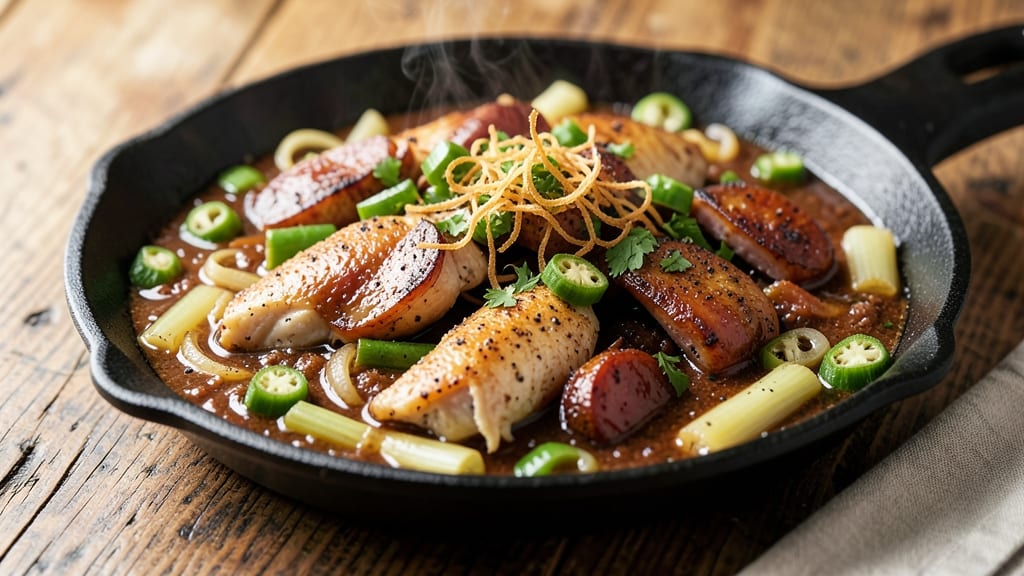
Mastering a traditional chicken gumbo recipe means embracing the soul of Louisiana—where dark roux, smoky spices, and okra-rich broth create a dish that’s equal parts comfort and celebration.
Growing up in Georgia, I learned that gumbo isn’t just soup; it’s a story of Creole and Cajun traditions layered into every spoonful.
The key lies in patience: a roux that takes 45 minutes to darken, the "holy trinity" of onions, bell peppers, and celery sweating into the pot, and filé powder dusted at the end to thicken without a lump.
This recipe delivers restaurant-quality depth using simple ingredients: chicken thighs for flavor, andouille sausage for smokiness, and okra to bind the broth naturally. The secret weapon? A cast iron pot—my 1920s Le Creuset holds heat like nothing else, letting the gumbo develop its signature complexity over 90 minutes of simmering.
Every step, from deglazing the pot to balancing the spices, builds on the last, ensuring the final bowl is rich, hearty, and impossible to resist.
What you’ll end up with is a steaming pot of gumbo where the roux sings with nutty depth, the okra adds a subtle silkiness, and the filé powder creates that signature velvety finish.
Serve it over steamed white rice, with hot sauce on the side, and watch as everyone at the table reaches for seconds. This isn’t just dinner—it’s a taste of Louisiana’s culinary heritage, made in your own kitchen.
For those who love to adapt, swap in shrimp or crawfish for seafood gumbo, or add file powder to the roux instead of stirring it in at the end. Either way, the result is a dish that carries the weight of tradition—and the warmth of home.
Ingredients for traditional chicken gumbo
Simple ingredients that pack a punch—just like Louisiana’s soulful traditions.
| Ingredient | Amount | Notes |
|---|---|---|
| Chicken Thighs 🍗 | 2 ½ lb | Bone-in, skin-on preferred |
| Andouille Sausage 🌭 | 1 lb | Cajun-style, sliced into rounds |
| Fresh Okra 🌿 | 1 lb | Trimmed, sliced into 1-inch pieces |
| Yellow Onion 🧅 | 1 whole | Medium, diced |
| Green Bell Pepper 🌶️ | 1 whole | Medium, diced |
| Celery Stalks 🥬 | 3 whole | Medium, diced |
| Garlic Cloves 🧄 | 6 cloves | Fresh, minced |
| All-Purpose Flour 🌾 | ½ cup | For roux |
| Vegetable Oil 🫒 | ½ cup | For roux |
| Chicken Broth 💧 | 6 cups | Low-sodium preferred |
| Cajun Seasoning 🌶️ | 2 tbsp | Homemade or store-bought |
| Smoked Paprika 🌶️ | 1 tbsp | For depth |
| Thyme Leaves 🌿 | 1 tbsp | Fresh or dried |
| Filé Powder 🌾 | 2 tbsp | Sassafras-based, for thickening |
| Salt 🧂 | 1 ½ tsp | Adjust to taste |
| Black Pepper 🌶️ | ½ tsp | Freshly ground |
| Hot Sauce 🌶️ | 2 tbsp | For serving, optional |
The roux is non-negotiable here. All-purpose flour and vegetable oil are your base, but the magic happens in the slow cook. Cast iron pots are ideal—they hold heat like a dream—but a heavy Dutch oven works too. The key? Stir constantly for those 45 minutes until it’s a deep, chocolatey brown. If you burn it, start over—no shortcuts. For the holy trinity (onion, bell pepper, celery), I always chop them small so they cook down completely. Trader Joe’s has pre-diced versions that save time, but fresh is better if you’ve got it. Andouille sausage? Zatarain’s is the brand I trust—it’s got that perfect smoky, spicy balance. Grab bone-in chicken thighs too; the skin crisps up beautifully during the simmer.
No filé powder? Cornstarch or arrowroot powder works in a pinch, but it won’t give you that signature gumbo silkiness. Fresh okra is best, but frozen works if you’re in a hurry—just thaw and drain it first. Short on thyme? Dried oregano at half the amount gets you close, but fresh is worth seeking out at the market. The Cajun seasoning can be homemade (paprika, garlic powder, onion powder, cayenne, thyme, oregano, black pepper, salt) or store-bought—just make sure it’s got heat. If you’re feeling adventurous, swap the chicken for shrimp or crawfish for a seafood gumbo twist. And if you’re worried about the roux sticking, butter a cast iron pot thoroughly before starting.
This gumbo tastes even better the next day—trust me, the flavors meld like magic. Store it in the fridge for up to 5 days, or freeze portions for 3 months. I like to portion it into glass jars with a little hot sauce on top—just reheat gently on the stove. The roux and okra thicken as it cools, so add a splash of broth if it’s too stiff. Serve it over steamed white rice, and always keep hot sauce on the side. Leftovers? Double the batch—it disappears fast.
Why You'll Love This Recipe
- One-Pot Magic: I swear by this recipe for lazy Sundays—just one Dutch oven, minimal cleanup, and no last-minute scrambling. The okra and filé powder do all the thickening work while you sip coffee, so you’re basically a gumbo chef with zero fuss.
- Smoky, Spiced Soul: That dark roux? It’s the star—30 minutes of stirring pays off with a flavor so deep you’ll want to lick the pot. The andouille sausage and smoked paprika add a smoky punch that’ll have your taste buds begging for seconds.
- Weeknight Crowd-Pleaser: Between us, this feeds six but costs less than takeout for two. The chicken thighs stay juicy, the okra adds that signature gumbo texture, and everyone—even the picky eaters—will ask for leftovers. (Yes, even on a Tuesday night.)
- Leftovers That Taste Fresh: Store it for up to 5 days, and reheating? Just stir in a splash of broth—no dry, sad gumbo here. The flavors actually improve after a day or two, so you’ll find yourself making it twice in a week. Trust me.
Step-by-step instructions for traditional chicken gumbo
Here's how to build this classic Louisiana dish layer by layer.
Build the Signature Dark Roux
Heat the 0.5 cup vegetable oil in a heavy-bottomed Dutch oven over medium-low heat. Add the 0.5 cup all-purpose flour and stir constantly with a wooden spoon to form a smooth paste. This is your foundation - don't rush this step or you'll burn the roux.
Cook for 30-40 minutes, stirring frequently, until the roux reaches a deep chocolate brown color. You're aiming for that classic gumbo hue that carries all the flavor. The smell will be rich and nutty - this is where the magic happens. If it starts to smoke too much, reduce the heat slightly but keep stirring.
Sauté the Holy Trinity Vegetables
Once your roux is perfect, immediately add the diced yellow onion, green bell pepper, and celery stalks. Stir well to coat the vegetables in the roux and cook for 8-10 minutes until they soften and release their flavors. This combination forms the base of Cajun cooking - the "holy trinity" that gives gumbo its depth.
Add the 6 cloves minced garlic and cook for another 1-2 minutes until fragrant. Here's where it gets aromatic - you'll smell that classic gumbo scent developing. Don't let the garlic burn, or you'll get bitter flavors. Keep the heat at medium for this step.
Brown the Protein and Add Okra
Push the vegetables to one side of the pot and add the 2.5 lb chicken thighs and 1 lb andouille sausage to the empty space. Let them brown for 5-7 minutes until the chicken develops a golden crust. This browning creates flavor that will infuse into your gumbo.
Add the sliced 1 lb fresh okra and stir to combine with the other ingredients. The okra will release its natural thickening properties as it cooks. Sprinkle in the 2 tbsp cajun seasoning, 1 tbsp smoked paprika, and 1 tbsp thyme leaves, stirring well to distribute the spices evenly.
Simmer the Gumbo to Perfection
Pour in the 6 cups chicken broth and bring to a boil. Once boiling, reduce heat to low and let it simmer uncovered for 45-60 minutes. This long simmer allows all the flavors to meld together. Skim off any foam that rises to the surface during this time for a cleaner gumbo.
After 30 minutes, check the seasoning and adjust with the 1.5 tsp salt and 0.5 tsp black pepper if needed. The gumbo should be thick but still spoonable. If it's too thin, you can simmer longer or add a bit more filé powder later. The okra will naturally thicken as it cooks.
Finish and Serve Traditionally
Once the gumbo has simmered and the chicken is tender (it should fall off the bone easily), remove the chicken pieces and shred the meat, returning it to the pot. Stir in the 2 tbsp filé powder just before serving - this will thicken the gumbo instantly and create that signature gumbo texture.
Ladle the gumbo into bowls and serve immediately with 2 tbsp hot sauce on the side. Traditional gumbo is best enjoyed fresh from the pot. The flavors continue to develop as it sits, so don't wait too long to serve. Each bowl should be rich with smoky roux, tender chicken, and the distinctive okra flavor that makes this gumbo truly traditional.
Pro Tips For Making Traditional Chicken Gumbo
- Stir Like Your Life Depends On It: That 30-40 minute roux isn’t just about time—it’s about constant stirring. I’ve seen people walk away for "just a minute" and come back to a blackened disaster. Keep that wooden spoon moving in figure-8s, especially when it starts darkening. The moment you stop stirring is the moment it burns, and burned roux tastes like regret.
- Trim That Okra Properly: Fresh okra is finicky—those little stems hide bitterness. Before slicing, trim off the very top and bottom of each pod (about ¼ inch) and scrape out the seeds with a paring knife. I learned this the hard way when my gumbo tasted like overcooked green beans. Clean okra = smooth gumbo.
- Don’t Crowd the Chicken: When browning the 2.5 lb chicken thighs, resist the urge to pile them all in at once. Work in batches if needed—golden crust comes from contact with the pot, not steam. Crowded chicken steams instead of sears, and that’s how you end up with bland, gray meat instead of flavor-packed bites.
- Taste Before You Thicken: That filé powder is non-negotiable, but don’t dump it in blindly. After simmering 30 minutes, taste the gumbo without the filé first—you might need less than the full 2 tbsp. Filé can turn gumbo gluey if overused, and you don’t want a pot of paste. Adjust, then stir it in right before serving.
Wine and beer pairings for this recipe
Bold Reds Pair
Gumbo’s deep, smoky flavors call for a bold red wine that can stand up to its richness. I reach for a Zinfandel from California—specifically, a Dry Creek Vineyard—with its jammy blackberry notes and peppery finish.
The wine’s acidity cuts through the gumbo’s fat while its dark fruit echoes the roux’s caramelized depth. Serve it slightly chilled (55-60°F) to enhance its aromatic qualities. 🍷
Malty Amber Ales
For beer lovers, an amber ale with caramel and biscuit notes is my go-to. I love New Belgium Fat Tire or Allagash White—both offer just enough sweetness to balance gumbo’s spice while their malty backbone complements the okra’s earthiness.
The carbonation also cleanses the palate between bites. Keep it cold (45-50°F) for the best experience.
Spicy Margarita Twist
If you want something lighter yet still flavorful, a spicy margarita made with reposado tequila, fresh lime, and a dash of Tajín works wonders. The citrus brightens the gumbo’s richness, while the chili powder mirrors its heat.
I like to rim the glass with smoked salt for an extra smoky touch that ties back to the andouille. Serve it over ice with a lime wedge. 🌶️
Coffee Liqueur Finish
For a sophisticated after-dinner sip, I recommend a Kahlúa-spiked coffee—equal parts Kahlúa, dark rum, and hot brewed coffee. The bitterness of the coffee enhances the gumbo’s depth, while the rum’s warmth soothes the palate. Garnish with a sprinkle of cinnamon for a cozy, Louisiana-inspired finish.
Local Louisiana Options
If you’re serving gumbo in Louisiana, don’t overlook regional favorites. A cold Dixie Beer from New Orleans or a crisp Abita Amber from the hills of Louisiana pairs beautifully. For non-alcoholic options, try a sweet tea lemonade—the Southern classic balances the gumbo’s heat without overpowering its flavors. 🍹
Nutrition facts
Frequently asked questions
Can I make gumbo without okra?
While okra adds natural thickening and a subtle silkiness, you can substitute 1-2 tablespoons cornstarch or arrowroot powder mixed with cold water for every 1 cup of broth. Stir it in during the final 10 minutes of simmering. Just don’t add filé powder if you’re using cornstarch—they both thicken but behave differently. The gumbo will still be delicious, just with a slightly different texture.
Why does my roux burn so easily?
Roux burns when heat gets too high or you stop stirring. Always use medium-low heat and stir constantly with a wooden spoon—never metal. If it starts smoking excessively, lower the heat immediately. A good rule: the roux should bubble gently, not roar. Pro tip: Use a heavy-bottomed Dutch oven (like Le Creuset) to distribute heat evenly and prevent hot spots.
How do I prevent my gumbo from being too thin?
Start by simmering uncovered for the full 45-60 minutes—the okra and roux will naturally thicken as they cook. If it’s still too thin, stir in 1 tablespoon filé powder per cup of broth just before serving. For extra insurance, mash a few cooked okra slices into the broth during simmering. Avoid adding flour directly to the pot—it can make the gumbo grainy.
Can I make this gumbo in a slow cooker?
Yes, but with adjustments. Sauté the holy trinity and brown the proteins in a skillet first, then transfer everything to the slow cooker. Cook on low for 6-8 hours or high for 3-4 hours, stirring occasionally. The roux won’t darken as deeply, so aim for a lighter color and add 1 extra tablespoon Cajun seasoning for depth. Stir in filé powder just before serving to avoid clumping.
What’s the best way to reheat leftover gumbo?
Reheat gently on the stove over low heat, stirring frequently to prevent burning. Add 1-2 tablespoons broth or water if it’s too thick. Never microwave it—this can make the roux separate and the okra mushy. For best results, reheat only what you’ll serve immediately. Leftovers taste even better the next day! The flavors deepen as it rests.