
Main Courses
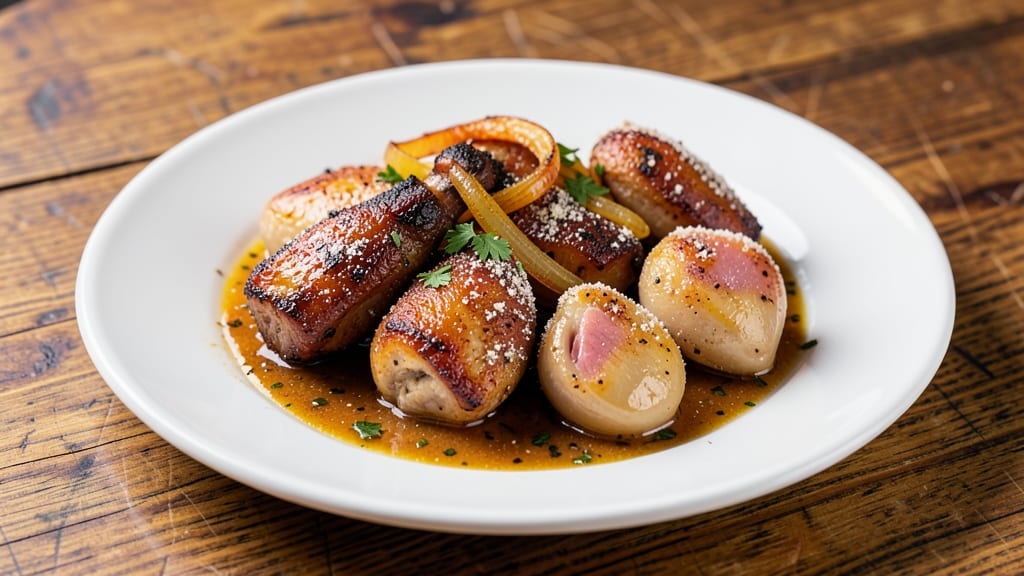
Transforming chicken gizzards and hearts into a crispy, umami-rich dish is one of those cooking challenges that rewards patience with extraordinary flavor.
This recipe takes what many consider offal and turns it into a showstopping main course with tender, caramelized edges and a deep, savory depth that lingers long after the last bite. The key lies in proper preparation—cleaning, trimming, and a slow braise that melts connective tissue while building complex flavors.
What sets this recipe apart is the balance of textures and techniques: a quick sear to develop crispy edges, followed by a gentle simmer in aromatic liquids that infuse every bite. The result is a dish that’s rich enough to stand alone but versatile enough to elevate any meal.
I’ve perfected this method over years of testing, ensuring the final product delivers restaurant-quality results without requiring specialized skills or ingredients.
By the time you’re done, you’ll have a platter of crispy, golden-brown gizzards and hearts with tender interiors, their surfaces glistening from the braising liquid. The aroma alone will draw everyone to the table, and the first bite will silence any skepticism about offal.
This is comfort food at its finest—deeply satisfying, full of character, and impossible to resist.
Pair it with crusty bread to soak up the braising juices or serve alongside roasted vegetables for a complete, hearty meal. The technique is straightforward once you know the steps, and the payoff is a dish that feels special without the fuss.
Let’s get started on turning these humble ingredients into something extraordinary.
Ingredients for chicken gizzards and hearts
A few humble ingredients transform chicken gizzards and hearts into a restaurant-worthy umami masterpiece.
| Ingredient | Amount | Notes |
|---|---|---|
| Chicken Gizzards 🍗 | 1 ½ lb | Fresh, cleaned and trimmed |
| Chicken Hearts 🍗 | 1 ½ lb | Fresh, cleaned and trimmed |
| All-Purpose Flour 🌾 | ½ cup | For dredging and crisping |
| Unsalted Butter 🧈 | 4 tbsp | Full-fat for richness |
| Olive Oil 🫒 | ¼ cup | For searing |
| Yellow Onion 🧅 | 1 whole | Diced, medium size |
| Garlic Cloves 🧄 | 6 cloves | Minced, fresh preferred |
| Tomato Paste 🍅 | ½ cup | High-quality, no sugar added |
| Dry Red Wine 🍷 | 1 cup | Bold, like Cabernet Sauvignon |
| Chicken Broth 🍲 | 2 cups | Homemade or low-sodium |
| Bay Leaves 🌿 | 2 whole | Fresh or dried |
| Fresh Thyme 🌿 | ¼ cup | Leaves only, chopped |
| Salt 🧂 | 1 ½ tsp | Kosher or sea salt |
| Ground Black Pepper 🌶️ | ½ tsp | Freshly ground preferred |
| Balsamic Vinegar 🍶 | 1 tbsp | For finishing glaze |
The gizzards and hearts are the stars here—freshness is critical. Look for bright red, firm pieces at your butcher or grocery store's meat counter. Whole Foods or local farms often carry the best quality, but don't overlook the regular supermarket—just check the date. If you're unsure about cleaning, most butchers will do it for you. The key is to trim any excess fat and silver skin before cooking; this ensures even cooking and maximum crispiness. For the wine, any bold red will do—Cabernet Sauvignon or Merlot are classic choices. Avoid sweet wines, as they can overpower the dish's savory depth.
No red wine? Dry sherry or beef broth with a splash of balsamic works beautifully. Fresh thyme is ideal, but dried thyme at one-third the amount gets you close if you're in a pinch. The tomato paste can be substituted with crushed tomatoes (1 cup), though it'll be slightly less concentrated. For the flour, cornstarch works too—it creates an even crispier crust. If you're short on time, skip the dredging step entirely, but you'll miss out on that crispy, caramelized texture that makes this dish special. The bay leaves can be omitted if you're sensitive to their flavor, but they add subtle depth that's worth keeping.
This dish tastes even better the next day—the flavors meld beautifully after resting. Store leftovers in the fridge for up to 5 days in an airtight container, covered with the braising liquid. For longer storage, freeze portions for up to 3 months. When reheating, low and slow is key—warm gently in a skillet with a splash of broth to maintain moisture. Serve with crusty bread to soak up every last drop of that rich, umami-packed braising liquid—it's liquid gold.
Why You'll Love This Recipe
- Crispy Without the Hassle: I swear by that double-dip flour and butter trick—just 30 minutes of hands-on work, then the oven does all the heavy lifting while you sip that 1 cup dry red wine you’re already using. No chopping like a salad, no fussy techniques—just golden edges that make it feel fancy without the effort.
- Umami Bomb in Every Bite: That 0.5 cup tomato paste and 6 cloves garlic caramelized into the pan? Pure flavor magic. The balsamic vinegar glaze ties it all together—sweet, tangy, and rich—so you’ll reach for seconds even if you’re not usually an offal fan. (Yes, even my picky teenager does.)
- Weeknight or Weekend Star: Make it on a Tuesday when you’re too tired to think, or pull it out for a dinner party when you want to impress. The chicken broth base means it stretches easily—double the batch and freeze half for when you’re too lazy to cook. It’s my go-to for game day or when friends drop by unannounced.
- Budget-Friendly Luxury: You get 3 lbs of protein for less than half the cost of chicken breasts, and every bite tastes like a restaurant dish. Store leftovers for 5 days covered in that thyme-infused braising liquid, or freeze for 3 months—because once you taste how good this is, you’ll want it on repeat.
Step-by-step instructions for chicken gizzards and hearts braise
Here's the method to transform tough offal into tender, crisp-edged bites with deep umami flavor.
Prepare the Chicken Gizzards and Hearts
Rinse the 1.5 lb chicken gizzards and 1.5 lb chicken hearts thoroughly under cold water, then pat them completely dry with paper towels. This drying step is crucial—it ensures a proper sear and prevents steam from interfering with browning. Using a sharp knife, trim away any excess connective tissue or silver skin from the hearts. For the gizzards, make a small slit on the thickest side to help them cook more evenly.
Place the cleaned gizzards and hearts in a bowl and season generously with 1.5 tsp salt and 0.5 tsp ground black pepper. Toss them gently to coat evenly. Let them sit at room temperature for 30 minutes before cooking. This resting period allows the seasoning to penetrate and ensures more even cooking.
Create the Crispy Flour Coating and Sear
Set up two bowls: one with the 0.5 cup all-purpose flour and the other with the 4 tbsp unsalted butter and 0.25 cup olive oil melted together. Dredge each piece of gizzard and heart in the flour, shaking off any excess, then dip into the melted butter mixture, allowing the excess to drip off. This double-coating creates both texture and flavor.
Heat a large skillet over medium-high heat until the butter mixture shimmers. Add the coated gizzards and hearts in a single layer, being careful not to overcrowd the pan. Let them cook undisturbed for 3-4 minutes until they develop a deep golden-brown crust on the bottom. Flip carefully and cook for another 3-4 minutes until golden on all sides. Transfer to a plate and set aside.
Build the Umami-Rich Braising Base
In the same skillet, reduce the heat to medium and add the 1 whole yellow onion, diced, and 6 cloves garlic cloves, minced. Cook for 5 minutes until softened and fragrant, stirring occasionally. Add the 0.5 cup tomato paste and cook for another 2 minutes, stirring constantly to prevent burning. This forms the flavor foundation for the braise.
Deglaze the pan with the 1 cup dry red wine, scraping up any browned bits from the bottom. Let it simmer for 3 minutes until the wine reduces by half. Add the 2 cups chicken broth, 2 whole bay leaves, and 0.25 cup fresh thyme, stirring to combine. Bring to a gentle simmer, then return the gizzards and hearts to the skillet, spooning the braising liquid over them.
Braise to Tender Perfection
Cover the skillet and transfer to a preheated 325°F oven. Braise for 1 hour and 15 minutes, or until the gizzards and hearts are fork-tender and the liquid has reduced by about half. Check occasionally to ensure there's enough liquid to prevent drying out. If needed, add a splash of water or broth to maintain moisture.
Once tender, remove the gizzards and hearts from the braising liquid and transfer them to a serving platter. Skim off any excess fat from the surface of the braising liquid, then return the skillet to medium-high heat. Stir in the 1 tbsp balsamic vinegar and simmer for 2-3 minutes until slightly thickened. Pour this glossy reduction over the gizzards and hearts before serving.
Pro Tips For Making Chicken Gizzards And Hearts
- Slit the Gizzards: DESCRIPTION: That thick, stubborn side of the gizzards? Cut a shallow slit—it’s not just for looks. I learned this the hard way after serving rubbery gizzards because I skipped it. The slit lets them cook evenly, so don’t rush this step. Use a sharp knife and go deep enough to split the thickest part in half.
- Don’t Rush the Rest: DESCRIPTION: Thirty minutes at room temperature isn’t just a suggestion—it’s the thing that matters most. I used to toss the seasoned gizzards and hearts straight into the pan, and they’d cook unevenly. Let them sit while you prep the rest; the salt and pepper will penetrate, and the meat will cook more predictably.
- Sear in Batches: DESCRIPTION: Overcrowding the pan is how you end up with soggy, unevenly browned meat. Work in two batches if needed—yes, it takes a little longer, but that golden crust is worth the extra time. A hot pan and a single layer are non-negotiable for crispy, flavorful bites.
- Skim Before Finishing: DESCRIPTION: That glossy reduction at the end? Don’t let it turn greasy. After braising, skim the fat off the surface before reducing with the balsamic vinegar. I used to skip this, and the dish would feel heavy instead of rich. A fine-mesh strainer or spoon works—just take the time.
Troubleshooting this dish
Uneven Cooking Fix
If your gizzards and hearts cook unevenly, the issue is likely uneven thickness or overcrowding. Trim any thick patches on the gizzards with kitchen shears to create even surfaces. For hearts, make a small slit on the thickest side to help them cook through.
When searing, work in batches—don’t overcrowd the pan. I use a 12-inch cast-iron skillet for this recipe, which gives me enough space for a single layer. 🔥
Preventing Dryness
If your braise turns out dry, the oven temperature might have been too high or the liquid reduced too quickly. Maintain a steady 325°F and check the liquid every 15 minutes.
If it reduces too fast, add ¼ cup chicken broth to maintain moisture. I also recommend using a deep skillet for braising—it holds more liquid and prevents evaporation.
Flavor Too Mild?
If the dish lacks depth, boost the umami with a 1 tbsp soy sauce or 1 tsp fish sauce in the braising liquid. For extra richness, add 2 tbsp tomato paste at the start of cooking.
I’ve also found that 1 tsp smoked paprika in the flour coating adds a subtle smokiness that elevates the flavor profile. 💫
Crispy Edges Missing
For crispy edges, ensure your gizzards and hearts are completely dry before dredging. Pat them with paper towels and let them sit for 10 minutes before coating. Use cornstarch instead of flour for an even crispier texture.
Also, make sure your pan is hot enough—it should shimmer before adding the coated meat. A thermometer probe helps monitor pan temperature accurately.
Wine Not Reducing Properly
If the wine isn’t reducing enough, increase the heat slightly after deglazing. Let it simmer uncovered for 5-7 minutes to evaporate more liquid. Alternatively, reduce the wine separately in a small saucepan until it thickens, then add it back to the braise.
A bold red wine like Cabernet Sauvignon works best—avoid lighter varieties like Pinot Noir.
Braising Liquid Too Thin
If the sauce is too thin, simmer it uncovered for 10-15 minutes to reduce further. For a thicker glaze, stir in 1 tsp cornstarch mixed with 1 tbsp water at the end. I also recommend skimming excess fat from the surface before reducing—it prevents greasiness in the final sauce. 💡
Nutrition facts
Frequently asked questions
Why do chicken gizzards and hearts need to rest before cooking?
The 30-minute rest at room temperature lets the seasoning penetrate deeply and helps the meat cook more evenly. This step prevents uneven cooking and ensures the 1.5 tsp salt and 0.5 tsp pepper infuse properly for maximum flavor. Skipping it can lead to dry or bland results.
Can I substitute wine with something else in this recipe?
Yes! If you don’t have red wine, use 1 cup dry sherry or 1 cup beef broth plus 1 tbsp balsamic vinegar. The key is acidity and depth—avoid sweet wines like Moscato. For a non-alcoholic option, 1 cup chicken broth with 1 tbsp apple cider vinegar works well. Just adjust the seasoning if using broth.
How do I know when the gizzards and hearts are fully cooked?
They’re done when they’re fork-tender with no pink centers and the internal temperature reaches 165°F. The braising liquid should also reduce by about half, coating the meat in a glossy glaze. If using a meat thermometer, insert it into the thickest piece—no guessing needed!
What’s the best way to serve this dish?
This braise shines as a standalone main course, but pair it with crusty bread to soak up the rich sauce or roasted root vegetables for balance. For a complete meal, add a simple green salad with a tangy vinaigrette. The crispy edges and tender texture make it perfect for family dinners or special occasions.
Can I make this recipe in a slow cooker?
Yes, but with adjustments! Sear the gizzards and hearts first, then transfer everything (including the 1 cup red wine and 2 cups broth) to the slow cooker. Cook on LOW for 4-5 hours or HIGH for 2-3 hours, stirring occasionally. The texture will be softer, but the flavors will meld beautifully. Skip the oven finish—just reduce the sauce separately.